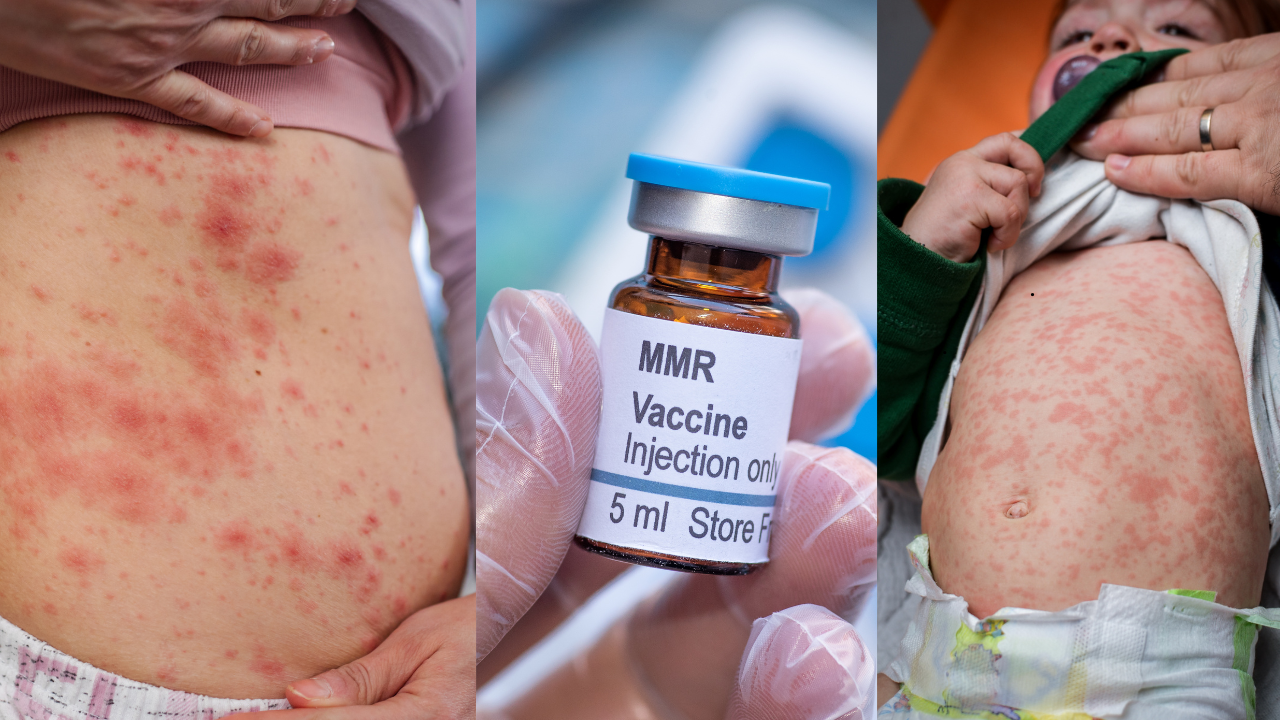
Mexico has reported more than 2,700 new cases of measles so far this year, as per the government data. Most of these infections have been detected among infants and young children. Not too far away, in the US, as per the Centers for Disease Control and Prevention (CDC) data, 900 new cases have been confirmed. However, unlike in the 1990s, the Secretary of Public Education in Baja California Sur, Alicia Meza Osuna, clarified that it is not a requirement to present the complete vaccination schedule for children to attend schools. However, in the Mexican city of Cabo San Lucas, specific health measures are being taken. What Parents In Cabo San Lucas Must Keep In Mind?The standard school enrollment process will continue as usual, and families are not required to present a complete vaccination record to register.In areas where recent cases have been reported, localized health precautions may be introduced. Families in Cabo San Lucas should be prepared for temporary preventive measures if an outbreak occurs.Parents are advised to take their children to a medical facility if they notice symptoms such as fever, cough, runny nose, conjunctivitis, small white spots inside the cheeks, or skin rashes so they can receive timely medical care.Except during declared emergencies, vaccination certificates are not required for school admission.What Happened In Mexico In The 1990s?In the 1990s, the Ministry of Health (SSA) and the Ministry of Public Education (SEP) required that children be protected against diseases such as measles, polio, rubella, tetanus, diphtheria and tuberculosis before entering preschool or primary school, as part of the health prevention policies. However, at present, as Alicia Meza Osuna stated, "It is not a requirement to enroll children in school to present their vaccination card. Under no circumstances is it a requirement to present a complete vaccination schedule for a child to attend school."What Is Measles?Measles, also known as rubeola, is an extremely contagious viral illness that typically causes high fever, cough, runny nose, red and watery eyes, and a characteristic rash that begins on the face and spreads downward across the body. It spreads through respiratory droplets and can lead to severe and sometimes fatal complications, including pneumonia and inflammation of the brain known as encephalitis.Although it is preventable through the safe and effective MMR vaccine, measles remains a serious threat in many regions. There is no specific cure, and treatment focuses on managing symptoms, according to the Cleveland Clinic.What Are The Symptoms Parents Must Look Out For?Measles has a high transmissibility, and high measles immunity levels are required to prevent sustained measles virus transmission.This is why herd immunity for measles could be easily breached.It easily spreads from one infected person to another through breathes, coughs or sneezes and could cause severe disease, complications, and even death.Symptoms include:High feverCoughRunny NoseRash all over the bodyThe most unique symptom or the early sign of measles in the Koplik spots. These are tiny white dots that look like grains of salt on red gums inside the cheeks that appear before the red rash starts to appear on a person's face and then the body.Read: Unique Symptoms Of Measles In 2026 And How Long Does The Infection Last?Furthermore, the symptoms of measles are also characterized by the three Cs:CoughCoryza or runny noseConjunctivitis or red and water eyesHow Long Does The Infection Last?The progression of the symptom comes in two stages, first is the prodromal stage or Days 1 to 4, where one would notice high fever, cough, runny nose, red and watery eyes, sore throat, fatigue, and Koplik spots.The second stage is called the rash stage or the days 5 to 10 or even more where rash start to appear on the hairline, and then it runs down the body. It lasts for several days and fades in the same order.The first symptoms, notes the Centers for Disease Control and Prevention (CDC), appear 7 to 14 days after a measles infection. Often, it could also lead to ear infection, or even diarrhea. Though these complications happen in every 1 in 10 children or individual with measles.