
- Health Conditions A-Z
- Health & Wellness
- Nutrition
- Fitness
- Health News
- Ayurveda
- Videos
- Medicine A-Z
- Parenting
Missouri Reports 2 Cases Of Deadly Clade I Mpox, US Tally Rises To 3 In 2026
Credit: Canva
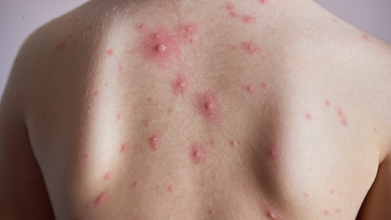
Two adults living in Missouri have been diagnosed with the more severe Clade I Mpox, taking the total number of cases in the US to three this year.
As per the US CDC, since November 2024, there have been 12 reported cases of clade I Mpox in the country. With the two cases in Missouri, the total tally rises to 14.
The Missouri Department of Health and Senior Services (DHSS), in a statement, said that both individuals had recent international travel to countries where Mpox is more prevalent.
Also Read: Indian Drug Regulator Flagged 90 Combination Medicines Sold Without Approval
Further investigation revealed that the two cases are unrelated to one another and are not believed to be connected to any locally acquired Mpox cases.
“While risk to the general public remains low, Mpox is still active,” said Dr. George Turabelidze, state epidemiologist.
“We recommend those who are at risk for Mpox infection to get vaccinated and ensure they complete the 2-dose series,” Turabelidze added.
Earlier this week, New York City reported the first case of Mpox Clade I in the US.
Last week, health authorities in Argentina announced the country's first locally acquired case of mpox clade Ib, raising concerns about the potential for community transmission in South America.
Clade 1 Outbreaks
According to the CDC, more than 53,000 clade I monkeypox cases, including more than 200 deaths, have been reported in several countries in Central and Eastern Africa since January 1, 2024.
Also Read: Can Semaglutide Help Fight Cancer In The Brain?
Between March 2025 and March 2026, 30 countries have reported 37,170 confirmed cases of the deadly strain, including 165 deaths.
The majority of the cases are reported from the Democratic Republic of the Congo, Sierra Leone, and Uganda.
The CDC maintains that the risk of clade I Mpox to the general public in the US remains low, while for men who have sex with men, it is low to moderate.
What is Mpox? Why is Clade 1 more deadly?
Mpox is a disease caused by two different genetic types of the mpox virus, called Clade I and Clade II.
The Missouri health department said that Clade I is more likely to cause severe illness and death, especially in people who have a weak immune system.
The latest records also show that Clade I has a mortality rate of 1-10 percent compared to Clade II’s 1-4 percent.
Both types of the virus spread primarily through direct physical contact with a symptomatic person with Mpox or through contact with used items contaminated with the Mpox virus. It is not spread through the air.
But, statistics have shown that Clade 1 infects children more than adults.
People with Mpox are considered infectious until all their lesions have crusted over, the scabs have fallen off and a new layer of skin has formed underneath, and all the lesions on the eyes and in the body (in the mouth, throat, eyes, vagina and anus) have healed too.
Other symptoms of mpox which may develop prior to a rash can include
fever,
chills,
headache,
exhaustion,
muscle aches,
sore throat,
swollen lymph nodes.
The CDC urges rapid response measures, such as contact tracing and vaccination, to effectively stop disease spread.
Vaccination reduces the risk of getting mpox and can reduce symptoms if infected.
Washington Reports Human Bird Flu Case After Dairy Cattle Exposure: Should You Be Worried?

Credit: iStock
A Yakima County resident in Washington has tested positive for avian influenza after exposure to infected dairy cattle, the Yakima Health District (YHD) and Washington State Department of Health (DOH) announced.
The resident has not developed severe illness, has not required hospitalization and is isolating at home, officials said.
“We are working closely with our public health partners to follow up with people who have been in close contact with this individual. We want to make sure they know what symptoms to watch for and can access testing and treatment if needed,” said Dr. Dave Atteberry, health officer at the Yakima Health District.
H5N1 Detected In Washington Dairy Cattle
The case follows the detection of highly pathogenic avian influenza (HPAI) H5N1 in dairy cattle on two Yakima County farms. The resident was exposed to the infected cattle.
The Washington State Department of Agriculture has placed both farms under quarantine and implemented biosecurity measures, officials said. Veterinarians are treating sick cows.
Washington State Veterinarian Amber Itle urged farms to strengthen biosecurity measures and promptly report symptoms in animals.
Also read: H5N1 Bird Flu Reaches New Zealand; 12 Human Infections Reported Worldwide
Should You Be Worried About Bird Flu?
The risk to the general public remains low, health officials said. Dairy workers and others who have close or prolonged contact with infected animals or contaminated environments face a higher risk.
Public health officials are contacting people who had close contact with the patient and monitoring them for symptoms for 14 days after their last exposure.
Have Human Bird Flu Cases Been Reported Before In The US?
Read More: H5 Bird Flu Spreads To Australian Mammals: Is It Nearing Humans?
Yes. The first reported human H5N1 case in the US was detected in April 2022 in a Colorado poultry worker exposed to infected birds. The first presumed cow-to-human H5N1 transmission in the country was reported in Texas in April 2024, involving a dairy worker exposed to infected cattle.
According to the Pan American Health Organization (PAHO), 1,002 laboratory-confirmed human H5N1 infections and 479 deaths were reported across 25 countries between 2003 and August 7, 2026. In 2026 alone, nine cases, including two deaths, were reported worldwide.
The US Centers for Disease Control and Prevention (CDC) reported 12 human H5N1 infections outside the US between August 4, 2025, and June 10, 2026: eight in Cambodia, three in Bangladesh and one in India. Three cases were fatal. The infections were associated with exposure to infected poultry or their environments; no person-to-person transmission was identified.
What Is Avian Influenza?
Avian influenza, commonly called bird flu, is caused by Type A influenza viruses found naturally in wild birds. The virus can spread to poultry and mammals, including dairy cattle. Humans can become infected through close contact with infected animals or contaminated environments.
Sustained human-to-human transmission of currently circulating H5N1 viruses has not been established.
How Can You Reduce Your Risk?
People who have close or prolonged contact with infected animals or contaminated environments face a higher risk. They include agricultural workers, backyard flock owners, hunters and wildlife workers.
To prevent the risk, it is recommended to:
- Avoid touching wild birds or other animals, including those that appear healthy. Stay away from sick or dead animals, bird droppings and potentially contaminated surfaces.
- Workers exposed to infected animals should follow recommended precautions, wear appropriate personal protective equipment (PPE) and report suspected illness in animals.
- Hunters should wear disposable gloves when handling harvested birds and practice good hygiene.
- Ask your healthcare provider about seasonal flu vaccination. It does not prevent bird flu but can reduce the risk of simultaneous infection with human and avian influenza viruses.
Are Dairy Products Safe To Consume?
Pasteurization kills HPAI viruses in milk, helping protect the commercial dairy supply. However, infected cows can shed the virus in their milk, making raw milk and unpasteurized dairy products unsafe.
Avoid raw dairy products. Do not give pets raw milk, unpasteurized dairy products or raw meat.
Teen Girls in US Have Lower Heart Health Scores Than Boys: CDC Study
Credit: iStock
Female high school students in the United States had lower overall cardiovascular health scores than male students, with mean scores of 64.2 and 66.2, respectively, according to a nationwide survey by the US Centers for Disease Control and Prevention (CDC).
The findings, based on the American Heart Association’s Life’s Essential 8 framework, showed that female students had lower mean scores for physical activity and sleep health but higher, more favorable BMI scores than male students.
Lower physical activity and sleep health scores were also observed among students in higher grades, while nicotine exposure scores were lower among students in higher grades.
CDC Study Assesses Heart Health Among US Teenagers
Also read: 4 in 10 US High School Students Report Binge Eating: What Are the Risks?
The 2025 biennial Youth Risk Behavior Survey included 10,710 students in grades 9–12. Of these, 5,192 had complete data for all five cardiovascular health measures: physical activity, diet, sleep health, body mass index (BMI), and nicotine exposure.
The findings, published in the CDC’s Morbidity and Mortality Weekly Report, showed that approximately 21% of students had high overall cardiovascular health scores, while 61% had moderate scores and 18% had low scores.
The prevalence of high overall scores was lower among female students and those in grades 10–12 than among male students and ninth-graders, respectively. Overall, approximately four in five students had low or moderate scores across the five assessed cardiovascular health measures.
Why Sleep, Diet and Exercise Matter for Teen Heart Health
Cardiovascular diseases (CVDs) are the leading causes of mortality in the US, and many CVD risk factors emerge in childhood and adolescence. Adolescence is a crucial period during which health behaviors develop and persist into adulthood.
A March 2026 study published in the European Journal of Preventive Cardiology suggested that even small, combined improvements in daily habits may benefit cardiovascular health.
Sleeping an additional 11 minutes, engaging in five more minutes of moderate-to-vigorous physical activity, and eating an extra quarter-cup of vegetables daily were associated with a 10% lower risk of heart attacks, strokes and other serious cardiovascular problems compared with less healthy habits.
Sleep is particularly important during adolescence, when the body and brain undergo significant developmental changes. Adequate sleep supports physical recovery, immune function, concentration and emotional well-being.
Teenagers generally need eight to 10 hours of sleep each night. However, schoolwork, extracurricular activities and screen time can interfere with sufficient rest. Research has also linked insufficient sleep with less healthy food choices and a greater tendency to eat later at night.
Elsie Taveras, a pediatrician at Mass General Brigham, highlights the importance of adequate sleep in reducing the risk of chronic conditions, including obesity and cardiovascular risk factors. Children from racial minority and lower-income households may face additional barriers to healthy sleep.
“Sleep health is something we need to pay attention to, and that we counsel teenagers and their families about,” Taveras said.
“We’ve found that shorter sleep duration and lower sleep quality in children and adolescents are associated with a higher risk of obesity and risk factors for heart disease. These are substantial effects that can affect children for years to come,” she added.
Dr Rachna Shroff: Indian-American Cancer Researcher Who Turned Her Diagnosis Into Advocacy

Credit: University of Arizona
Dr Rachna Shroff, an Indian-American cancer researcher at the University of Arizona, has died at the age of 47 from an aggressive form of cancer she had spent her career studying, the university announced.
Earlier this year, Shroff, associate director of clinical investigations at the University of Arizona Cancer Center, was diagnosed with incurable, terminal adenocarcinoma, a cancer that develops in glandular cells lining certain organs.
Dr Rachna Shroff’s Cancer Diagnosis
Dr Rachna first noticed a swollen lymph node in May. By the end of the month, the cancer had spread elsewhere in her body, and tests suggested it had likely originated in her stomach or intestine.
Her medical team initially suspected lymphoma, a type of blood cancer. Further testing later confirmed terminal adenocarcinoma.
“It’s been a journey,” Dr Rachna told NBC News in a Zoom interview shortly before her death. “I’ve spent my entire life trying to eradicate cancer, primarily pancreatic cancer, but also liver cancers.”
Also read: Swimmer Archie Goodburn’s Plea Prompts UK Brain Cancer Research Review
Dr Rachna Shroff’s Scientific Work
Dr Rachna was a clinician-scientist and internationally respected expert in cholangiocarcinoma, a rare cancer of the bile ducts. She authored more than 80 publications and participated in more than 130 professional engagements.
In September, despite her own life-limiting diagnosis, one of her final wishes was to establish the Conquer Cancer – Rachna Shroff, MD, MS, FASCO Endowed Young Investigator Award in Biliary Cancers. Within weeks, she achieved her goal of raising more than $1.35 million to support future cancer research and innovation.
A Career Dedicated to Advancing Cancer Treatment
READ: Survival In Aggressive Brain Tumors Improves By Up To 50% in India, Say Doctors
The daughter of a nephrologist mother and a biochemist father, Dr Rachna developed an early interest in cancer research in Tucson. As a high school student, she won the 1993 Osler Fellowship, which gave her the opportunity to work in the laboratory of Margaret Briehl, a University of Arizona Cancer Center member and professor at the College of Medicine – Tucson.
She completed her undergraduate studies at Brown University and earned her medical degree from Thomas Jefferson University. In 2010, she completed her fellowship at the University of Texas MD Anderson Cancer Center, where she subsequently served as an associate professor of gastrointestinal medical oncology from 2010 to 2018.
She returned to Tucson in 2018 after being recruited to the University of Arizona.
Dr Rachna became internationally recognized for her work in cholangiocarcinoma, focusing on a rare and historically difficult-to-treat disease at a time when treatment options were limited and no therapies had been approved by the US Food and Drug Administration specifically for the disease. The field has since advanced significantly, in part through landmark clinical trials she led as a principal investigator.
In a video recorded for a conference five years ago, Dr Rachna discussed how gastrointestinal cancer research was beginning to catch up with advances in better-known cancers.
“I will admit that we had a little bit of envy of the targeted therapy space in, say, lung cancer and breast cancer...but I think in the last decade or so, we have seen a dramatic improvement in terms of understanding the relevant targets for all of the different GI malignancies,” she told the 2021 Gastrointestinal Cancers Symposium.
Shroff was also renowned for her work developing novel therapies for pancreatic and hepatobiliary cancers.
Dr Rachna Shroff’s Family
Beyond her professional accomplishments, Dr Rachna's most cherished roles were those of wife, mother and friend.
She is survived by her husband, Dr Puneet Shroff, a professor of medicine and associate director of the Banner Medical Group’s Allergy Clinic; their children, Simran and Sachin.
- Follow Us :


© $2026 Times Horizon Private Limited