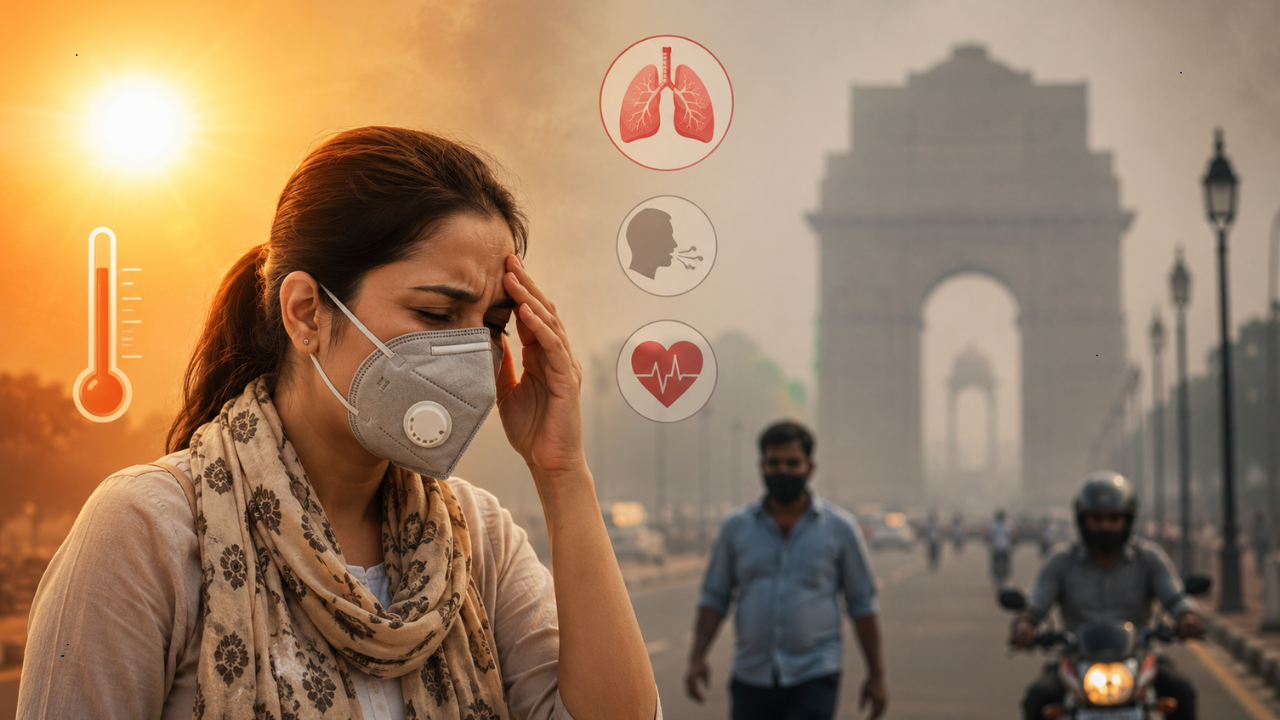
As Delhi and most of North India continue to face rising temperatures, doctors have raised concerns over worsening air pollution, warning that the combination is placing severe stress on the human body, even among otherwise healthy individuals.HealthandMe spoke to experts to understand how the overlap of heatwaves and polluted air can affect health.According to experts, extreme heat and pollution together are no longer just an environmental issue, but are emerging as a serious urban health emergency.Also Read: AYUSH Ministry Shares Yoga, Ayurveda Tips To Beat Heatwave StressDr. Amit Kumar Mandal, Senior Director - Pulmonology at Paras Health, explained that extreme heat combined with pollution forces multiple organs to work harder simultaneously.“People often think heatwaves only affect the skin or cause dehydration, but when extreme heat combines with high pollution levels, the body starts functioning as if it is constantly under attack,” he said.The expert explained that "the lungs are forced to work harder to filter hot, polluted air, while the heart simultaneously struggles to regulate body temperature. This invisible overload can quietly trigger inflammation, breathing distress, sudden BP fluctuations, and cardiac strain, even in people who otherwise consider themselves healthy".Symptoms Often MissedAlso read: What Is The Best Low-Cost Solution For Panic Attacks?Dr. Amit further noted that the subtle symptoms in the beginning often go unnoticed, making the combination even more dangerous.The symptoms increasingly being seen during such weather conditions include persistent tiredness, irritability, disturbed sleep, headaches, chest heaviness, unusual breathlessness.“Heat and pollution together are no longer just an environmental issue; they are emerging as a serious urban health emergency. Preventive care during summers now has to go beyond avoiding the sun; people need to actively protect their respiratory and cardiovascular health as well,” Dr. Amit told HealthandMe .How Prolonged Exposure Can Affect HealthDr. Rahul Punj, Senior Consultant - Internal Medicine at Yatharth Super Speciality Hospital, told HealthandMe that prolonged exposure to high temperatures and poor air quality can affect multiple systems in the body.“Rising heat and increasing pollution levels are becoming major health concerns, especially in urban areas. Prolonged exposure to extreme temperatures and poor air quality can lead to dehydration, heat exhaustion, breathing difficulties, allergies, skin issues, and can even worsen heart and lung diseases. Children, elderly people, pregnant women, outdoor workers, and patients with asthma, COPD, or other chronic illnesses need to be extra cautious during this period,” he said.How To Prevent Health RisksRead More: Ebola Cases Cross 900, Death Toll Tops 200; 10 Countries On High AlertDr. Rahul advised people to take preventive measures seriously during heatwave conditions. Preventive measures that can help reduce health risks include:staying hydrated, avoiding direct sunlight during peak afternoon hours, wearing light cotton clothes, using masks in polluted areas, maintaining proper indoor ventilation.The expert recommended people to also avoid strenuous outdoor activities during high pollution or heatwave alerts. Creating awareness and taking timely precautions is essential to protect public health from the growing impact of climate and environmental changes.Weather TodayResidents in Delhi continue to struggle against soaring temperatures and blazing sunshine. The India Meteorological Department (IMD) has issued a yellow alert for the next three days, warning of continued heatwave conditions along with strong surface winds during the afternoons and evenings.The maximum temperatures are expected to increase by a further 1°C-2°C within the next 24 hours and are forecast to stay high until May 27.The national capital recorded a maximum temperature of 43.6 degrees Celsius on Sunday, around 3.4 degrees above the seasonal average. The minimum temperature settled at 28.4 degrees Celsius in the morning, nearly two degrees above normal.Last week, the Commission for Air Quality Management (CAQM) invoked Stage 1 of the Graded Response Action Plan (GRAP) across Delhi-NCR after the city’s air quality slipped into the ‘poor’ category.