
- Health Conditions A-Z
- Health & Wellness
- Nutrition
- Fitness
- Health News
- Ayurveda
- Videos
- Medicine A-Z
- Parenting
Mumbai Locals Suffer Burns After Hydrogen Filled Balloons Erupt In Lift

Credit: X
Two people have suffered burn injuries in Mumbai after a cluster of gas-filled balloons exploded and turned into a ball of fire inside a residential building’s lift earlier this week.
The incident occured at Anmol Towers, a residential building opposite a petrol pump in Mumbai's Goregaon West and police have registered a case against the balloon vendor, according to NDTV.
CCTV footage shows a woman entering the lift with a small trolley, followed by a man carrying several balloons packed in a large bag. Moments later, the balloons mysteriously caught fire, leading to the blast inside the elevator.
Despite flames briefly covering the CCTV camera, the woman and two men were seen running out of the elevator seconds later. In the end, the clip shows the elevator doors shutting as flames erupt at the centre of the lift.
It was unclear what type of gas was used to inflate the balloons. However, while many consumers assume decorative balloons are filled with helium, a non-combustible gas, authorities and safety experts suggest that it is highly possible that hydrogen was used instead.
Mumbai police have urged the public to exercise caution and warned balloon sellers against using flammable gases, particularly in residential buildings and enclosed areas.
Why Is Hydrogen Dangerous?
Hydrogen has a very wide range of flammability in air (4-75 percent by volume) and requires very low energy to ignite. It often causes explosions rather than just fires, especially in confined spaces.
In high concentrations in enclosed areas, hydrogen acts as a simple asphyxiant by displacing oxygen, which can lead to dizziness, unconsciousness, or death. Additionally, hydrogen fires burn with a nearly invisible, pale blue flame, making them almost impossible to detect with the naked eye during daylight.
Moreover, hydrogen gas also burns faster than most conventional fuels, increasing the risk of deflagration (subsonic) or detonation (supersonic).
On the other hand, as a noble gas, helium has a completely filled outer shell of electrons, meaning it does not react with other elements or catch fire in the presence of oxygen and heat.
Along with this, unlike hydrogen, which is also lighter than air but highly explosive, helium will not ignite even if exposed directly to a flame or spark and it can can act as a buffer and actually suppress flames by displacing oxygen in the immediate area.
What To Do If You Suffer From Burns?
For minor burns, immediately run cool (not cold) water over the area for 10–20 minutes, remove jewelery or tight clothing near the injured area and cover with a sterile bandage. A minor burn might need emergency care if it affects the eyes, mouth, hands or genitals.
However, for serious and large burns, protect the burned person from further harm and ensure that they are breathing. Loosely cover the area with gauze or a clean cloth and raise the burned area above heart level, if possible.
As you call emergency services, watch for symptoms of shock which include cool, clammy skin, weak pulse and shallow breathing.
Seek immediate care for burns, which:
- May be deep, involving all layers of the skin.
- May cause the skin to be dry and leathery.
- May appear charred or have patches of white, brown or black.
- Are larger than 3 inches (about 8 centimeters) in diameter.
- Cover the hands, feet, face, groin, buttocks or a major joint, or encircle an arm or a leg.
- Are accompanied by smoke inhalation.
- Begin swelling very quickly.
Globally, about 10 million people experience burns and about 180,000 die from them each year.
Delhi HC Allows Sperm Extraction of Soldier in Coma: Doctors Call For Clearer IVF Guidelines
Credit: iStock
India needs clearer guidelines on reproductive rights, consent, and medical ethics, said doctors after the Delhi High Court, in a highly complex and sensitive case, granted permission for the extraction and cryopreservation of sperm of an Indian Army soldier in a persistent vegetative state.
As per the guidelines laid under the Assisted Reproductive Technology (ART) (Regulation) Act, 2021, it is important to have the written consent of both partners.
However, calling it “the right to reproductive autonomy,” Justice Purushaindra Kumar Kaurav allowed for sperm retrieval. The Court also cited the soldier's prior consent to undergo IVF treatment with his wife. "It constituted valid consent under the ART Act," LiveLaw reported.
What Is the Case All About?
The wife of an Indian Army soldier had approached the Court seeking directions to allow the retrieval and preservation of her husband's genetic material to enable her to undergo IVF.
Her husband, an Indian Army soldier, suffered a severe traumatic brain injury during deployment in Jammu and Kashmir in July last year and has since remained in a persistent vegetative state.
Before the incident, the couple had already opted for IVF and initiated procedures. However, the process was halted due to the husband's inability to provide fresh written consent as required under Section 22 of the ART Act, Live Law reported.
“While ...as on date there is no express indication of consent from the petitioner's husband, however, under the facts and circumstances of the present case, it is found to be fair, reasonable, and just for the respondents to undertake the necessary procedure/steps which are required to take the IVF treatment to its logical conclusion. But for this, the original consent given by the petitioner's husband shall stand vitiated, and the very purpose for acceding to the IVF treatment shall be rendered otiose,” said Justice Kaurav, in the Court's ruling.
“It is further directed that the petitioner's consent be considered as valid consent for her husband for the purposes of IVF procedure, if the same is required for any other step/procedure. The respondents shall not disentitle the petitioner on the sole ground that the petitioner's husband's written consent is absent,” the Court said.
HealthandMe spoke to IVF specialists to understand the procedure and implications around reproductive rights, consent, and medical ethics.
How Is Sperm Retrieval Performed in a Comatose Patient?
Dr Rachita Munjal, Director and Senior Consultant - Department of Fertility at Cloudnine Group of Hospitals, Gurugram, said that sperm retrieval and cryopreservation are possible in coma/vegetative patients, but success depends on timing and medical condition.
Also read: Explained: What Is Posthumous Reproduction?
In such conditions, sperm quality may be compromised, but assisted reproductive techniques can still make conception possible.
"Cryopreservation of sperm in men who are in a vegetative state or coma is medically complex but technically feasible in many cases, depending on the underlying condition and timing," the doctor told HealthandMe.
How sperm is retrieved
Since the person cannot ejaculate voluntarily, doctors use assisted techniques, such as
- Penile vibratory stimulation (PVS): Non-invasive; works if spinal reflexes are intact
- Electroejaculation (EEJ): Electrical stimulation under anesthesia to induce ejaculation
- Surgical sperm retrieval: If the above fail. Testicular sperm aspiration (TESA), Testicular sperm extraction (TESE)
- Percutaneous epididymal sperm aspiration (PESA)
These are typically performed by urologists or fertility specialists with consent from legal guardians or prior consent of the patient. Once sperm is obtained:
- Sperm is analyzed (count, motility, morphology)
- Mixed with a cryoprotectant to prevent cell damage
- Gradually cooled and stored in liquid nitrogen at –196°C
- Can be preserved for years without significant degradation
- Cause of coma (trauma vs neurological disease)
- Time since coma onset (earlier is better)
- Baseline fertility health
- prolonged immobility
- infections
- medications (sedatives, antibiotics)
- hormonal disruption
Are There Any Ethical Considerations
There are many ethical considerations in such cases, said Dr Munjal, noting that this requires explicit prior consent or legal authorization.
“Ethical concerns include reproductive rights and future child welfare,” she added.
Dr. Sabine Kapasi, IVF Specialist & Public Health Strategist, called it “an emotionally sensitive case where law, ethics, and reproductive rights intersect”.
“While prior IVF consent may indicate shared intent to build a family, it does not always automatically equal consent for gamete retrieval during permanent incapacity. Such decisions should ideally involve explicit consent, ethics review, and psychological counseling for the family,” the expert said.
This is not the first time that sperm have been retrieved from a comatose patient.
In 2024, a Kerala High Court permitted the extraction of the sperm of a childless couple where the husband was in a brain-dead condition and kept alive with ventilator support. The Court allowed the extraction and cryopreservation of the gametes, without the written consent of the husband.
"India now needs clearer ART guidelines for coma, posthumous, and incapacity-related reproduction to avoid future disputes. Compassion is important, but medical ethics and long-term child welfare must remain central,” Dr Kapasi noted.
Vinod Kambli Battles ‘Memory Loss’ at 54; Signs of Blood Clot in the Brain

Vinod Kambli has been recovering slowly, but still dealing with memory problems. (Photo credit: PTI)
Former Indian cricketer Vinod Kambli is at risk of suffering from a brain stroke and is battling serious health challenges, says Marcus Couto, a friend of Kambli. In an interview with the Times of India, he revealed that Kambli had been hospitalised 18 months ago and has a clot in his brain. Because of this, his memory is impaired, Couto told TOI. He further added that Kambli remembers details briefly and then forgets them again. While Kambli has given up drinking alcohol, his friend revealed that he sometimes smokes despite it being forbidden. For Kambli’s fans, this news comes as an unfortunate update—not to forget the lingering risk of a brain stroke, given the current scenario.
Also Read: US CDC Warns Rising Drug-Resistant Shigella Cases A Public Health Threat: Here’s How To Prevent
Vinod Kambli’s health has reportedly improved recently, but concerns linger regarding his neurological health and memory. The 54-year-old is reportedly able to walk, but his memory remains inconsistent. Reports suggest that he recalls only fragments from his life, despite the fact that his health has not deteriorated in recent months. While the clot in his brain cannot be removed, his friend Couto confirmed that doctors have recommended extra care due to the risk of a brain stroke. Reports suggest that Kambli’s friends in the cricketing community have come forward to offer financial support—Sunil Gavaskar, Sachin Tendulkar, and Kapil Dev, to name a few.
Vinod Kambli is recovering despite challenges
On the brighter side, reports suggest that Kambli’s mobility has improved. Earlier relying on furniture for movement, he now walks with the help of a support stick—efforts are underway to enroll him in physiotherapy. While daily challenges persist, Kambli spends most of his time at home undergoing health check-ups. While undergoing treatment at Breach Candy Hospital, he had recovered by 60 per cent.
Are blood clots always deadly?
Blood clots usually form as the body’s natural response to a physical injury. They help prevent excessive loss of blood due to uncontrolled bleeding. However, when these clots form inside blood vessels, they can obstruct blood flow and even rupture, thereby leading to severe complications such as a stroke, damage to brain cells, and even death. In some cases, blood clots in the brain can lead to mild episodes of seizures and paralysis. Therefore, it is important to ensure prompt medical treatment.
Symptoms of a blood clot in the brain
A blood clot in the brain is known as an embolism, and its symptoms often appear suddenly and require immediate medical attention. Some of the symptoms are:
- Weakness or numbness in one part of the body
- Dizziness
- Severe headaches
- Speech difficulties
- Disorientation
- Memory loss
- Behavioural changes
- Sudden, unexplained seizures
- Double or blurred vision
- Vertigo or loss of balance
Ozempic and Wegovy Can Help Reverse Severe Fatty Liver Disease, Suggests Mouse Study
Credit: iStock
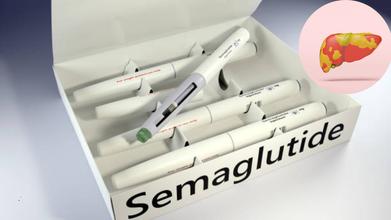
While Ozempic and Wegovy are best known for treating diabetes and obesity, a new mouse study has shown promise for treating liver disease, particularly metabolic dysfunction-associated steatohepatitis (MASH)—fatty liver disease.
MASH is a severe form of fatty liver disease in which fat buildup, inflammation, and tissue scarring can lead to cirrhosis and liver failure.
The benefits seen were independent of weight loss, revealed the study, which challenges long-held assumptions about how GLP-1 medicines work in the liver and could reshape how physicians treat metabolic liver disease.
Researchers at Mount Sinai Hospital found that patients taking semaglutide—the active ingredient in the popular weight loss drugs—showed improvements in the fatty liver condition that went beyond what could be explained by blood sugar control and weight loss alone.
The finding, published in the journal Cell Metabolism, explained that semaglutide, which mimics the gut hormone GLP-1, acts directly on a subset of liver cells to improve organ function and does so independently of weight loss.
"We've seen in clinical trials that patients who lose very little weight see the same reductions in liver inflammation, scarring, and enzyme levels as those who lose a great deal of weight. Now we know why," said Dr. Daniel Drucker, a senior investigator at the Lunenfeld-Tanenbaum Research Institute, who led the study.
"We're not saying weight loss isn't important, because many things improve when patients lose weight. But we now know that weight shouldn't be the only measure of success, because GLP1 medicines will improve liver health whether or not the patient loses weight," he added.
Semaglutide Could Reverse Fatty Liver Disease
There is a prevailing assumption that liver cells do not carry the receptor that semaglutide binds to, meaning the drug has no direct route to the organ.
To better understand, Postdoctoral fellow Dr. Maria Gonzalez-Rellan combined sophisticated mouse models of MASH with deep molecular analyses of liver cells.
The results identified two cell types carrying semaglutide receptors: liver sinusoidal endothelial cells (LSECs) and immune T cells.
Although LSECs account for only about 3 per cent of liver cell volume, they proved to be the key driver of semaglutide's liver benefits.
LSECs line the tiniest blood vessels in the liver and are studded with pores that allow them to act as a molecular sieve, filtering substances passing between the liver and the bloodstream.
“Semaglutide reversed MASH in mice that lacked the brain receptors controlling appetite, demonstrating that weight loss is not required for liver benefits,” Dr. Gonzalez-Rellan said.
In a further test, mice lacking LSEC receptors showed no liver improvement on semaglutide even after losing 20 per cent of their body weight.
How This Will Impact Patients
The findings carry practical implications. GLP-1 medicines have become widely prescribed, yet their mechanism of action in the body, beyond appetite suppression and blood sugar control, is not well understood
Knowing that semaglutide improves liver health independently of weight loss could influence prescribing decisions.
Physicians may choose lower doses that avoid the side effects associated with the higher doses needed for significant weight loss, potentially also lowering costs for patients, said Dr. Drucker.
- Follow Us :


© 2024 Bennett, Coleman & Company Limited