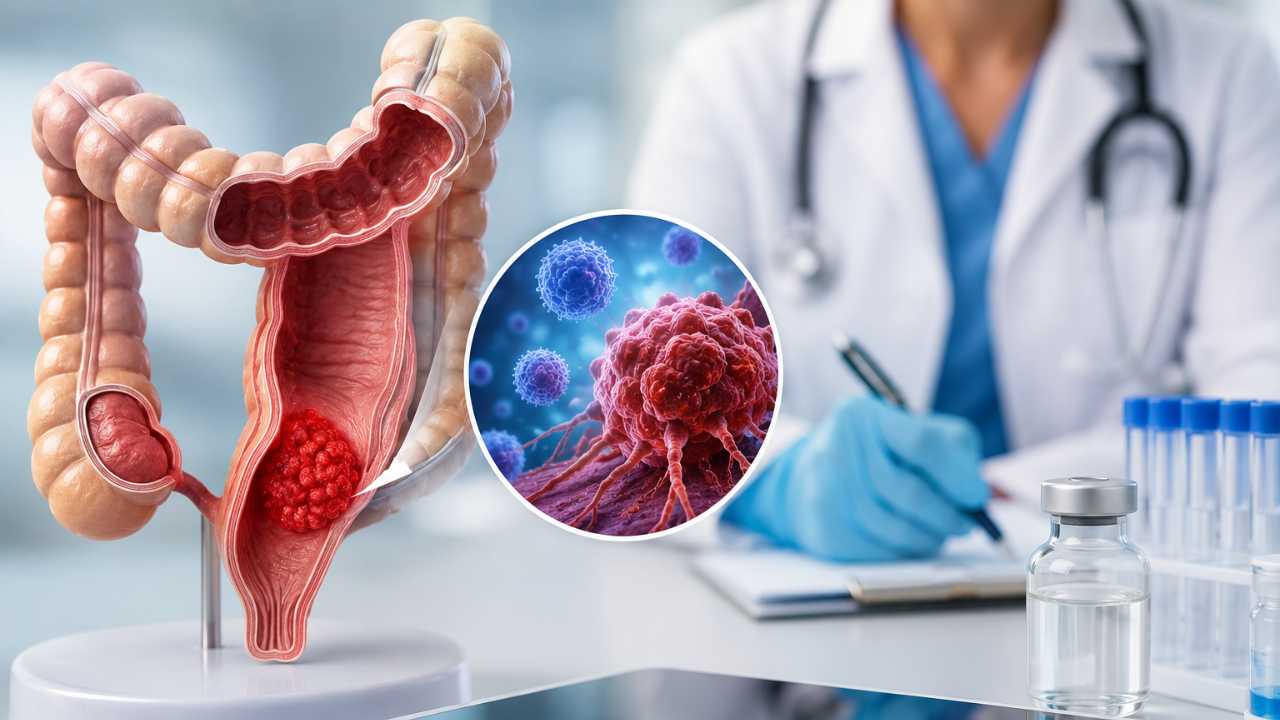
A landmark clinical trial has found that four in five people with early-stage rectal cancer could avoid major surgery after receiving chemoradiotherapy and keep their rectum intact. This means that surgery would be reserved only for patients who really need it. The findings from the STAR-TREC trial, funded by Cancer Research UK and Stand Up To Cancer, could completely change the way some people with early-stage rectal cancer are treated. Researchers from University College London, the University of Birmingham and the University of Leeds found that combining chemotherapy and radiotherapy, followed by monitoring closely, allowed 80% of patients to avoid major surgery and keep their rectum. More About The STAR-TREC Approach Rectal cancer is usually treated with surgery to remove the affected parts of the rectum. While this can remove the tumour, major surgery can have lasting effects, including changes in bowel function, sexual and urinary problems, and the possibility of living with a permanent colostomy bag. Patients first receive chemoradiotherapy, which combines radiation with chemotherapy to shrink or eliminate the cancer. Doctors then closely monitor to see how the tumour responds or if the cancer grows. If the cancer disappears or responds satisfactorily, patients can avoid major surgery. Those whose cancer does not respond adequately may still need to undergo surgery.Also read: Two-Decade Long Study Sees 50% Higher Risk Of Distal Colon Cancer In Men With High Dietary Nitrite Intake Four In Five Patients Avoided Surgery The trial found that four out of five patients were able to keep their rectum, avoiding the major operation. This doesn't mean that surgery is no longer necessary for rectal cancer. The findings suggest, instead, that some carefully selected patients can be treated without removing their rectum. Researchers say this could be particularly important because around 4,100 people in England are diagnosed with early-stage rectal cancer each year.Also read: PM2.5 Linked To 8.82 Million Global Cancer Cases, Accounts for Largest Share Among Pollutants: Study Why Could This Be Milestone In Rectal Cancer Treatment? Removing part or all of the rectum can affect how bowel function even if the cancer treatment is successful. Some patients experience increased bowel frequency, urgency, leakage or difficulty controlling bowel movements. Others may require a stoma, in which waste leaves the body through an opening in the abdomen into a colostomy bag. Avoiding major surgery when it is medically safe could therefore not only preserve an organ but also save the person's quality of life. Michelle Mitchell, chief executive of Cancer Research UK, described the findings as potentially “life-changing for thousands of people.” The non-surgical approach does not mean patients can simply finish treatment and forget about the cancer. A major concern with preserving the rectum is that cancer could return to the same area. That's why patients following this approach require constant intensive surveillance, including scans, examinations, and other necessary tests. If cancer returns or fails to respond adequately to the treatment, surgery for rectum removal remains an important treatment option. The study therefore represents a shift from routinely removing the rectum upon confirmation of cancer diagnosis toward a less invasive approach based on response, where doctors can determine whether surgery is actually necessary for an individual patient.