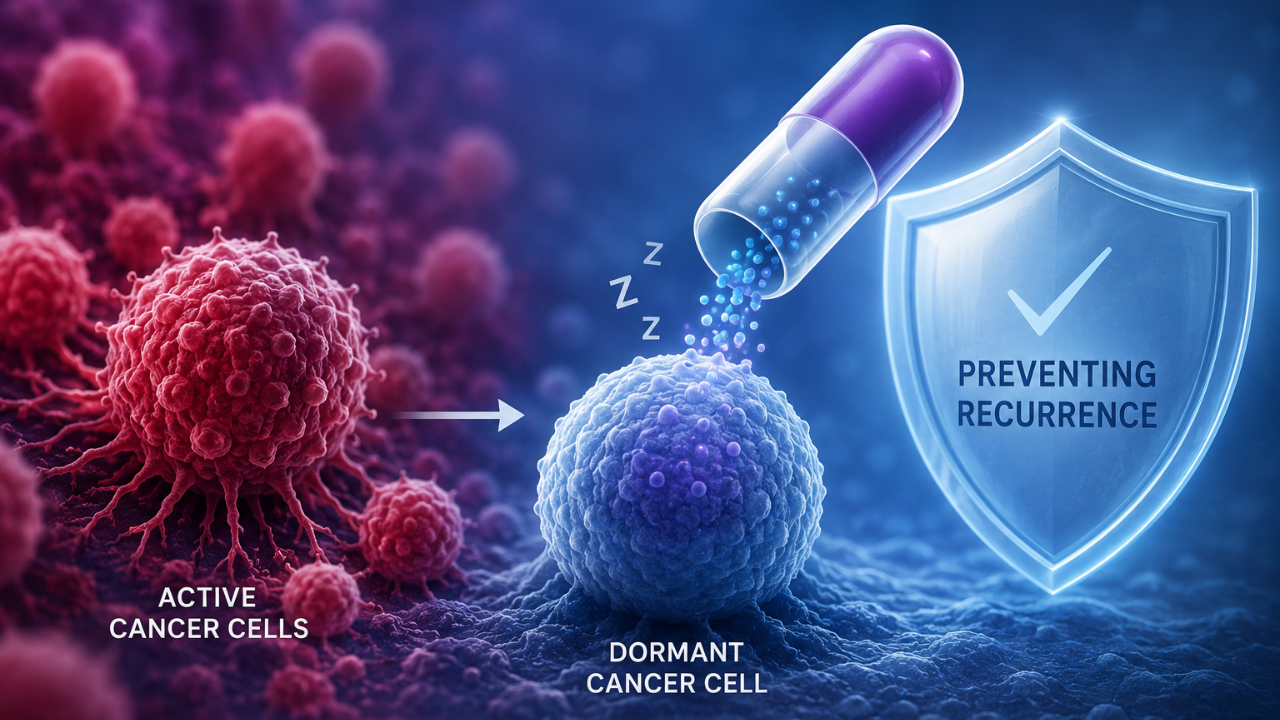
Cancer recurrence remains one of the biggest challenges in cancer treatment. Dormant tumour cells are capable of surviving treatment and therapy and can reactivate months or even years later. Now, researchers say that a new generation of experimental drugs designed to target these dormant cancer cells could offer a promising strategy to prevent the disease from recurring.The findings come as scientists have been increasingly focusing on tumour dormancy, a state in which cancer cells stop actively multiplying but remain hidden in the body. They become resistant to chemotherapy and other conventional cancer treatments. The research suggests that targeting the biological pathways controlling dormancy may help stop these cells from getting reactivated and forming new tumours or metastases.According to researchers, dormant cancer cells are one of the key reasons why some patients experience relapse long after completing treatment."Dormant tumour cells are a major driver of cancer recurrence and metastasis," the researchers noted, stating that therapies aimed at controlling or eliminating these cells could change how cancer is treated and managed in the future.About The Experimental Drugs Also read: Bone Marrow Transplant: The Quiet Revolution Transforming India's Fight Against Blood CancersUnlike traditional cancer treatments that mainly attack rapidly dividing cells, these new experimental drugs target the molecular signals that allow dormant cancer cells to survive and go unnoticed in the body.Researchers are investigating several approaches, including blocking pathways that trigger dormant cells to become active again, disrupting the cells' survival mechanisms, and making them more vulnerable to conventional cancer therapies. Some experimental treatments are also being tested alongside immunotherapy to improve the body's ability to detect and destroy these hidden cells on time. Scientists say this approach could be especially important for cancers known to recur years after treatment, including breast, lung and certain gastrointestinal cancers.Why Do Some Cancers Return? Also read: NHS Breast Cancer Screening Misses 95% Of High-Risk Young Women In UK: Why Personalized Care Could Be KeyCancer recurrence can happen when a small number of cells survive surgery, chemotherapy or radiation. These cells may remain inactive for long periods of time before starting to grow again, eventually leading to a relapse or metastatic diseas.Researchers believe that the environment of the tumour, immune responses, inflammation and changes in cellular structure and metabolism all play a role in determining whether dormant cancer cells remain inactive or become aggressive again.While the findings encourage advanced pathways for cancer treatments, experts caution that most drugs that target tumour dormancy are still in the experimental or early clinical trial stage.Rather than only treating visible tumours, future therapies may also focus on preventing hidden cancer cells from ever becoming active again, potentially reducing the risk of relapse years after successful treatment. More studies are needed to determine whether they can really reduce cancer recurrence and improve long-term survival in patients.Viagra May Prevent Cancer From Spreading The promising research comes after a new study found that Viagra, best known as a treatment for erectile dysfunction, may also help stop cancer from spreading. Researchers from the Weizmann Institute of Science in Israel found that sildenafil, the active ingredient in Viagra, may enhance a newly identified cholesterol-regulating mechanism that could be used to curb cancer metastasis.The study, published in Cancer Research, showed that sildenafil limits cancer cells' ability to use cholesterol, an essential component of cell membranes.Cholesterol is especially important for cancer cells that break away from the primary tumor, travel through the body, and invade distant organs. When their access to cholesterol is reduced, these cells have greater difficulty forming metastases.