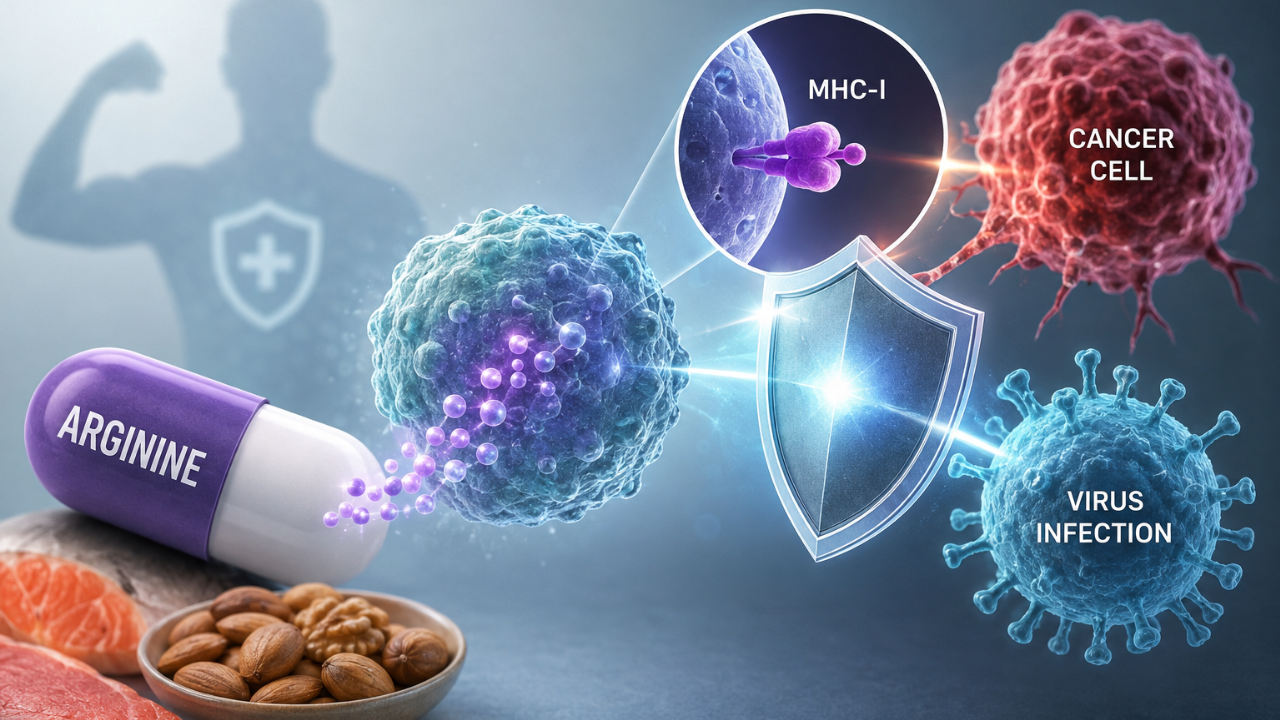
A common amino acid found in protein-rich foods, which is also available as an dietary supplement, may have surprising potential for strengthening the body's immune response against cancer and viral infections, according to a new study.Published in the journal Cell, researchers from Rockefeller University found that arginine plays a key role in helping immune cells detect and attack abnormal cells. Their findings suggest that restoring arginine levels could improve the effectiveness of the body's natural defences and may one day strengthen cancer or antiviral treatments. "Our work reveals how a lack of arginine interferes with the immune system, and suggests that upping arginine intake could prove beneficial," said Qiushuang Wu, the study's first author and a postdoctoral researcher at Rockefeller University. "Perhaps that means it could be used in combination with other therapies to treat both cancer and viral infections."What Are The Findings?The team investigated how low arginine levels affect gene expression in models of colon cancer, influenza and SARS-CoV-2 infection. They found that arginine deficiency disrupted the production of major histocompatibility complex class I (MHC-I) proteins, molecules that help cells, allowing the immune system to detect and fight virus-infected or cancerous cells in the body. The researchers discovered that when arginine was low, ribosomes, the cellular machinery responsible for making proteins, stalled while producing MHC-I proteins. As a result, infected or abnormal cells became harder for the immune system to identify. However, after giving a moderate amount of arginine, roughly equivalent to a couple of over-the-counter tablets, restored the production of these stalled proteins.Also read: Bone Marrow Transplant: The Quiet Revolution Transforming India's Fight Against Blood Cancers Many cancers and viral infections are known to alter amino acid levels in the body. The new findings suggest that these changes may weaken immunity in an unexpected way by limiting the production of proteins essential for a stronger immune response. Senior author Sohail Tavazoie, head of Rockefeller University's Laboratory of Systems Cancer Biology, believes the discovery could become an asset for future clinical research, especially in cancer treatment studies. "Arginine supplementation could be readily tested in patients receiving immunotherapies or given to high-risk populations exposed to viral pathogens," Tavazoie said. "Considering that arginine is inexpensive and readily available, we hope that therapeutic and preventative studies could be undertaken soon." What Is Arginine? Arginine is an essential amino acid, meaning the body usually produces. Additional amounts of of arginine may be needed during illness, injury or periods of physiological distress to the body. It is naturally found in foods such as meat, poultry, fish, dairy products, nuts, seeds and legumes. It is also sold as a dietary supplement. It also serves as a building block for nitric oxide, a molecule involved in blood flow and immune function. While the findings are promising, the researchers emphasise that the study does not prove that taking arginine supplements can prevent or treat cancer or viral infections in people. Reliable human clinical trials are still needed to determine whether the supplementation is safe, effective and beneficial.