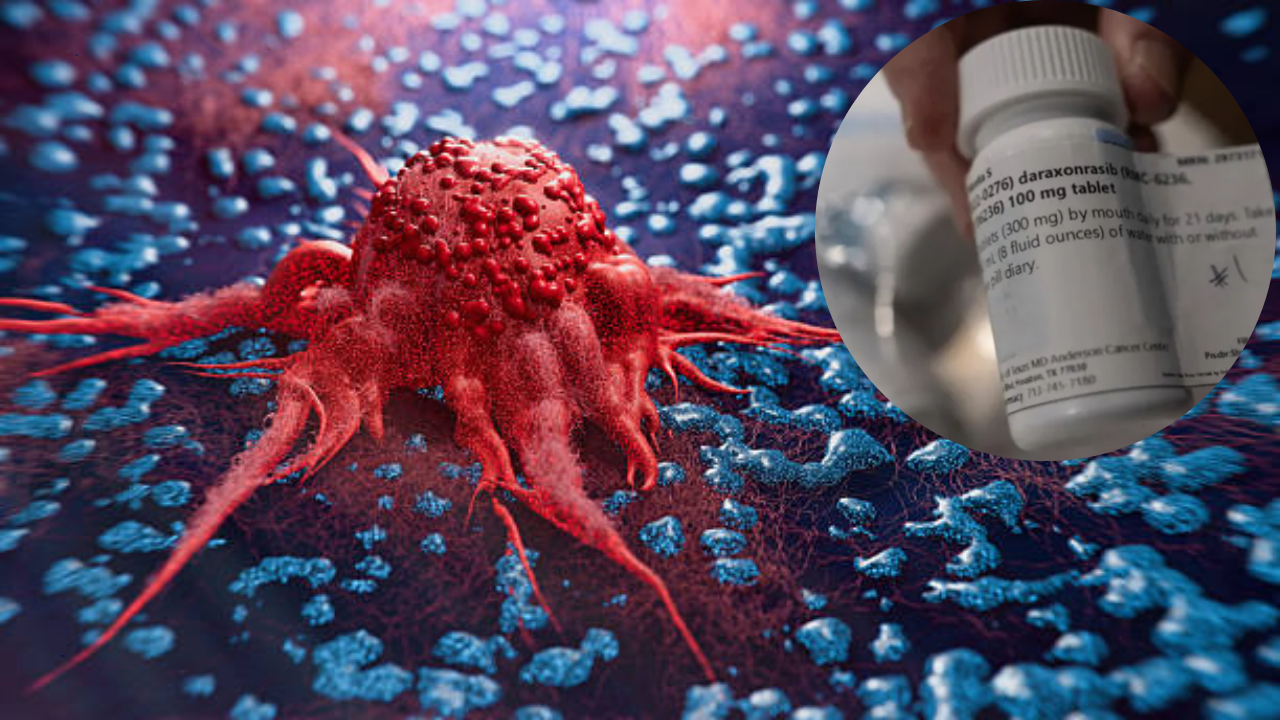
Daxaronrasib has been touted as a game-changing treatment for pancreatic cancer, a disease that has long remained one of the toughest challenges in oncology.Developed by the US-based late-stage clinical oncology company Revolution Medicines, daxaronrasib has shown promise in improving survival rates among patients with metastatic pancreatic ductal adenocarcinoma (PDAC).In a clinical trial, daxaronrasib demonstrated a median overall survival of 13.2 months, compared with 6.7 months for standard chemotherapy.Experts believe the drug may also prove effective against other cancers, including cancerous tumors in lung and ovaries.The drug works by targeting mutations in the KRAS gene, which are found across multiple cancer types, including lung, colorectal, ovarian, endometrial and a type of bile duct cancer known as cholangiocarcinoma.“Daxaronrasib provides a clear and highly meaningful step forward for patients with pancreatic cancer who have experienced progression on prior treatment, typically chemotherapy,” said Brian M. Wolpin, professor of medicine at Harvard Medical School and principal investigator of the trial.“Pancreas cancer may be the first for this drug, but there will be others,” he added, noting that “Now the floodgates open.”What Is Daxaronrasib? How Does It Work?Also read: Former US Senator Ben Sasse Opens Up About Battle With Terminal Stage 4 Pancreatic CancerDaxaronrasib is a daily oral pill that has demonstrated statistically significant and clinically meaningful improvements in progression-free survival (PFS) and overall survival (OS) compared with standard intravenous chemotherapy.Described as a multi-selective inhibitor of RAS(ON) proteins, it is the first investigational drug in a new class of RAS inhibitors designed to target a broad spectrum of cancer-causing RAS mutations.The drug works by blocking KRAS signalling proteins that drive tumor growth.“It’s been incredibly hard to drug that mutation,” Wolpin said, NBC News reported. “That mutated protein is like a round ball, and you just can’t get the drug to stick to it, to block the effect.” It’s only “through some really amazing chemistry work,” he said, that scientists have been able to develop a drug to work on the mutation.Daraxonrasib is that first drug. It works by pairing up with a protein called cyclophilin A inside cells, acting like a “molecular glue,” Wolpin said, glomming onto the mutated protein.Pancreatic cancer is considered one of the most RAS-dependent cancers, with more than 90 per cent of patients carrying tumours driven by RAS protein mutations. Similar RAS-targeting drugs are also being developed for pancreatic, lung and colon cancers.“It’s the beginning, not the end,” said Elizabeth Jaffee in comments to The New York Times.The findings was presented at a plenary session of the American Society of Clinical Oncology’s meeting in Chicago on May 31, and simultaneously published in the New England Journal of Medicine.Read More: Ozempic-Style Drugs May Slowdown Cancer, Study FindsWhat Are The Side Effects?According to the company, “Daxaronrasib was generally well tolerated, with a manageable safety profile and with no new safety signals.”Previous studies have shown that rash is the most common side effect. Other frequently reported adverse effects include:Mouth soresDiarrhoeaNauseaVomitingFDA Fast-Tracks DaxaronrasibBased on the first interim analysis, all progression-free survival and overall survival results are now considered final.Revolution Medicines said it plans to submit the data to global regulators, including the U.S. Food and Drug Administration (FDA), as part of a future New Drug Application under a Commissioner’s National Priority Voucher.