
- Health Conditions A-Z
- Health & Wellness
- Nutrition
- Fitness
- Health News
- Ayurveda
- Videos
- Medicine A-Z
- Parenting
New Warning On Ozempic Use In Australia, After Study Links Popular Weight Loss Drugs With Suicidal Thoughts

Credits: iStock
Ozempic, Wegovy, Saxenda, Trulicity, Mounjaro, all from different brands, with different active ingredient but all are GLP-1-type drugs, which have now been linked with depression, suicidal thoughts, and changes in mood and behavior. As a result, the Therapeutic Goods Administration (TGA), Australia released a safety alert on Monday to update the product warnings of GLP-1-type drugs.
This is to "ensure consistent information regarding the potential risk of suicidal thoughts or behaviours". The alert said, "The updates follow investigations by TGA and other international regulators. Patients taking any of these medicines should tell their health professional if they experience new or worsening depression, suicidal thoughts or any unusual changes in mood or behaviour."
While the TGA noted that not enough evidences were there to conclude the drugs caused such changes however, there is indeed a complex relationship between mental illness and conditions GLP-1 drug treat, that could be associated with suicidal thoughts, which cannot be ignored.
GLP-1 Drugs Sold In Australia
- Ozempic (semaglutide)
- Wegovy (semaglutide)
- Saxenda (liraglutide)
- Trulicity (dulaglutide)
- Mounjaro (tirzepatide)
Weight Loos Drugs For Women
The TGA has issued a separate warning about a possible link between the GLP-1 drug tirzepatide, sold as Mounjaro, and reduced effectiveness of oral contraceptives. The regulator said it cannot rule out the possibility that the medication may interfere with how well oral birth control works. As a precaution, product information for tirzepatide has been updated to include clearer advice for patients who rely on the pill.
According to the TGA, women who are taking tirzepatide should consider switching to a non-oral contraceptive or using an additional barrier method for four weeks after starting the medicine. The same advice applies for four weeks after each time the dose is increased.
The alert also reminded patients that GLP-1 medications should not be used during pregnancy.
What Are GLP-1 Drugs And How Do They Work?
GLP-1 drugs have become widely known for helping people manage type 2 diabetes and obesity. They work by copying the action of a natural hormone that slows digestion and helps people stay full for longer. Their popularity has skyrocketed over the past few years, but there has also been ongoing discussion about their potential mental health effects.
Some studies overseas have suggested that people with anxiety or depression might face a higher risk of depression, anxiety or suicidal thoughts when taking these medications.
The US Food and Drug Administration has been reviewing reports of suicidal thoughts among people using GLP-1 drugs. So far, the agency says it has not found evidence that the medications directly cause these thoughts, although it notes that the number of cases is small and it cannot completely rule out a possible risk.
The TGA highlighted similar concerns in its safety update. The agency has received 72 reports of suicidal thoughts from people taking GLP-1 drugs, along with a smaller number of reports involving suicide, attempted suicide or depression-related suicide.
With an estimated half a million Australians now using these medicines, the regulator launched a detailed review and sought advice from the Advisory Committee on Medicines. The committee concluded that the available evidence does not support a clear link between GLP-1 drugs and suicidal or self-harming behaviour. However, it recommended updating product information to ensure consistency and to promote awareness without suggesting a proven causal connection.
Virus Without Vaccine Hits California; No Need To Worry, Say Public Health Officials
Credits: Canva
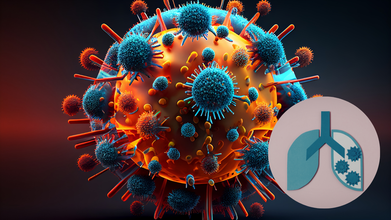
Sick days are again piling up with a respiratory disease, not COVID-19 or the flu. This disease is most likely the one Americans have not heard of. This is HMPV or human metapneumovirus. Doctors have asked people to stay vigilant as seasonal flu virus could lead to pneumonia and bronchitis, and it is spreading in California wastewater and around the country. However, as per public health officials, there is nothing to get worried at this point.
As per the public database WasterwaterScan Dashboard, high levels of HMPV were detected across Northern California cities. The highest levels were reported in Redwood City, whereas elevated levels were found in San Francisco Bay Area and Napa's Wine Country. What's more dangerous is that this virus is without a vaccine.
The good news is that in other parts of country HMPV remains lower. However, the Centers for Disease Control and Prevention (CDC) noted that data from October 2025 shows the cases are trending up, especially during winter and spring.
Dr. Matthew Binnicker, director of the Clinical Virology Laboratory at Mayo Clinic, as reported by The Independent said, "In the late winter, early spring, it can account for five percent to 10 percent of all the respiratory infections that we diagnose in the United States. So it's definitely out there." Experts explain that other viruses like HMPV or influenza get a chance when COVID is quieter.
Read: HMPV Virus Cases Surging In California, New Jersey: Is It Dangerous?
Virus Without A Vaccine: What Is HMPV?
HMPV was first discovered in 2001 and is part of the Pneumoviridae family along with the Respiratory syncytial virus (RSV).
HMPV most likely spreads from an infected person to others through:
- the air by coughing and sneezing
- close personal contact, such as touching or shaking hands
- touching objects or surfaces that have the viruses on them, then touching the mouth, nose, or eyes
In the US, HMPV circulates in predictable patterns each year, typically beginning in winter and lasting through spring.
The usually self-limiting and mild symptoms typically last 4 to 5 days. These include:
- cough
- fever
- nasal congestion
- shortness of breath
People at risk include:
- elderly people
- children
- people with comorbidities
"The HMPV is not deadly, and there is no evidence of mortality or a severe transmission rate," former Indian Council of Medical Research (ICMR) scientist, Dr. Raman Gangakhedkar, told IANS, during the virus's outbreak in India in 2025.
“The virus may cause pneumonitis-like illness, but the mortality rates are almost unknown so far. HMPV has a global prevalence of about 4 per cent,” he added.
While no vaccine or treatment can prevent HMPV infection, to avoid the infection, individuals must:
Practice good hygiene and cover your mouth and nose with a tissue when coughing or sneezing, or use your elbow, not your hands, for it. And wash your hands properly, especially in healthcare settings.
Why Are People Hearing About The Virus Without Vaccine Now?
The reason people have not heard about it before is because its symptoms are nearly indistinguishable from other respiratory infections, so often it could go undiagnosed. Furthermore, earlier the COVID cases and influenza cases sparked up, which deviated the attention from HMPV. Now, with the season gone, and increased awareness around respiratory illnesses, greater attention to viruses like HMPV is also paid.
1 In 7 Indians Affected By Mental Health Disorders; Govt To Launch NIMHANS-2 To Boost Care

Credit: Canva
One in seven Indians, or over 14 percent of the population, suffers from some form of mental health disorder. Amid an increasing treatment gap -- up to 90 percent -- seen in several states, especially in North India, the government today reiterated the plan of launching a second National Institute of Mental Health and Neurosciences (NIMHANS) in the northern states.
NIMHANS-2 was first announced by Finance Minister Nirmala Sitharaman during the Union Budget 2026-27, to deliver specialized care for mental health and neurological disorders in north India.
Health experts and policymakers, as part of the government-led Post-Budget Webinar series, highlighted the growing burden of mental and neurological disorders in India and also stressed the urgent need to strengthen institutional capacity to meet emerging healthcare demands.
"One in seven Indians is affected by mental health disorders, while several states continue to face a treatment gap ranging from 70 to 90 percent," the experts said.
Noting that Non-Communicable Diseases (NCDs) account for over 60 percent of deaths in the country, they added that "neurological and mental health conditions are among the leading contributors to disability-adjusted life years (DALYs)," among the citizens.
Need For Tertiary Neuro-psychiatric Care
To address these, the experts called for ramping up tertiary mental health institutions and expanding specialized services.
The session, moderated by Vijay Nehra, Joint Secretary, Ministry of Health and Family Welfare, highlighted that North India currently lacks adequate tertiary neuro-psychiatric care facilities. These include areas such as:
- advanced neuroimaging,
- neurocritical care,
- specialized neurological services
Further, making a virtual address at the Post-Budget Webinar, Union Health Minister JP Nadda also highlighted the government’s focus on strengthening mental healthcare services in the country.
"NIMHANS-2 will be established in North India to expand advanced clinical care, training, and research," Nadda said.
"In addition, the Central Institute of Psychiatry, Ranchi, and the Lokopriya Gopinath Bordoloi Regional Institute of Mental Health, Tezpur, will be upgraded as regional apex institutions to strengthen mental healthcare services in the eastern and north-eastern regions," he added.
Meanwhile, the experts also stressed the need to improve services in underserved and geographically remote regions, including the northeastern states, through better infrastructure, capacity building, and targeted deployment of trained mental health professionals.
They also discussed strategies for expanding advanced neuro-psychiatric care and reinforcing India’s overall mental healthcare ecosystem. They proposed:
- Adopting a hub-and-spoke model supported by digital health platforms
This would allow tertiary institutions and centers of excellence to provide technical guidance, specialist consultations, and clinical support to district hospitals and community-level health facilities.
"Such a model would strengthen referral pathways and ensure that specialized mental health services are accessible to people even in remote and rural areas," the experts said.
- Integrating services under Tele-MANAS
Both existing and upcoming campuses of NIMHANS must be integrated , as this will enable a robust nationwide tele-mental health network that ensures
- timely counselling,
- psychological support,
- specialist consultations
- Digital follow-up systems
The experts called for the seamless integration of healthcare facilities, aligned with the vision of the Ayushman Bharat Digital Mission and the ABHA ID ecosystem. This, they said, will
- enable continuity of care,
- Improve monitoring of patients,
- Lead to better clinical outcomes
- A national Brain-Mind Cloud Network
The Network proposed under the National Health Mission would connect premier institutions such as All India Institute of Medical Sciences (AIIMS), state medical colleges, and primary healthcare centers through a digitally integrated platform.
It could also facilitate
- unified mental health records,
- AI-based screening tools,
- data-driven clinical decision support systems,
- tele-neuro-psychiatric hubs at regional centers.
HMPV Virus Cases Surging In California, New Jersey: Is It Dangerous?
Credit: Canva
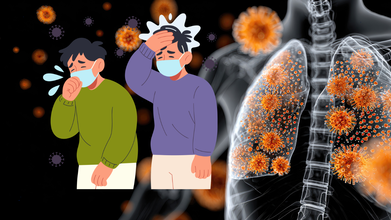
California and New Jersey in the US are seeing an uptick in cases of human metapneumovirus (HMPV) -- a virus with no vaccine or treatment.
According to the US Centers for Disease Control and Prevention (CDC), HMPV can cause upper and lower respiratory disease. There is currently no vaccine to prevent it, and no specific antiviral therapy to treat it.
"Most people will recover on their own," the agency noted, but advised people who get sick to drink plenty of liquids, stay home, and rest.
As per the CDC's respiratory dashboard, the cases of HMPV steadily ticked up since November 2025. It accounted for over 5 percent of positive tests the week of February 14 through February 21.
While HMPV is not a "new" virus, having first been discovered in 2001, cases haven't spiked to this level in the US since an outbreak in April 2025, USA Today reported.
The New Jersey Respiratory Surveillance Report cited that about 4 percent of residents in the state are testing positive for HMPV. The HMPV cases, accompanied by RSV, COVID, and flu cases, are surging, increasing the number of people seeking emergency medical care.
As per the public database, WastewaterScan Dashboard, HMPV is rampant in Northern California -- specifically San Francisco, Marin, Vallejo, Napa, Novato, Santa Rosa, Sacramento, and Davis, the Independent UK reported.
What Is HMPV? Is It Dangerous?
HMPV was first discovered in 2001 and is part of the Pneumoviridae family along with the Respiratory syncytial virus (RSV).
HMPV most likely spreads from an infected person to others through:
- the air by coughing and sneezing
- close personal contact, such as touching or shaking hands
- touching objects or surfaces that have the viruses on them, then touching the mouth, nose, or eyes
In the US, HMPV circulates in predictable patterns each year, typically beginning in winter and lasting through spring.
The usually self-limiting and mild symptoms typically last 4 to 5 days. These include:
- cough,
- fever,
- nasal congestion,
- shortness of breath
People at risk include:
- elderly people,
- children,
- people with comorbidities
"The HMPV is not deadly, and there is no evidence of mortality or a severe transmission rate," former Indian Council of Medical Research (ICMR) scientist, Dr. Raman Gangakhedkar, told IANS, during the virus's outbreak in India in 2025.
“The virus may cause pneumonitis-like illness, but the mortality rates are almost unknown so far. HMPV has a global prevalence of about 4 per cent,” he added.
While no vaccine or treatment can prevent HMPV infection, to avoid the infection, individuals must:
Practice good hygiene and cover your mouth and nose with a tissue when coughing or sneezing, or use your elbow, not your hands, for it. And wash your hands properly, especially in healthcare settings.
- Follow Us :


© 2024 Bennett, Coleman & Company Limited