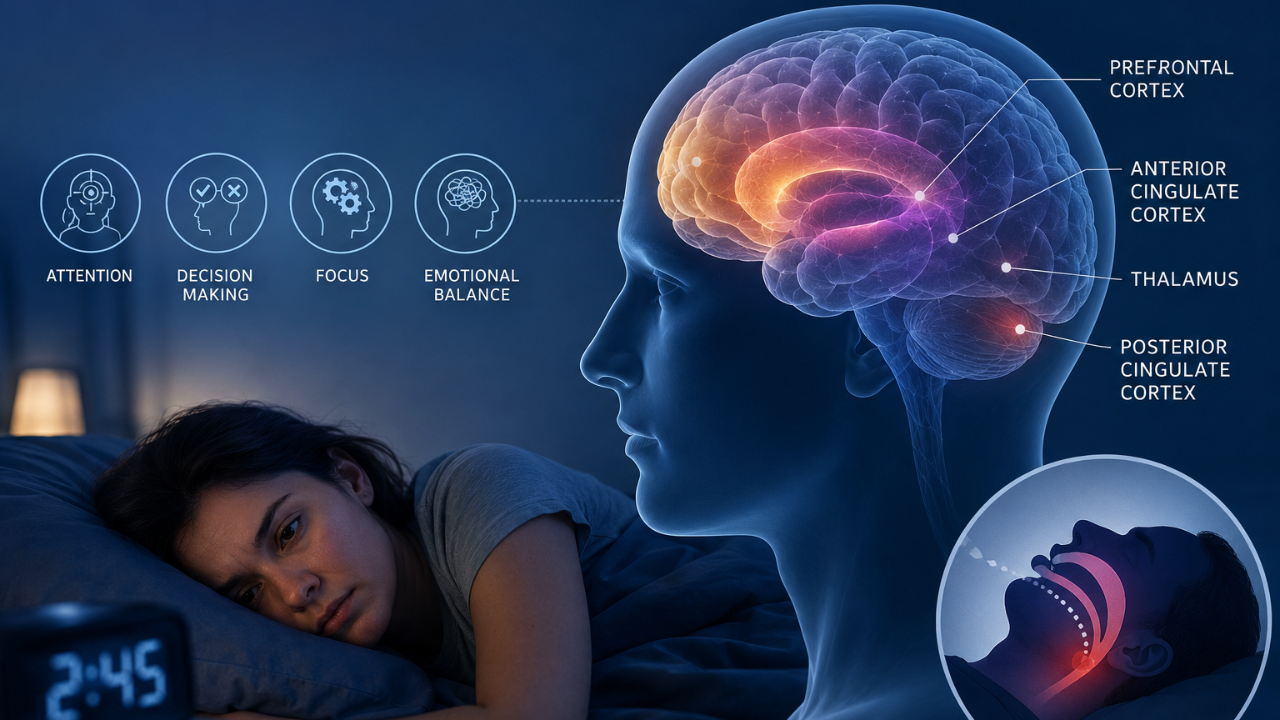
Sleep disorders have long been associated with daytime fatigue, poor concentration, and memory problems. Now, a new neuroimaging study suggests that the impact of sleep disorders could be deeper. Researchers have found that people with sleep disorders show structural changes in brain regions involved in attention, motivation, decision-making, and emotional regulation. The findings, published in the Nature Portfolio journal Scientific Reports, are based on one of the largest neuroimaging meta-analyses examining structural changes in the brain across multiple sleep disorders. Common Brain Changes Due To Sleep Disorders Researchers analyzed data from numerous brain imaging studies involving people diagnosed with various sleep disorders. The following alterations were absorbed in different regions of the brain: The prefrontal cortex plays a key role in planning, attention, and decision-making.The anterior cingulate cortex, involved in emotional regulation, conflict navigating, and motivation.The thalamus, which helps regulate attention and acts as a communication link between different brain regions.The posterior cingulate cortex, associated with examining choices, memory, and internally directed thinking. Sleep And Brain Health According to the researchers, disrupted sleep may interfere with the brain's ability to maintain biological functions. Rather than affecting a single region, sleep disorders appear to impact multiple interconnected networks in the brain. This could be why many people with chronic sleep disorders experience symptoms beyond tiredness. Some of them are: Difficulty concentratingSlower thinkingPoor decision-makingReduced motivationEmotional instabilityProblems with memory and attentionAlso read: Pediatric Sleep: The Foundation Of Healthy Growth, Behavior And SocietyThese symptoms are commonly reported in conditions like insomnia, obstructive sleep apnea, restless legs syndrome, and other chronic sleep disorders. The new study adds to the evidence that healthy sleep is essential for maintaining optimum cognitive function. Previous studies have linked sleep deprivation to poor attention, slower reflexes, increased dementia risk, and poor emotional processing. They have also indicated that even chronic sleep deprivation can contribute to changes in brain health alongside metabolic and cardiovascular effects.Also read: Why Are Sleep Disorder Cases Rising In Children Under 10 In South Korea? Poor Sleep Can Also Affect Heart Health In an earlier study, researchers discovered that even just three nights of insufficient sleep were enough to change blood chemistry, affecting heart health. In the study, it was observed that the levels of proteins linked to a higher risk of heart disease and inflammation went up after just three nights of poor sleep. It was further observed that while exercise had some positive effects on protein levels, it wasn't enough to completely eliminate the harm caused by not sleeping enough. Even with exercise, participants still showed increased levels of 16 proteins associated with heart disease. The study points out how young and healthy people can face these negative biological changes from short-term sleep loss. Bottomline Persistent problems with falling asleep, staying asleep, excessive daytime sleepiness, or interrupted breathing during sleep deserve immediate medical attention. As researchers continue to unravel how sleep shapes the brain, one message has become increasingly clear: quality sleep is not simply a time of rest. It is an essential biological process that supports physical health, attention span, decision-making, emotional well-being, and overall cognitive health.