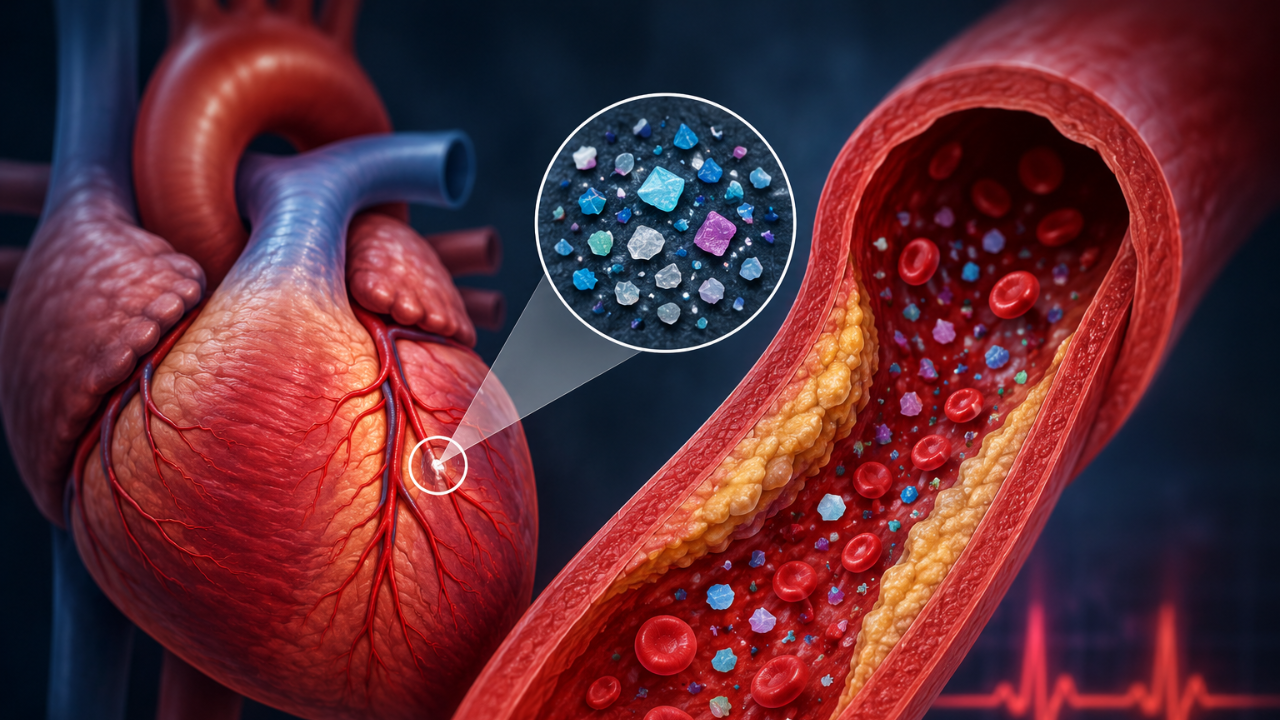
Tiny plastic particles in the human body may cause serious heart attacks. A recent study observed that people who had microplastics present in their arteries supplying blood to the heart are more likely to experience severe heart attacks. The study has raised concerns about the effects of plastic pollution on cardiovascular health. Dangers Of Microplastics In Heart Arteries A new study published in the European Heart Journal has found that people with microplastics present in the arteries supplying blood to the heart were more likely to experience larger and more severe heart attacks, raising concerns about the cardiovascular effects of plastic pollution. Microplastics are plastic fragments smaller than five millimeters that originate from the breakdown of larger plastic items. “Micro and nanoplastics are tiny plastic particles that are found virtually everywhere in the environment, including the air we breathe, the water we drink, and many foods we consume,” said Pasquale Paolisso, lead author of the study. Although microplastics have already been detected in human blood, lungs, brain, and arteries, researchers are still trying to understand their long-term health effects.Also read: Recovering From A Heart Attack? Avoid These Dangerous Mistakes What Did The Study Find? In the latest study, researchers analyzed 61 Italian patients who were treated for heart attacks and measured the presence of microplastics in blood collected from the coronary arteries. Researchers also collected data on whether the patients were smokers and on their exposure to pollution. “In our study, smoking history was strongly linked to microplastics in the blood. Our findings suggest that smoking might make it easier for micro and nanoplastics to enter the bloodstream via the lungs. Air pollution may act in a similar way,” Dr Emanuele Barbato, an author of the study from Sapienza University of Rome, said.Scientists detected micro and nanoplastics in 84 per cent of patients who had heart attacks. In comparison, only 40 per cent of patients with chronic ischemic heart disease and 32 per cent of patients with normal coronary arteries were found to have micro and nanoplastics.Also read: US Senator & Trump's Close Ally Lindsey Graham Died Of Aortic Dissection: All About The Fatal Heart Emergency They discovered that patients with higher levels of microplastics tended to have larger areas of heart muscle damage and greater inflammation, suggesting that these particles may be linked to more severe cardiovascular events. “While the findings do not prove that plastics directly cause heart attacks, they strengthen the growing scientific evidence that plastic pollution is an emerging public health issue deserving serious attention,” said Thava Palanisami,” a plastic researcher at the University of Newcastle in Australia. Built On A Landmark Study The study is built on earlier research published in 2024, which found that patients whose arterial plaque contained microplastics and nanoplastics were more than four times as likely to suffer a heart attack, stroke, or death. That landmark study was among the first to find that plastics accumulating inside blood vessels could have important clinical consequences. Scientists believe microplastics may trigger chronic inflammation and oxidative stress, damage the cells lining blood vessels, and make fatty plaques in arteries more unstable. This could increase the likelihood of heart attacks.