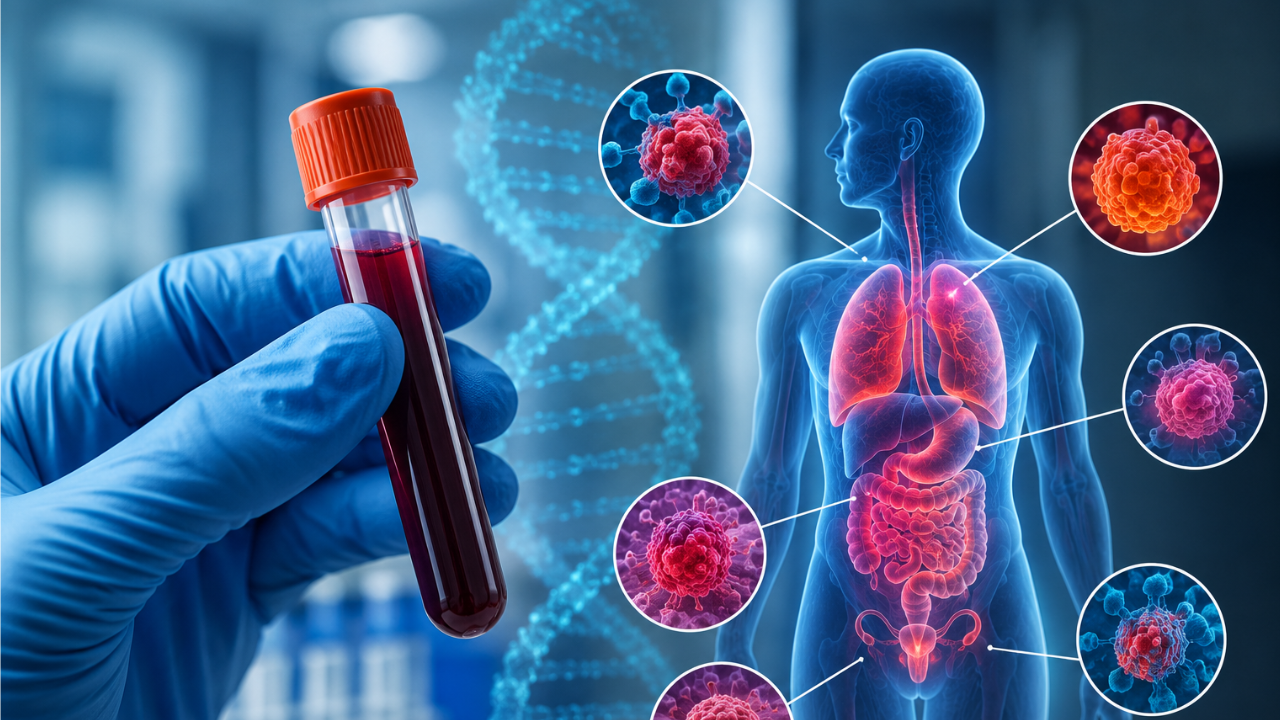
What if one blood sample could detect symptoms of multiple cancers at once, while also disclosing which organ may be affected? A new study from UCLA has brought that possibility a step closer to reality.Researchers have at UCLA have developed a blood test called MethylScan that can detect molecular signals linked to multiple cancers and other diseases by analysing DNA fragments circulating in the bloodstream.The findings, published in the Proceedings of the National Academy of Sciences, suggest the test could offer a simpler and potentially cheaper way to screen for serious diseases like cancer before their symptoms appear.How Can One Blood Test Detect Different Cancers?A blood test may be able to detect multiple cancers at once due to cell-free DNA (cfDNA). Every day, billions of cells die and release tiny fragments of DNA into the bloodstream. These fragments carry information about where they came from and what is happening in that tissue.Instead of primarily searching for cancer-causing mutations, MethylScan looks at DNA methylation, a type of chemical tags that regulate how genes behave. Different organs have distinct methylation patterns, and those patterns can change when cells become cancerous or diseased.“DNA methylation reflects the health status of a tissue. It’s a very informative signal,” said Dr Wenyuan Li, professor of pathology and laboratory medicine at UCLA.The researchers also developed a method to filter out the DNA released by normal blood cells, reducing the "background noise” that can make early cancer signals difficult to detect.Also read: Studying Live Cancer Cells Could Transform Drug Discovery; Researchers Turn Cell Biology Into ‘Live Cinema’What Are The Study's Findings? The researchers tested MethylScan using blood samples from 1,061 people, including patients with liver, lung, ovarian and stomach cancers, people with liver diseases and healthy participants.At 98% specificity, the test detected about 63% of cancers across all stages. For early-stage cancers, its sensitivity was around 55%.The test also showed promise in identifying where an abnormal signal originated. This could help as a positive blood test would still need to be followed by imaging or other diagnostic tests.“Being able to trace signals back to their source is important because a positive blood test needs to be followed by imaging or other diagnostic procedures directed at the right organ,” Li said.Also read: Tudriqev: US FDA Approves Replimune's Skin Cancer Drug After Rejecting It TwiceEarly Cancer Detection Is Key Cancer often becomes harder to treat after it has spread. Finding a tumour while it is still small and localised can help one avail more treatment options and improve outcomes.“Early detection is crucial,” said Dr Jasmine Zhou, the study’s senior author. “Survival rates are far higher when cancers are caught before they spread.”The findings are promising, but larger trials will be needed to establish whether such tests can reliably detect cancers in people who have no symptoms.Also read: Following A Western Diet? Changes In Your Gut Bacteria Could Increase Colon Cancer RiskMore Developments In The Field The findings come as another multi-cancer test, Galleri, is designed to detect signals from more than 50 cancers from a single blood sample. Reuters reported this month that the US FDA plans to convene an advisory panel in September to review its application for approval.But experts continue to stress that these tests are not replacements for established screening, such as mammograms or colonoscopies.