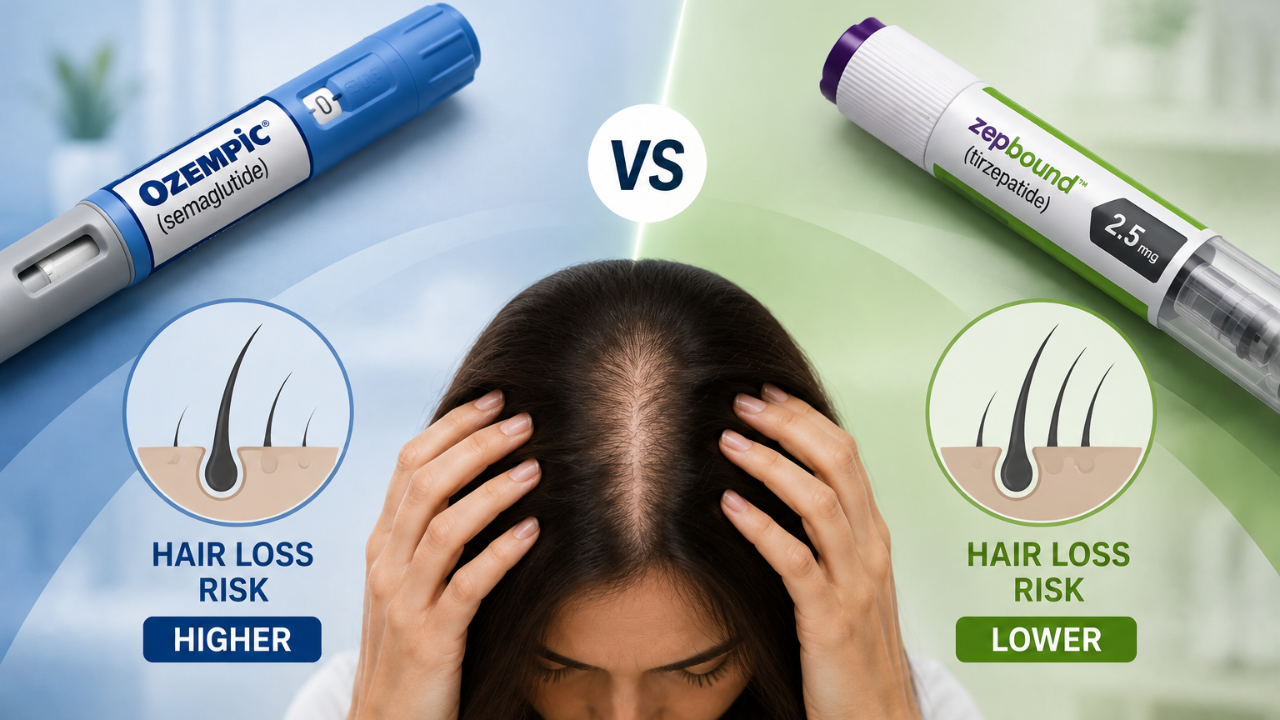
Hair loss is one of the recent and increasingly discussed concerns among people taking popular weight-loss medicines like Ozempic and Zepbound. A new study has compared hair loss risk linked with these two drugs to obtain a clear picture of whether one drug is more likely to trigger shedding than the other. The study, published in the Journal of the American Academy of Dermatology, examined the risk of new-onset hair loss among people taking semaglutide or tirzepatide, the active ingredients in Ozempic/Wegovy and Zepbound/Mounjaro, respectively. The findings emerge at a time when hair loss due to GLP-1 treatment is widely discussed. Even though the findings indicate, the absolute risk of hair loss due to GLP-1 remains relatively low. Ozempic Vs Zepbound: Which Drug Poses Higher Risk? The study compared people who were prescribed semaglutide and tirzepatide and looked at newly diagnosed hair loss. The researchers found an association between use of both medications and hair loss, including conditions like telogen effluvium, a form of temporary shedding that can occur after a major physical or metabolic stress. However, the researchers say that the findings not be interpreted as proof that either drug directly damages hair follicles. The study was based on electronic health data, which helped researchers identify an association but could not establish that the medication itself was the cause of hair loss.Also read: Nestlé Customizes Drinks For Ozempic, Wegovy Consumers: What Are Protein And Nutrition Needs of GLP-1 Users? Why Can Weight-Loss Drugs Cause Hair Shedding? One of the leading explanations suggests that the hair loss has more to do with the rapid change in metabolic health which helps with the weight loss. Researchers have not found evidence that the drug directly attacks the hair follicles. When the body undergoes a sudden metabolic change, more hair follicles can prematurely enter the resting phase of the hair-growth cycle. Several months later, those hairs can shed. This effect is known as telogen effluvium. Reduced food intake can also mean some people consume less protein, iron and other nutrients which are essential for for healthy hair growth. These factors could contribute to shedding during a phase of major weight loss. Previous clinical data have reported hair loss in around 3% of adults taking Wegovy compared with 1% taking placebo, while Zepbound trials reported hair loss in about 4%-5% of users compared with 1% with placebo.Also read: Paris Jackson Undergoes ‘Painful’ ECT for Depression: Can Electroconvulsive Therapy Reduce Suicide Risk? Temporary Hair Loss Due To Metabolic Shift Telogen effluvium is generally a temporary form of hair shedding. Hair follicles remain intact, meaning they can return to their normal growth cycle once the rapid weight loss stabilises. Hair shedding may become noticeable several months after weight loss begins, rather than immediately after starting the medication. Regrowth can then take several additional months.However, not every case of hair loss during GLP-1 treatment is necessarily telogen effluvium. Other forms of alopecia can have different causes and require different treatment.The new findings come amid growing scrutiny of hair loss as a potential adverse effect of GLP-1 medicines. A separate large study published in The BMJ in July 2026 also found that adults with type 2 diabetes taking GLP-1 receptor agonists had a slightly higher risk of alopecia compared with people taking other diabetes medicines.Researchers have stressed that more research is needed to understand whether the medicines themselves contribute to hair loss or whether the shedding is related to rapid weight loss and metabolic or nutritional changes.