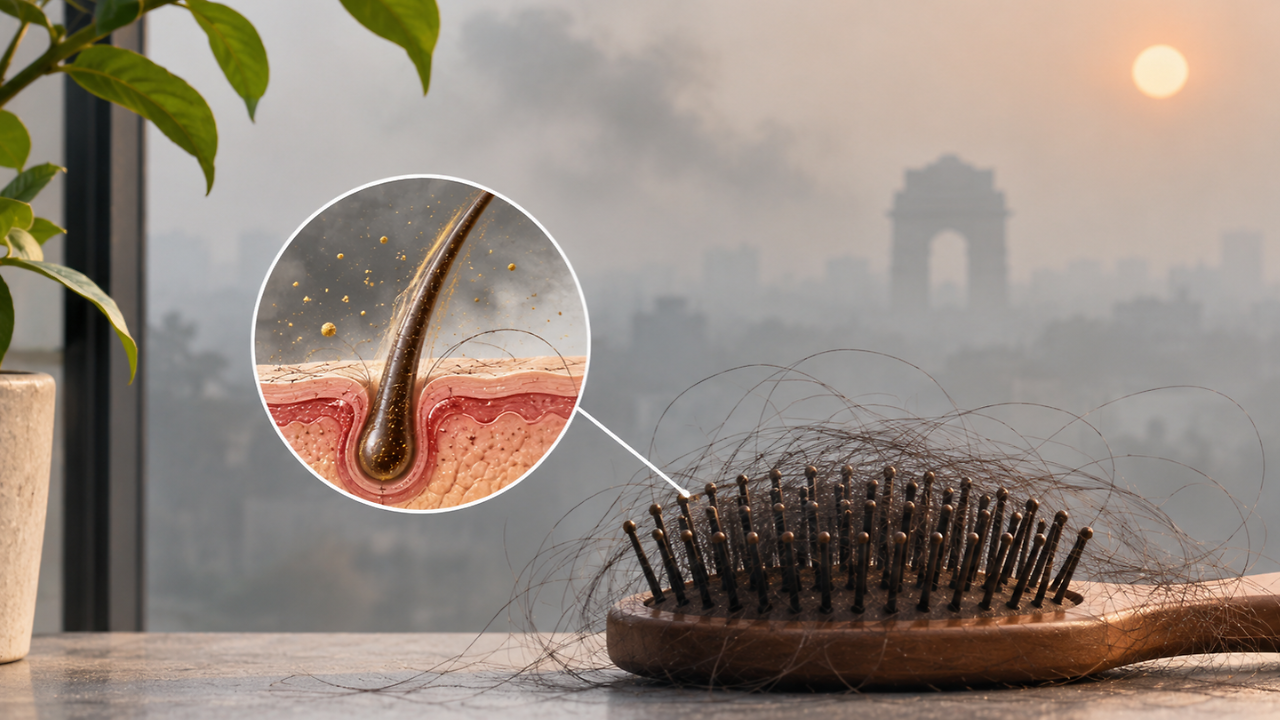
When air quality goes down in Delhi NCR, the first thing we think about is how it is impacting our lungs and heart, and rightfully so. However, I am finding a growing number of patients coming into my clinic asking if there is any affect to their scalp and hair.Potentially yes! Your scalp is subject to the same dust and tiny particles (PM2.5/PM10).Effects on scalp and hairOxidative Stress – The pollutants can cause free radicals which can weaken the natural protective barriers of the scalp.Irritation – Dust and toxins can cause the scalp to become more sensitive. This can aggravate existing issues such as itchiness and redness.Dry, Frizzy and Dull Hair – The pollutants can build up on your hair. Combined with the environmental stress it can leave your hair feeling dry, frizzy and dull. This can increase the chances of your hair breaking.Disruption to the Scalp – The particles can mix with your scalp’s natural oils and sweat causing disruption to the natural balance.Early research suggests that pollution can cause damage to your hair follicles however there is still research being carried out to see just how directly linked air pollution is to severe hair loss. Pollution is an environmental stressor, meaning that whilst it is a factor it is unlikely to be the main cause of hair loss. Genetics, diet, stress and hormones will still be the main factor.Also read: With Delhi AQI Nearing 400, Pollution & Flu Loom Ahead Of Diwali: What Happens When Both Hit Your Lungs?How to keep your hair healthy on high AQI days,Wash your scalp regularly using a gentle shampoo. This will help remove any dust and excess oil on your scalp. How often depends on your scalp type.Use a conditioner on your mid-lengths and ends. This will help reduce any dryness.Cover your hair when outside using a clean cap or scarf.Try to avoid heat styling. It is not necessary to add heat or chemicals to already stressed hair.Try not to overload your hair. Using too many oils, serums and styling creams will cause build up.Eat a healthy diet. Having enough protein, Iron and Zinc will help your hair grow normally. Don’t ignore any ongoing issues. If you are experiencing itchiness, redness, flakiness or abnormal shedding then seek advice from a specialist.If you are noticing more hair falling out than normal for over 3 months then it would be best to seek medical advice. We naturally lose around 50-100 strands of hair per day. Anything significantly more than this should be looked at. Getting advice early can often mean a simpler treatment and better outcomes.Whilst we can’t control the outside air we can work on keeping our scalp healthy. Taking care of your scalp is an important thing to do everyday especially during the worst months. Our lungs are suffering but our scalps and hair are also suffering every day from the pollution.By Dr Mayank Singh, Hair transplant Surgeon, Founder of Crown – The Hair Transplant Experts and President of AHRS India