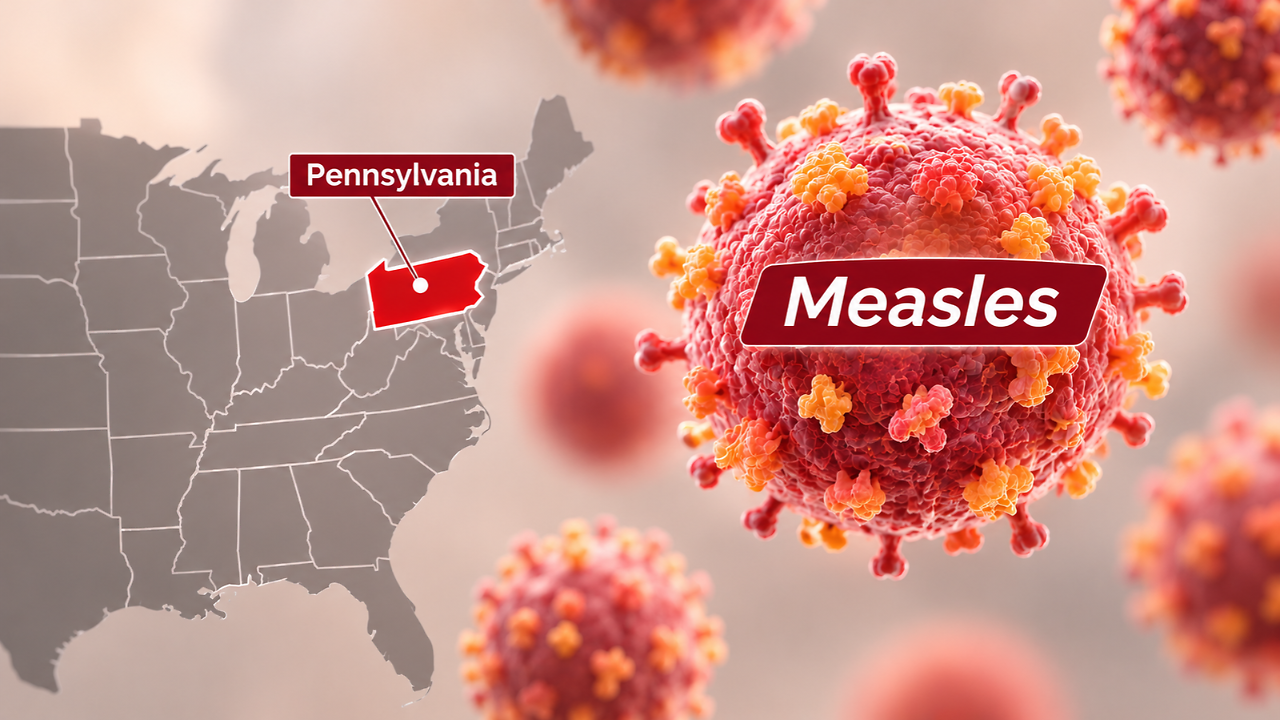
As the United States battles with the worst measles outbreak in three decades, Pennsylvania, the worst-hit state, has reported its ninth death due to measles. The US has reported thousands of cases in 2026, losing its measles elimination status after 26 years.On Monday, the Pennsylvania Department of Health confirmed that an unvaccinated resident of Centre County had tested positive for measles and died. The state has recorded 1,638 confirmed cases across 46 counties so far in 2026, along with 330 hospitalisations.The latest death in Pennsylvania adds to growing concerns about uncontrolled measles transmission, inadequate vaccination coverage and the risk of severe complications from an infection that is largely preventable through vaccination.Pennsylvania's Measles Outbreak Continues To ExpandPennsylvania has become the hardest-hit state in the ongoing US measles resurgence. According to latest state figures, the outbreak has spread across dozens of counties.The nine measles deaths reported by Pennsylvania are from Centre, Clinton, Jefferson, Lancaster, Mifflin and Montour counties. The state has also reported a sharp rise in demand for measles, mumps and rubella (MMR) vaccination in the recent months.According to state health officials, nearly 20% of people identified with measles in Pennsylvania have been hospitalised, underscoring that the severity of an infection that is largely considered a routine childhood illness.The ninth death in Pennsylvania comes soon after Virginia reported its first measles death after nearly 48 years. Wisconsin, on the other hand, has had two deaths. New York reported its first measles-related death in 30 years. This has brought the total measles death toll at 13. Also read: Virginia Reports First Measles Death After Nearly 50 Years As Cases In The Us Near 6,000 US Measles Cases Reach Highest Levels In DecadesThe United States has recorded 5,838 confirmed measles cases as of November 19, according to the health authorities. This is the highest annual total cases since 1991. The country recently lost its measles elimination status, which it had maintained for 26 years since 2000. Measles elimination means that continuous transmission of the virus within a country has been interrupted. However, elimination does not mean the virus has disappeared completely as imported cases can still trigger outbreaks. The loss of elimination status signals that measles is once again spreading through sustained transmission within the country.Dr. Evan Shirey, an infectious disease specialist, told CBS News that he went from seeing no measles cases to dealing with them "almost every day." He also attributed the increase in cases to misinformation and hesitancy around vaccination. "The manifestations of that can just be horrible to see," he added. "Children gasping for air. Seeing a child who is altered, confused, unable to recognize their own mom."Health and Human Services Secretary Robert F. Kennedy Jr., who has been a long-time vaccine skeptic, responded to US losing measles-free status: "I continue to recommend MMR vaccination as the most effective way to prevent measles."To compound to the crisis, kindergarten vaccination rates have fallen below the 95% mark needed to protect the immunocompromised and infants who are too young to be vaccinated.Also read: US Loses Measles-Free Status: Doctors Warn Of Mumps, Rubella And Whooping Cough ResurgenceSymptoms Of Measles Measles is a highly contagious viral infection that spreads through respiratory droplets and airborne particles when an infected person coughs, sneezes or breathes. The virus can remain infectious in the air for up to two hours after an infected person has left an area.Early symptoms generally include:High feverCoughRunny noseRed, watery eyesFatigueA characteristic red rash develops several days after the initial symptoms and often begins on the face before spreading to the rest of the body.Measles can lead to serious complications, including pneumonia, severe dehydration, ear infections and encephalitis, or inflammation of the brain. Some complications can be life-threatening, especially in infants, young children, pregnant women and people with weak immune systems.Vaccination Remains The Best Guard Against MeaslesAlso read: Measles Vaccine, Autism & Tylenol: RFK Jr's Most Controversial Health ClaimsHealth authorities continue to stress that vaccination is the most effective way to prevent measles and limit its transmission.Two doses of the MMR vaccine provide approximately 97% protection against measles. The first routine dose is generally given at 12 to 15 months of age, followed by a second dose. During outbreaks, infants may be eligible for an early dose but it does not replace the routine vaccination schedule.