
- Health Conditions A-Z
- Health & Wellness
- Nutrition
- Fitness
- Health News
- Ayurveda
- Videos
- Medicine A-Z
- Parenting
Pope Francis Injures His Arm After A Fall: Know How To Prevent Falls

Pope Francis (Credit: X)
Pope Francis injured his right arm after suffering a fall earlier this week. According to the Vatican, while the 88-year-old pontiff did not break his arm, a sling was put on as a precaution. This incident comes just weeks after another fall on December 7, where he hit his chin on a nightstand, resulting in another, visible bruise. The pope's health has been a topic of ongoing speculation due to his age and medical history, which includes long bouts of bronchitis and mobility challenges. Often seen using a wheelchair or a cane, Francis also uses a walker within the Vatican's Santa Marta hotel, where he resides. Notably, his frailty has brought renewed attention to the risks of falls among elderly individuals and the steps one must follow to mitigate such falls.
Preventive Measures For Bone Health
A study published in Frontiers in Aging Neurosciences people get older, the bone density in the lower back and thigh bone decreases significantly. This raises the risk of osteoporosis (OP). Therefore it becomes pivotal to pay early attention to nutrition, exercise ability, vitamin D levels, and uric acid levels in older individuals to prevent Ostreopsis and mitigate fall risks. The risk of falls and bone injuries among elderly individuals underscores the importance of preventive measures for maintaining bone health and minimizing fall risks.
Elderly, particularly menopausal women, require a daily calcium intake of 1,200 mg, divided into two or more doses. This can be achieved through dietary sources such as dairy and non-dairy products or through supplements like calcium carbonate and calcium citrate. However, total daily calcium intake should not exceed 2,500 mg to avoid potential health risks.
Vitamin D is essential for calcium absorption and bone mineralization. While sunlight exposure helps synthesize vitamin D, older individuals often require supplements due to reduced skin synthesis and the limited availability of foods. Fortified milk and supplements containing 200–600 IU of vitamin D daily are recommended, with higher doses required for those with deficiencies. Severe cases may necessitate high-dose treatments, such as 50,000 IU weekly for up to three months, along with regular monitoring of calcium and vitamin D levels.
Regular exercise is vital for preserving bone mass and reducing fall risk. Weight-bearing activities, strength training, and balance exercises like brisk walking or skipping can enhance bone density and improve coordination. Experts recommend at least 30 minutes of moderate physical activity most days of the week, supplemented by strength training twice weekly. For individuals unable to engage in standard exercise routines, alternatives like vibrating platforms may help maintain bone health.
Falls remain a leading cause of fractures among individuals over 60. Addressing contributing factors such as balance issues, vision problems, and environmental hazards can significantly reduce risks. Preventive measures include regular vision checks, minimizing medications causing dizziness, improving home safety (e.g., installing railings and removing loose rugs), and wearing rubber-soled footwear. Hip protectors may also help mitigate the impact of falls.
COVID Variant BA.3.2 Spreads To 23 Countries: Is The Variant Under Monitoring A Cause Of Worry?
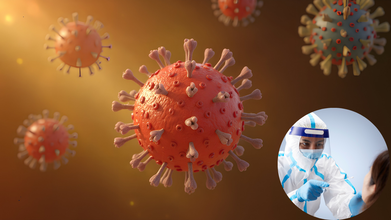
Credit: Canva
The emergence of the COVID variant BA.3.2, linked to the Omicron variant lineage, has once again stirred public anxiety, reviving memories of the devastating global impact of the COVID-19 pandemic.
The variant is particularly concerning as it provides no immune protection to people with previous infection or even vaccination.
The US Centers for Disease Control and Prevention (CDC) has raised concerns about BA.3.2 — touted as a highly mutated variant of COVID. BA.3.2 has already been reported in at least 23 countries, including 25 states in America.
The BA.3.2 variant was first identified in a respiratory sample in South Africa in November 2024.
The World Health Organization (WHO) has designated BA.3.2 as a Variant Under Monitoring (VUM). It means the variant may be not that dangerous yet, it may have concerning mutations.
However, the "BA.3.2 has not shown a sustained growth advantage over any other cocirculating variant, and no data indicate increased severity, hospitalizations, or deaths associated with this variant", according to the WHO's Initial Risk Evaluation Report in December 2025.
"Overall, available evidence suggests that BA.3.2 poses low additional public health risk compared with other circulating Omicron descendant lineages," it added.
What Is The BA.3.2 Variant?
BA.3.2 is a descendant of the Omicron BA.3 lineage. It is genetically distinct from the previously circulating JN.1 lineages (including LP.8.1 and XFG).
BA.3.2 comprises two major branches, BA.3.2.1 and BA.3.2.2. BA.3.2.2 also has substitutions like: K356T, A575S, R681H, and R1162P, the CDC report said.
What makes the BA.3.2 variant special is the “70 to 75 substitutions and deletions in the gene sequence of its spike protein”, revealed the CDC’s latest Morbidity and Mortality Weekly Report.
“BA.3.2 represents a new lineage of SARS-CoV-2, genetically distinct from the JN.1 lineages (including LP.8.1 and XFG) that have circulated in the US since January 2024,” said the CDC researchers.
“BA.3.2 mutations in the spike protein have the potential to reduce protection from a previous infection or vaccination,” they added.
The first BA.3.2 lineage sequence was detected in a respiratory sample collected on November 22, 2024, in South Africa from a boy aged 5 years.
It was then identified in 2025, in Mozambique (March), the Netherlands (April), and Germany (April). It began to increase in September 2025, with the highest number of detections reported during the week beginning December 7, 2025.
As of February 11, 2026, BA.3.2 had been detected in at least 23 countries.
Between November 2025 and January 2026, the weekly BA.3.2 detections increased and reached approximately 30 percent of sequences reported in three European countries (Denmark, Germany, and the Netherlands).
The CDC reported that BA.3.2 has appeared in wastewater and clinical samples in 25 states. The states include California, Connecticut, Florida, Hawaii, Idaho, Illinois, Louisiana, Maine, Michigan, Maryland, Massachusetts, Missouri, New Hampshire, New Jersey, Nevada, New York, Ohio, Pennsylvania, Rhode Island, South Carolina, Texas, Utah, Vermont, Virginia, Wyoming.
Surveillance shows that the variant is present in both urban and rural areas, but the full extent may be larger than reported because not all states have strong genomic testing programs.
BA.3.2 A Variant Under Monitoring
According to the WHO, BA.3.2 demonstrates antigenic drift and reduced neutralization in vitro from previously infected or vaccinated individuals.
However, the global health body noted that currently approved COVID-19 vaccines are expected to continue providing protection against severe disease.
Despite immune evasion, phenotypic data suggest BA.3.2 has reduced infectivity.
Liverpool Legend John Toshack Diagnosed With 'Terrible Disease' Dementia

Credit: FAWales/X
John Toshack, the Wales and Liverpool legend, has been diagnosed with dementia, his son Cameron has confirmed to the media.
After a glittering playing career with Liverpool, the now 77-year-old Toshack went on to manage several leading clubs across Europe, including Real Madrid, Real Sociedad, and Besiktas.
His son and ex-Leeds United assistant Cameron, now coaching in Thailand, told the Daily Mail that his father has "good days and bad days".
"It's a terrible disease," he added.
Cameron noted that while his father's memory of his glory days remains intact, his short-term memory is more affected. And his father often tends to forget matters they spoke about in short periods.
"It’s the short-term memory where we’re seeing it – I speak to him most days, and if we chat in the afternoon, he might not remember that we also spoke in the morning," the report said.
"But if I ask him about the Liverpool days, or Sociedad or Madrid, the detail is amazing; his memory was so clear".
Meanwhile, Football Association of Wales in a post on social media platform X shared: "Our thoughts are with former
@Cymru player and manager John Toshack and his family following his recent diagnosis".
What Is Dementia?
Dementia is an umbrella term used to describe a significant decline in mental function that is serious enough to affect everyday life. It commonly impacts memory, thinking, and reasoning skills.
Dementia itself is not a single disease but a collection of symptoms caused by underlying conditions such as Alzheimer’s disease or vascular dementia.
Common signs include memory problems, confusion, difficulty finding words, changes in mood or behaviour, and trouble completing familiar tasks.
These symptoms usually worsen over time and are not considered a normal part of ageing. Although there is no cure, treatment options can help manage symptoms, and early diagnosis plays an important role in care planning.
Alzheimer’s Disease: The Leading Cause of Dementia
Alzheimer's disease is one of the most common forms of dementia and mostly affects adults over the age of 65.
About 8.8 million Indians aged 60 and above are estimated to be living with Alzheimer's disease. Over seven million people in the US, 65 and older, live with the condition, and over 100,00 die from it annually.
Alzheimer's disease is believed to be caused by the development of toxic amyloid and beta proteins in the brain, which can accumulate in the brain and damage cells responsible for memory.
Amyloid protein molecules stick together in brain cells, forming clumps called plaques. At the same time, tau proteins twist together in fiber-like strands called tangles. The plaques and tangles block the brain's neurons from sending electrical and chemical signals back and forth.
Over time, this disruption causes permanent damage in the brain that leads to Alzheimer's disease and dementia, causing patients to lose their ability to speak, care for themselves, or even respond to the world around them.
While there is no clear cause of Alzheimer's disease, experts believe it can develop due to genetic mutations and lifestyle choices, such as physical inactivity, unhealthy diet, and social isolation.
Early symptoms of Alzheimer's disease include forgetting recent events or conversations. Over time, Alzheimer's disease leads to serious memory loss and affects a person's ability to do everyday tasks.
There is no cure for this progressive brain disorder, and in advanced stages, loss of brain function can cause dehydration, poor nutrition, or infection. These complications can result in death.
Drug Resistance Driving Severe Typhoid Disease, Death Among Children Under-5s in India: Lancet Study
Credit: Canva
Children under 5 in India remain at high risk of typhoid infections, hospitalization, and death due to growing antimicrobial resistance (AMR), according to an alarming study, which highlighted the urgent need to control drug resistance in the country.
Typhoid fever is a systemic illness caused by Salmonella enterica serovar Typhi (S. Typhi), and presents a significant health challenge in India.
The modelling study, published in The Lancet Regional Health – Southeast Asia, showed that typhoid fever caused an estimated 4.9 million cases and nearly 8,000 deaths in India in 2023.
However, more concerning was that a large proportion of infections were found resistant to fluoroquinolones — one of the main classes of antibiotics used to treat typhoid. They found that:
- Children aged 5–9 years had the highest number of typhoid fever cases and AMR cases
- Children aged 6 months to 4 years experienced the highest number of hospitalizations and deaths.
"Drug-resistant typhoid fever remains a serious public-health threat in India, with implications beyond national borders," said Dr Vijayalaxmi Mogasale, Joint PhD Candidate at the London School of Hygiene & Tropical Medicine and Nagasaki University.
"Tackling this problem does not lie solely in moving to newer antibiotics, but calls for timely preventive action, including responsible antibiotic use and the introduction of the typhoid vaccine into the national immunization program, prioritizing high-burden age groups and regions," she added.
Also read: Study Links Widespread Use of Antibiotics During COVID To Surge In AMR Cases
Typhoid: AMR A Major Concern In India
In Global Burden of Diseases (GBD) 2021, India contributed to 58 percent of global typhoid fever cases and 48 percent of global deaths.
The new study, including researchers from Christian Medical College in Vellore, estimated that more than two-thirds of typhoid cases in India are resistant to fluoroquinolones. This not only limits treatment options but also increases the risk of complications.
The major drivers of typhoid fever deaths were identified among those with no treatment and hospitalized cases with AMR-related complications. The highest burden of typhoid cases were reported from Delhi, Maharashtra, and Karnataka.
Further, the study found that drug-resistant typhoid infections accounted for at least 87 per cent of India's disease-related economic burden in 2023, the PTI reported.
The total economic burden due to typhoid fever was estimated at Rs 123 billion.
Children under the age of 10 incurred the highest economic burden, contributing to over half of the costs, researchers found.
In addition, they estimated that households bore 91 per cent of expenses, and 70,000 families faced "catastrophic" health expenditure.
A 2024 ICMR report also flagged that more Indians are developing antibiotic resistance against typhoid, pneumonia, and urinary infections. Over 95 percent of Salmonella typhi strains are now resistant to fluoroquinolones, making it difficult to treat infections caused by this bacterium.
Also read: Antimicrobial Resistance Explained: Why Is WHO Calling It A Serious Health Threat?
Typhoid: How Vaccines Can Help
Typhoid fever is a water- and food-borne infectious disease. Major symptoms include
- high fever,
- fatigue,
- headache,
- abdominal pain.
The World Health Organization (WHO) recommends TCV for children from six months of age and for adults up to 45–65 years, depending on the vaccine.
To achieve greater impact, the Lancet researchers suggested implementing:
- A broader catch-up or school-based vaccination campaigns
- controlling the broader strategy of antimicrobial stewardship
- Making improvements in water, sanitation, and hygiene.
- Follow Us :


© 2024 Bennett, Coleman & Company Limited