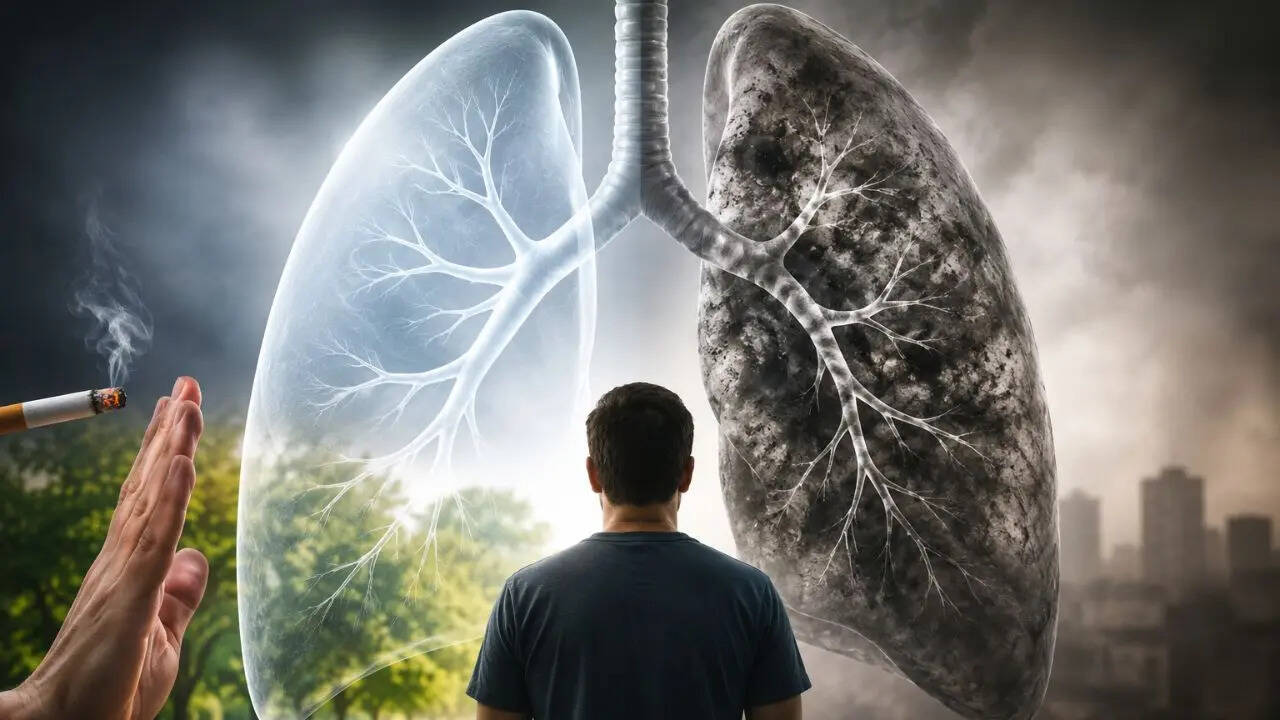
Quitting smoking remains one of the best decisions for your health. But new research suggests that even years after your last cigarette, your lungs may continue to carry the harmful effects that increase the risk of chronic lung disease. A new study by McGill University, published in the journal Translational Research, finds why former smokers remain at high risk to lung diseases even after quitting. By analysing lung cells closely, scientists found that even though some damage due to smoking heals over time, other damages persist, leaving ex-smokers at a higher risk of conditions like chronic obstructive pulmonary disease (COPD) and lung cancer. What Did The Study Find? The study was conducted on more than 100,000 individual lung cells collected from 21 people, including nine people who had never smoked, five active smokers, and seven former smokers. Using single-cell RNA sequencing, researchers examined molecular activity across more than 40 different lung cell types, creating one of the most comprehensive maps of how smoking and smoking cessation affect the lungs at the cellular level. Their findings revealed that long-term lung recovery is not uniform. While some lung cells gradually regained healthier patterns after smoking cessation, others continued to show long-term molecular changes affecting tissues, immune responses, blood vessel function, and the overall lung health. Perhaps the most surprising finding was that some cells in ex-smokers showed unique molecular markers that were not seen in active smoker and participants who never smoked, suggesting quitting smoking creates its own biological impact. Also read: Even Light Exercise Could Help People With COPD Live Longer, Study FindsWhy Does Lung Disease Risk Persist After Quitting? Scientists have long known that the risk of lung cancer and COPD declines after quitting smoking, but it never completely returns to the same level as seen in people who have never touched a cigarette. Smoking damages DNA, alters gene activity, triggers chronic inflammation and injures delicate lung tissues. While the body repairs some of this damage after the smoker quits, certain cellular changes become persistent. These lingering molecular alterations could continue influencing how lung tissue responds to injury, infections and aging. Senior author Professor Carolyn Baglole, from McGill University's Department of Pharmacology and Therapeutics, said, "Current smokers have the highest risk of deadly diseases like lung cancer, but former smokers still face a higher risk than people who never smoked. Despite more than a century of research on smoking, we don't fully understand why."She added, "Our findings show that while some damage appears reversible, other changes persist long after people stop smoking." First author Nicole Heimbach, a doctoral student at McGill University, said, "These findings are an important step toward understanding what damage caused by smoking can heal and what may be permanent. By knowing what damage remains after quitting, we can better understand how smoking-related diseases develop and how to treat them."Also read: Could Wildfire Smoke Trigger Your Migraine? Latest Study Finds A Strong LinkThinking Of Switching To Vaping Instead Of Quitting Cigarettes? Instead of quitting smoking, if you are thinking of switching to vaping, think again. According to a new study, vape users presented reduced fitness and impaired blood vessel function similar to traditional cigarette smokers. The research, published in the peer-reviewed journal ERJ Open Research, compared healthy adults aged 18 to 30 and found that both regular vapers and smokers had around 15% lower exercise capacity than people who had never smoked or vaped.This suggests that electronic cigarettes like vapes are not lesser of two evils. The researchers, however, caution that the study does not suggest that vaping is equally harmful as smoking in every respect.Traditional cigarettes still strongly remain linked to major disorders like cancer, chronic obstructive pulmonary disease (COPD), and many other life-threatening illnesses.But the new study indicates that when it comes to cardiovascular fitness, breathing efficiency, lung function and blood vessel health in young adults, vaping may offer far less protection.