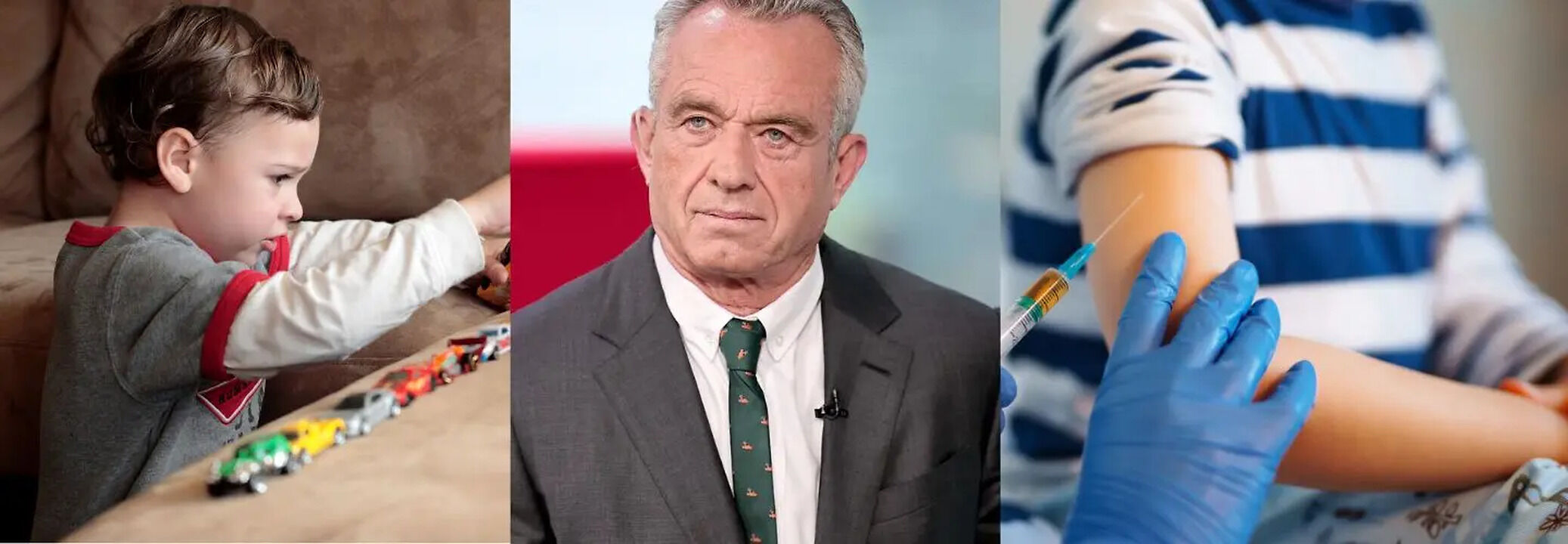
Robert F Kennedy Jr, who is selected to lead US Department of Health And Human Services (HHS), has linked autism to childhood vaccinations. In past, he has espouses a number of health-related conspiracy theories including his claim that Jews like Anne Frank had more freedom during the holocaust, than unvaccinated people during the COVID pandemic. What Did RFK Jr Say? Last week, the top American politician blamed vaccines to explain the substantial rise in autism diagnosis in recent decades, which increased from from almost 1 in 150 children in 2000 to 1 in 36 today. However, in reality, there are multiple researches that debunk this claim. It has been proven that much of this rise is due to increasing awareness and screening of this condition along with the changing definitions of autism to include milder conditions on the spectrum. His claim has been widely opposed by health groups and Autism activism groups. Do Americans Believe In RFK Jr's Theory?There are many, mostly Republicans, that are a believers and promoters of Kennedy's conspiracy theory. Timothy Caulfield, research director at the University of Alberta's Health Law Institute in Canada reasoned that it is majorly because people are more willing to believe in conspiracy theories about conditions such as autism—whose causes are complex and not fully understood—as compared to diseases whose reasons are clear. For instance, people seem less inclined to speculate about alternative explanations for Down syndrome that has clearly been known to be caused by an extra copy of chromosome 21.Autism Is A Complex ConditionAutism spectrum disorder (ASD) is a neurological and developmental disorder that affects how people interact with others, communicate, learn, and behave. Finding the real cause behind autism is complicated, because it is not a single disorder, rather a spectrum. Scientists have found a variety of risk factors for autism — most of which exist before birth — but there is no single cause for a neurological and developmental condition that affects how people interact with others, communicate, learn and behave. Environmental factors include prenatal exposure to toxics and chemicals and immune system abnormalities play a significant role.Do Genetics Play A Role?Doctors have long known that genetics play a significant role in autism and that it can run in families. For example, in identical twins, if one twin has autism, the other usually does, as well. Meanwhile, in the case of fraternal twins, if one twin has autism, the chance that the other will have autism ranges from 53% to 67%. Notably, scientists have identified more than 100 genes that are linked to this chronic condition. Moreover, they also believe that people develop autistic traits due to a combination of genetic vulnerability and environmental exposures. Complications at birth also increase chances of Autism. Many known risk factors associated with autistic characteristics occur before birth or at the time of delivery. Babies who experience complications at birth, such as their umbilical cord becoming wrapped around their neck, have a higher risk of autism. Another factor that increases risk of this disease is premature birth.