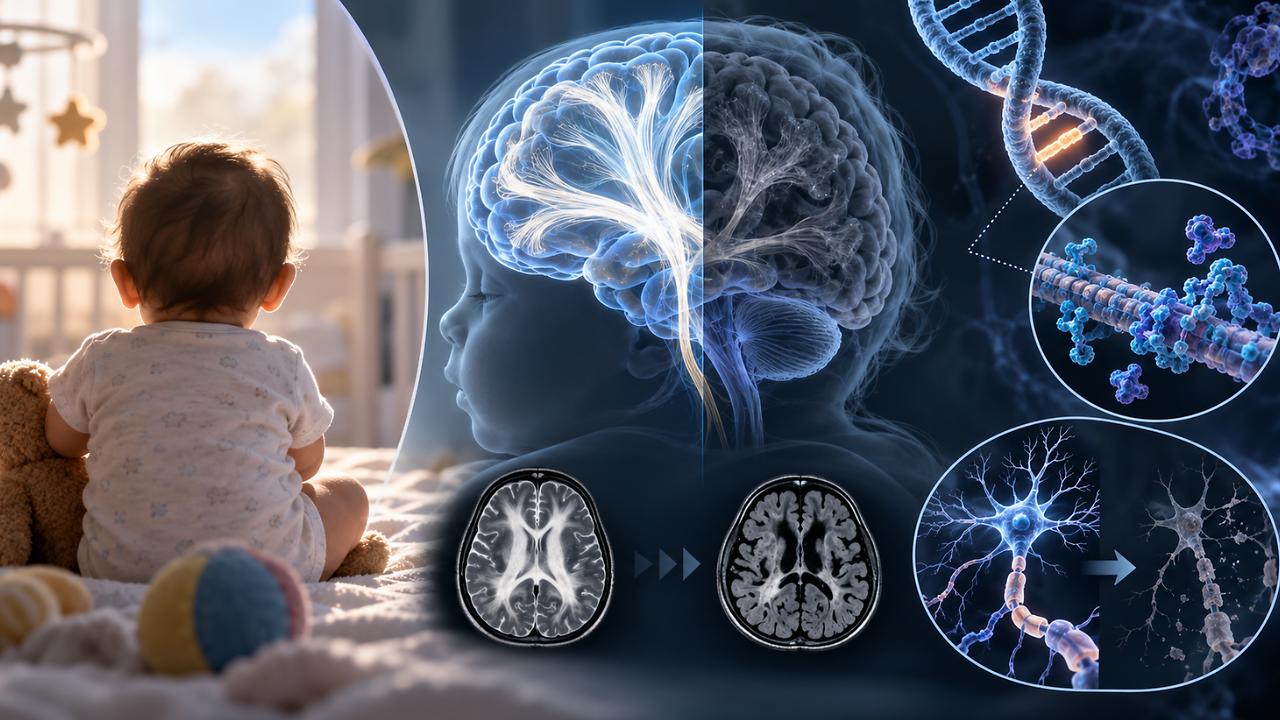
A baby girl who reportedly appeared healthy after being born died at just 14 months after getting afflicted with a devastating, ultra-rare genetic neurological disorder that made her incapable of moving, feeding and interacting with the world around her. Poppy Massey was born in February 2022 with no signs or symptoms of any illness. Her mother Kaylee Massey's told PEOPLE that they began having concerns when Poppy was around four months old and her vision did not appear to be developing normally. Further testing disclosed abnormalities in the corpus callosum, followed by diagnoses including microcephaly and cerebral visual impairment. She eventually got diagnosed with TBCD leukodystrophy, a rare inherited disorder affecting the brain and nervous system. Poppy died on April 30, 2023. What Is TBCD Leukodystrophy? TBCD disorder is a rare genetic condition that affects the brain and nervous system. It is caused by changes in both copies of a gene called TBCD, which is important for the normal development and functioning of nerve cells. A child usually inherits one faulty copy of the gene from each parent. The parents typically do not have symptoms because they carry only one altered copy. The condition can cause severe complications in brain development, movement, muscle strength and vision. Children may grow normally at first but then start showing symptoms like developmental delays, poor muscle, difficulties in feeding and moving, seizures, vision problems and loss of skills they had acquired previously. TBCD-related neurodegenerative disease is sometimes grouped among leukodystrophies, a group of disorders that affect the brain's white matter. White matter contains nerve fibres covered by a protective layer called myelin, which helps electrical signals travel efficiently through the brain and nervous system. When this system is disrupted, communication between nerve cells can become impaired, contributing to the severe neurological symptoms seen in patients.Also read: Busy Philipps Reveals She Had Surgery To Remove A Rare Brain Tumour: What Is Oligodendroglioma? Babies With TBCD Leukodystrophy May Initially Appear HealthyOne of the most difficult aspects of the disorder is that neurological problems may not be obvious immediately after birth. As the child's brain develops, symptoms can become more evident.Brain imaging can show cerebral and cerebellar atrophy, a thin corpus callosum and impaired myelination. Some children subsequently experience stunted development. In Poppy's case, her mother told PEOPLE that her condition deteriorated rapidly after diagnosis at nine months. She eventually lost the ability to suck and feed independently, lost movement in her legs and arms.Also read: Neuro-Protection: How Your 30s And 40s Determine Your 70s And 80s TBCD Is An Exceptionally Rare & Severe Disorder The nervous system depends on organised cellular structures to develop, transport materials and communicate between neurons. Disruption of the TBCD protein can interfere with these processes during early brain development. The disease involves brain atrophy and impaired myelination, affecting movement, development, vision, swallowing and other neurological functions. TBCD is exceptionally rare. The TBCD Foundation says fewer than 50 diagnosed cases are known worldwide, although the true number may be higher because rare genetic disorders may largely remain undiagnosed. Some affected children have very severe symptoms right from the onset of the disease disease, while others may survive longer. It varies depending partly on the specific genetic variants involved. Currently, there is no proven cure or treatment for TBCD disorder.