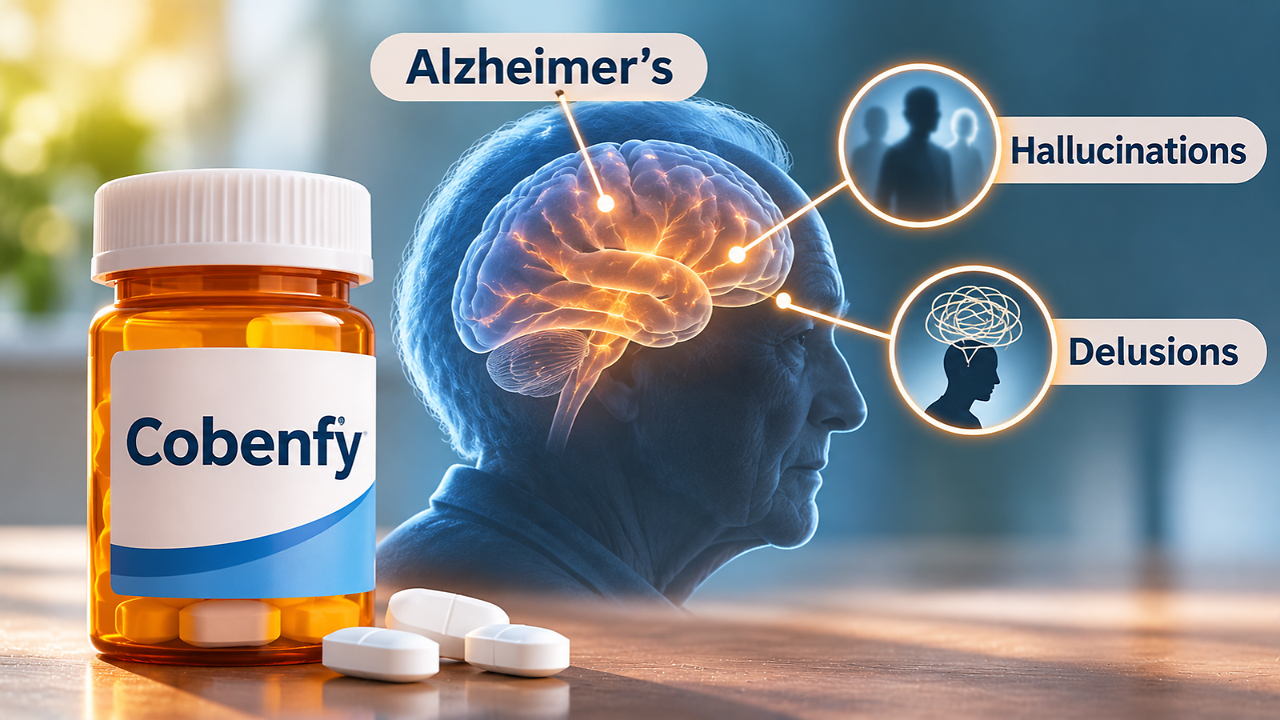
A schizophrenia drug has reportedly proven effective in fighting manic symptoms like hallucinations and delusions that accompany Alzheimer's disease. The finding has sparked hope to treat one of the most distressing symptoms complications of dementia.The drug, Cobenfy (xanomeline and trospium chloride), developed by Bristol Myers Squibb (BMS), is currently being investigated for treating psychosis that patients with Alzheimer's disease may experience. The preliminary findings from two Phase 3 clinical studies showed improvements in hallucinations, delusions and the severity of the overall disease among participants who received the drug.The findings were presented at the Clinical Trials on Alzheimer's Disease (CTAD) conference in Boston. Cobenfy is currently approved in the US for schizophrenia in adults, not for Alzheimer's-induced psychosis.Findings From The Clinical Trial Also read: Experimental Alzheimer's Drug Slows Cognitive Decline By 38% In A Two-Year Trial: How Does It Work?The findings came from two studies within BMS's Phase 3 ADEPT clinical development programme.In the ADEPT-1 study, 273 participants completed a 12-week treatment period in which patients knew they received Cobenfy.Researchers observed a mean reduction of 12 points in participants' hallucination and delusion scores, which was measured using the Neuropsychiatric Inventory-Clinician (NPI-C) scale. Their overall scores of disease severity also improved.A separate study, ADEPT-3, evaluated long-term safety and tolerability of the drug. Among 401 participants, 273 completed the 52-week treatment period. Their hallucination and delusion scores also improved.However, these findings came from open-label treatment trials, which means that participants and researchers knew that the drug was being administered. More reliable evidence will come from the blinded parts of the ADEPT programme, which evaluate the treatment's efficacy against a control group.What Is Alzheimer's-Related Psychosis?Also read: 'Viagra For The Brain': New Pill Slows Decline in Memory, Thinking By 31% In Some Alzheimer's PatientsAlzheimer's disease is a progressive neurological condition that damages brain cells and gradually affects memory, thinking, behaviour and the ability to perform everyday activities. Some people with Alzheimer's also develop psychosis, which can present with symptoms like hallucinations and delusions.Hallucinations occur when someone sees, hears or experiences things that are not actually present. For instance, a person may see people around them who are not actually there or hear voices that others cannot hear.Delusions involve strongly believing something that is not true. For example, an Alzheimer's patient with psychosis may be convinced that family members are stealing from them, that their partner is being unfaithful or that someone is trying to harm them.According to BMS, approximately 30–50% of people with Alzheimer's experience psychosis during the course of the disease.These symptoms can be distressing for patients as well as caregivers. Researchers also observed faster cognitive and functional decline in patients with psychosis. This increased caregiver burden and a greater likelihood of institutionalisation.Despite the severity of Alzheimer's-induced psychosis, there are currently no FDA-approved medicines for treating it. More About Cobenfy Cobenfy works differently from other antipsychotic medicines, which usually target dopamine receptors in the brain. Cobenfycombines two drugs: xanomeline and trospium chloride.Xanomeline activates muscarinic receptors, specifically M1 and M4 receptors, which regulate communication between brain cells, cognition and behaviour. By targeting these receptors, xanomeline regulates parts of brain that are involved in psychiatric symptoms.Trospium chloride is added to reduce unwanted effects of xanomeline outside the brain, especially those involving the peripheral nervous system.In the 12-week ADEPT-1 treatment period, 56.6% of participants experienced at least one adverse event due to the drug. Serious adverse events were reported in 5% of participants, while 4.4% stopped the treatment because of side effects.In the longer-term ADEPT-3 study, adverse events were reported in 65.1% of participants, serious adverse events in 7.7%, and discontinuations due to adverse events in 4.7%.Cobenfy remains investigational for its use for Alzheimer's-related psychosis. The ongoing ADEPT programme includes more studies to assess its efficacy , dose and long-term safety. BMS is expected to share further findings along with important results placebo-based trials.