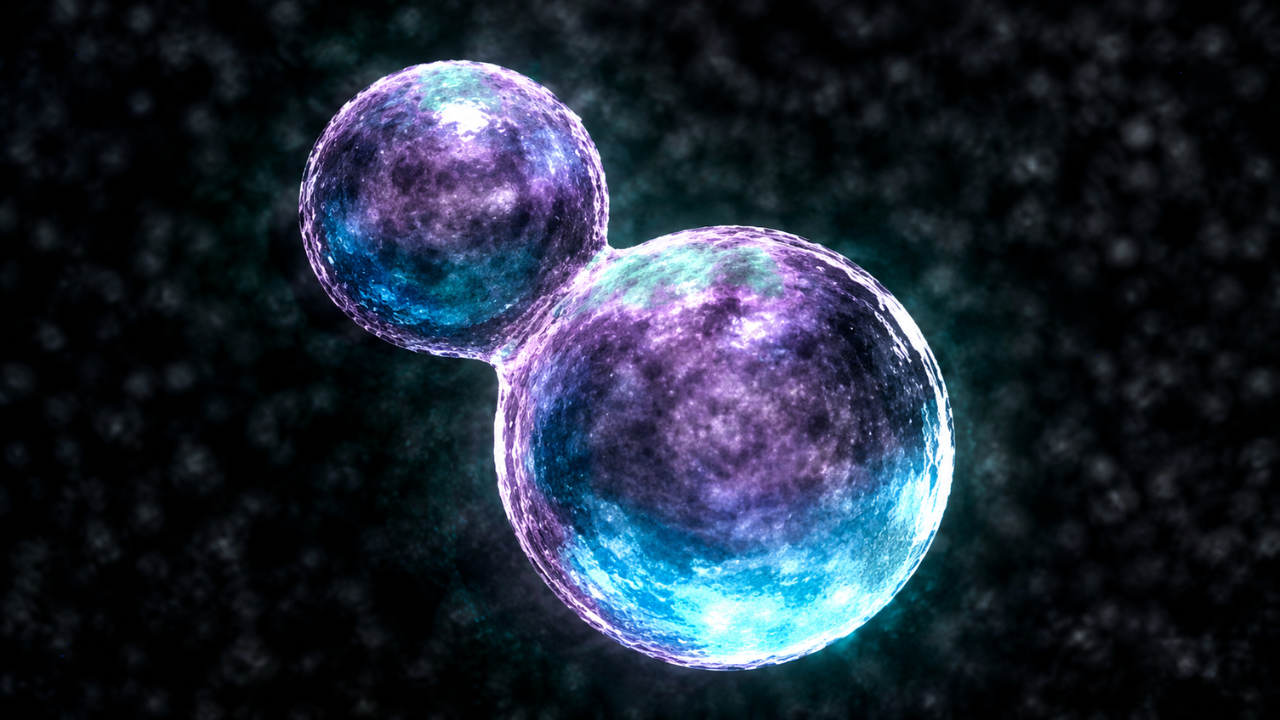
What sounds like science fiction is now a scientific reality. Researchers at the University of Minnesota have created the world's first synthetic cell built entirely from non-living chemical components that can eat, grow and reproduce—the defining characteristics of life.The lab-made cell, named SpudCell, completes an entire life cycle and could help scientists better understand how life works while opening new possibilities in medicine, biotechnology and manufacturing."We've replicated in chemistry what only used to be possible in biology: the complete set of behaviors of a cell," said Associate Professor Kate Adamala. "It proves that the most fundamental functions of life... do not need a mysterious, magical spark."The findings have been published as a preprint and have not yet been peer-reviewed."We have demonstrated key milestones towards construction of synthetic life: a complete cell cycle, including growth and division, and selection, in minimal cells with known identity of all components. This can serve as a chassis for further optimization of synthetic cells undergoing Darwinian evolution, advancing the field towards robust artificial life," the researchers wrote.What Is SpudCell?SpudCell is a synthetic cell assembled entirely from purified, non-living chemical components rather than modified living cells.It contains:36 purified enzymesA 90,000-base-pair genome spread across nine DNA moleculesA lipid membraneThe cell can grow, replicate its DNA, divide and compete across multiple generations—the first fully synthetic system to complete an entire cell cycle.What Can SpudCell Do?Replicate a Cell's Life CycleSpudCell can perform the essential functions of living cells, including:Feeding and acquiring resourcesGrowingReplicating its genomeDividingPassing on genetically encoded traits Unlike natural cells, SpudCell divides without a cytoskeleton. Instead, membrane-binding proteins build up on its surface until mechanical stress causes the membrane to split.Researchers also engineered a faster-growing version of the cell. Within five generations, it outcompeted the original, demonstrating selection and evolution-like behaviour in a fully synthetic chemical system.SpudCell: Why Is It Significant?Scientists previously estimated that the smallest possible genome for a living cell would be around 113 kilobase pairs (kbp). SpudCell functions with just 90 kbp, making it one of the simplest known cell-like systems.Its modular DNA design also allows researchers to program different cellular functions independently, making future synthetic cells easier to engineer.SpudCell: Potential ApplicationsResearchers stated that synthetic cells could eventually perform chemical reactions beyond the reach of conventional industrial processes.Possible applications include:Designing highly precise medicinesDeveloping new drug molecules using amino acids not found in natureProducing advanced materials through biological manufacturing"We could see materials that are grown, rather than synthesized... SpudCell provides, for the first time, a truly engineerable platform," the authors said.SpudCell: Next steps The researchers noted that in next steps they aim to combine the cell's multiple DNA molecules into a single stable genome, add more molecular machinery and develop common engineering standards before synthetic cells can be widely used."This work is just the beginning," Adamala said. "We are showing it's possible to engineer the basic functions of the cell."Experts Urge CautionWhile calling the work remarkable, Professor John Dupré of the University of Exeter questioned whether synthetic cells would outperform genetically modified bacteria in producing drugs, food, fuel and other materials.He also argued that synthetic cells lack an important feature of living organisms—their relationships with other life forms."What is missing... is the relational aspect of life, which has become clear in the growing realization that life is almost universally symbiotic," he said.