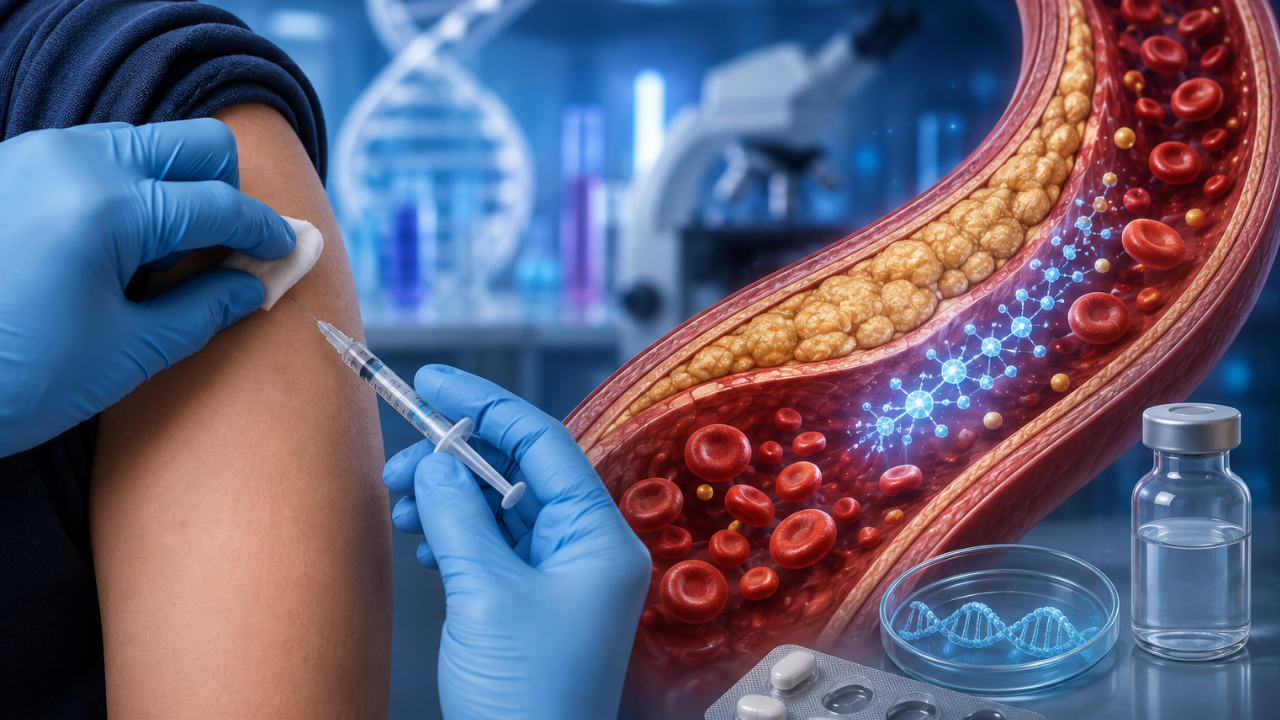
A one-time gene-editing treatment has been reported to lower bad cholesterol (LDL) by as much as 62% in an early clinical trial, raising hopes that high cholesterol could one day be treated without everyday pills. The experimental treatment, VERVE-102, is designed to make a long-term genetic change in the liver. Researchers say it could eventually offer a new way of managing high cholesterol, although it is still years away from standard use. The latest results have been described as an “extremely exciting milestone” by researchers.How Does The One-Time Treatment Work? VERVE-102 targets a gene called PCSK9, which plays an important role in controlling how much LDL cholesterol circulates in the bloodstream. The treatment uses base editing, a form of gene editing, to switch off the PCSK9 gene in liver cells. PCSK9 reduces the liver’s ability to remove LDL cholesterol from the blood. By permanently disabling the gene, researchers hope to reproduce the effect seen in people who naturally have PCSK9 variants that keep their cholesterol low and their risk of coronary heart disease reduced. The treatment is delivered through a single intravenous infusion containing the gene-editing machinery packaged inside a lipid nanoparticle. Also read: How To Read Your Blood Test Results: A Simple Guide To What Your Numbers MeanWhat Did The Trial Find? The Phase 1b Heart-2 trial involved 35 adults with either heterozygous familial hypercholesterolaemia, an inherited condition that leads to high cholesterol, or premature coronary artery disease. Participants received a single infusion at different doses. At the highest dose tested, LDL cholesterol fell by an average of 62%, while PCSK9 levels fell by as much as 88%. The reductions sustained during follow-up, with some being observed for up to 18 months. The study was published in the New England Journal of Medicine, making the findings particularly notable because they provide the first clinical evidence that this type of in-body gene editing can produce a substantial and potentially durable cholesterol reduction.Also read: Stopping Statins After 75 May Not Raise Death Risk In Low-Risk Adults: The Lancet Study Could It Replace Statins? The clinical trial was small and still early-stage. It was designed to examine safety and whether the treatment produces the expected biological effect, not to prove that VERVE-102 prevents heart attacks or strokes by lowering cholesterol. Researchers also need to understand the consequences of permanently altering PCSK9 over many years. The trial did not report any serious adverse events related to the treatment or dose-limiting toxicities, although some participants experienced fatigue and other reactions. Dr Riyaz Patel, a cardiologist at Barts Health NHS Trust and professor at University College London, said the early results provide encouraging evidence that PCSK9 base editing could eventually offer “substantial and durable” LDL reduction with a one-time treatment.Statins and other cholesterol-reducing medicines generally require regular, continued treatment. VERVE-102 is attempting to change the liver’s system of regulating cholesterol. That could be particularly useful for people who struggle to take medication consistently or whose cholesterol remains dangerously high despite existing treatments. Despite the promising results, calling VERVE-102 a 'cure' for high cholesterol would be premature. Eli Lilly plans to begin a Phase 2 trial by the end of 2026, which should provide more information about the treatment’s safety, effectiveness and durability.