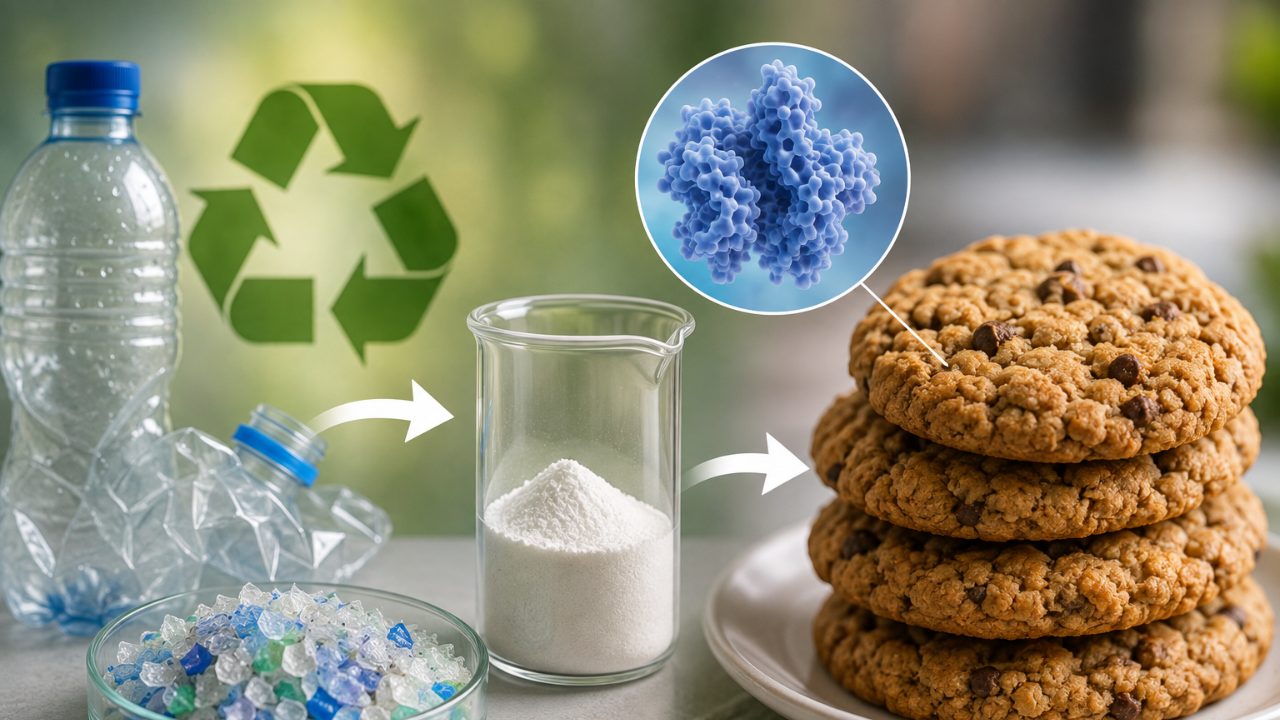
What if an old plastic bottle could become part of your next snack? Scientists at Southern Illinois University Carbondale have created a process that converts plastic and agricultural waste into ingredients for protein-rich, 3D-printed cookies. The unusual food, called µBites, is being developed as part of NASA’s project to explore ways to produce food in environments where there are limited resources like long deep-space missions. The researchers say that the technology could also have applications in disaster-afflicted zones and areas where there are acute food shortages. Can Plastic Be Turned Into Food? The process starts with polyethylene terephthalate (PET), the type of plastic commonly used to make water and soft-drink bottles. Researchers first break down PET, along with discarded corn stalks and leaves, using a process called oxidative hydrothermal dissolution. It uses water and oxygen at high temperatures and pressures to turn the tough waste materials into smaller molecules that microbes can use. The researchers then use specially programmed yeast as tiny biological factories. The yeast converts compounds derived from the waste into proteins, fats, acids, vitamins and flavouring molecules. The resulting mixture is mixed with ingredients like fibre, starch and sweetener before being moulded into cookies using a 3D printer.Also read: Microplastics Found In Anchovies’ Edible Muscle: What It Means For Brain Health Researchers Say The Idea Came From Two Global Problems Associate Professor Lahiru Jayakody, who leads the project, said the team was initially looking for ways to turn plastic waste into more valuable products. “Why not focus on making food? Because plastic is carbon and food is carbon,” Jayakody said. He added that the researchers are using microbes to solve problems created by humans. He said, “Microbes are very clever. So, we are using their traits to solve the problems we created.” The approach could possibly tackle two problems simultaneously — plastic pollution and the need for reliable food sources in environments where conventional agriculture is impossible.Also read: Brazilian Woman Dies After 6 Cosmetic Procedures In 8 Hours: How Can Beauty Treatments Go Wrong? Could These Cookies Actually Be Safe To Eat? The researchers say their current data show that the µBites are safe to eat, but they have not yet undergone human taste testing. The research team is awaiting approval before conducting human trials. Preliminary smell evaluations were promising. Most participants said they would be willing to eat the product in an environment where there is no food source. That distinction matters because turning plastic into food ingredients does not mean people are eating plastic itself. The PET is chemically broken down first, and microbes then use its carbon-containing components to produce new biological molecules.Also read: Paris Jackson Undergoes ‘Painful’ ECT for Depression: Can Electroconvulsive Therapy Reduce Suicide Risk? Why NASA Is Interested In Plastic-Based Food? Long-duration space missions present a particularly difficult food challenge. Astronauts cannot realistically carry unlimited supplies of fresh food, while growing enough crops in space requires substantial water, energy and equipment. A system capable of turning waste materials into food ingredients could therefore help reduce the amount of food and raw materials that need to be transported from Earth. The researchers envision the technology eventually being useful in submarines, disaster-response situations and other isolated environments, in addition to space exploration.