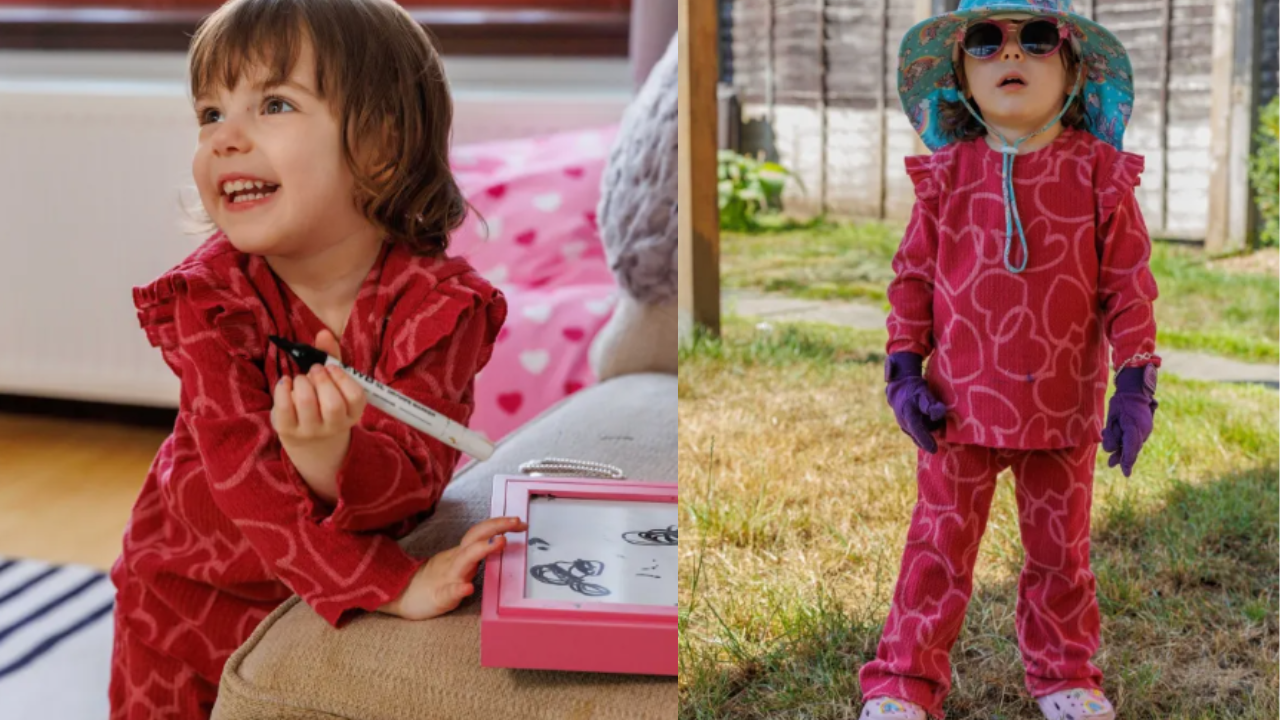
Sunlight brings energy, positivity and vitamin D, but not for two-year-old Mollie Murray from Scotland, who has a rare genetic disorder that makes her “allergic” to the sun.She is reportedly the only child in the UK known to be living with xeroderma pigmentosum (XP), a condition that makes the skin extremely sensitive to ultraviolet (UV) light.The incurable disorder puts Mollie at risk of severe sun damage year-round. She can only safely go outside in protective full-length clothing or after dark.“She burns all year round and has burnt in November before,” her mother, Kirsty Campbell, 35, a charge nurse, was quoted as saying to The Sun.“Everyday life is difficult as she needs full protective outerwear for going outside and sun cream every two hours under her clothes.”UV-Resistant Film Lets Mollie Play In DaylightNow, thanks to the charity The Archie Foundation, UV-resistant film installed at Mollie’s home last month means she can play indoors during the day without the curtains being closed.“It means she can do simple things like look outside for the postman or draw in daylight. My ex-partner was having to take playpark equipment into his house as it wasn’t safe outside. She’s so happy running around like a normal child,” her father, Ryan Murray, 34, said.How Was Mollie Diagnosed?Mollie was in and out of hospital from infancy with symptoms including seizures and severe reflux.She first experienced severe sunburn on an overcast day in May 2025. It happened again two months later, eventually leading to her diagnosis with XPF.Doctors have advised that Mollie is 10,000 times more likely to develop skin cancer than other children. Campbell also uses a UV monitor to check readings in every room and ensure it is safe for Mollie.The Sun said that her family has been told she may develop neurological impairment and mobility problems in her 40s and 50s, but that she should have a relatively normal childhood.What Is Xeroderma Pigmentosum?The National Institutes of Health (NIH) describes XP as a rare autosomal recessive genetic disorder marked by extreme sensitivity to UV radiation, changes in skin pigmentation, skin cancer and, in some cases, neurological problems.The condition usually appears in early childhood and significantly increases the risk of skin cancer.XP affects roughly one in a million people in the US and Europe, although it is more common in some other parts of the world.XP itself is not cancer, but it can increase the risk of skin cancer by thousands of times. Other cancers may also be more common in people with the condition.XP is caused by mutations in specific genes that affect the body’s ability to repair UV-induced DNA damage. It is inherited from parents.Symptoms Of Xeroderma PigmentosumSkin: Severe sunburn even after brief UV exposure, dry or thin skin, early freckles, changes in skin colour, fragile skin and precancerous growths such as actinic keratoses.Eyes: Dryness, irritation, light sensitivity and corneal damage, which can potentially lead to vision loss.Neurological: Some people may develop difficulty swallowing, loss of reflexes, problems controlling muscles, cognitive decline and hearing loss.How Is XP Diagnosed And Treated?XP can be diagnosed through specialised laboratory tests, including studies of cellular sensitivity to UV radiation, chromosomal breakage, complementation studies and gene sequencing.But there is currently no cure for XP. Management focuses on avoiding UV exposure, monitoring for complications and treating symptoms.How Mollie’s Family Is Protecting Her For Mollie’s family, the priority is to protect her while allowing her to experience as much normality as possible. The UV-resistant film has made a small but significant difference, allowing her to look outside, draw in daylight and play indoors without keeping the curtains closed.Mollie’s family hopes to give her the highest possible quality of life while keeping her safe.