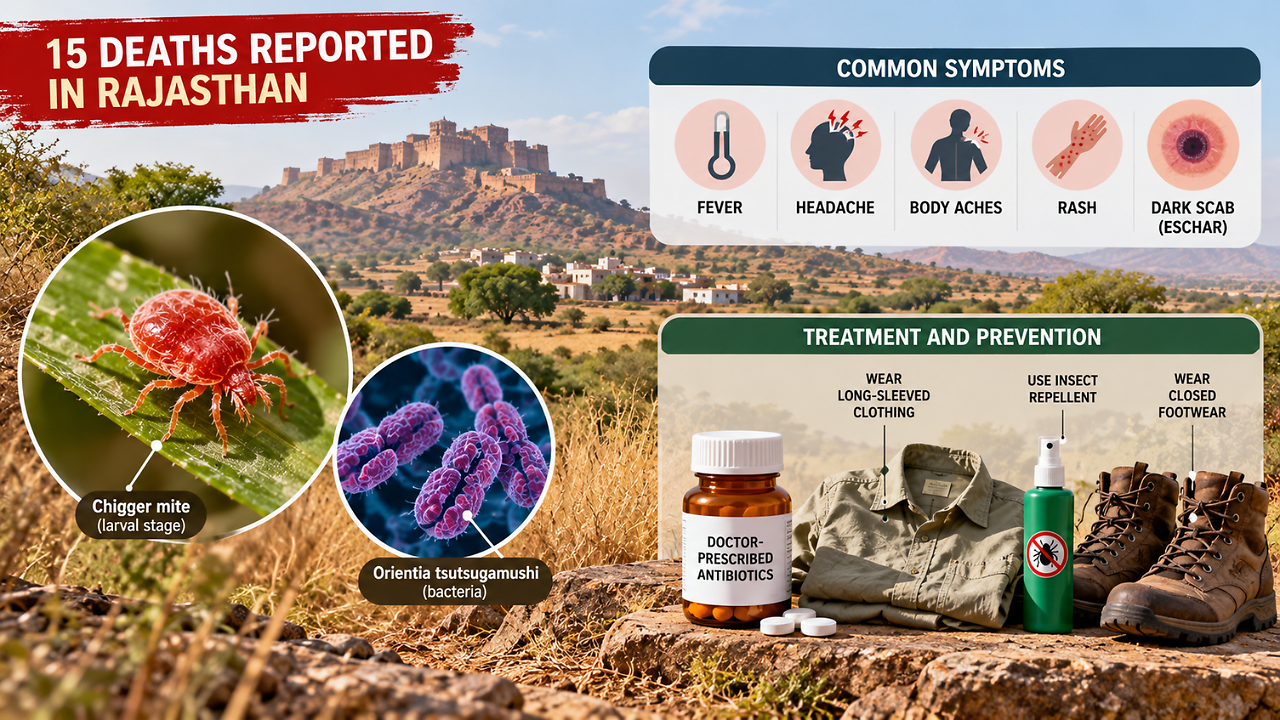
Scrub typhus has claimed 15 lives at Jaipur's Sawai Man Singh (SMS) Hospital between July and September, raising concerns about the fatal infection that can be mistaken as common illnesses like dengue, malaria and typhoid. According to reports, the hospital recorded more than 323 admissions from January to September. September alone accounted for 213 cases and nine deaths. According to the doctors, many of the deaths are attributed to organ failure, highlighting the importance of early diagnosis and treatment. What Is Scrub Typhus And How Is It Transmitted? Scrub typhus is a bacterial infection caused by Orientia tsutsugamushi. It spreads through the bite of infected larval mites, commonly called chiggers, which are found in grassy areas, fields, bushes and vegetation. Humans can become infected while working in agricultural fields or getting exposed in areas where these mites thrive. Scrub typhus does not ordinarily spread directly from one person to another. Symptoms usually develop around one to three weeks after exposure but the period of incubation can vary.Also read: Plague Treatable, CDC Monitoring US Arrivals From Russia After Worker’s Death, Says Director Erica SchwartzSymptoms Of Scrub TyphusEarly symptoms can be difficult to distinguish from other infections. They may include: Fever and chillsHeadacheBody aches and fatigueSkin rashSwollen lymph nodesBurning sensation in eyesDry coughAnother important symptom is an eschar, a dark, scab-like mark that may develop at the site of a mite bite. It can resemble a small burn or black crust, which is often surrounded by redness. However, not every infected person develops this mark, so its absence does not rule out the infection.Dr Vishal Gupta, a professor in the Department of Medicine at SMS Hospital, said that people should be alert if they develop any of the aforementioned symptoms of scrub typhus.The disease is transmitted through bites from mites or fleas. It is therefore important to wear full-sleeved clothing while working in fields and use an insect-repellent cream.Also read: Russia Plague Scare: WHO Reiterates Biosafety Rules Despite No Confirmed Lab Accident When Can Scrub Typhus Become Fatal? If treatment is delayed, the infection can progress towards serious complications, including inflammation of the lungs, liver and brain, kidney injury, bleeding and multiple-organ failure. As its early symptoms may overlap with those of dengue, malaria and other febrile illnesses, diagnosis may be delayed. People with persistent fever, especially after exposure to fields or dense vegetation, should seek medical assessment and mention the relevant exposure to their doctor.Scrub typhus is treatable with antibiotics. Doxycycline is the preferred treatment in many cases, and early treatment can reduce the risk of severe complications. Doctors may choose alternative antibiotics depending on factors like pregnancy, age and the patient's clinical history. Treatment should be prescribed by a healthcare professional. Patients should not self-medicate with antibiotics or wait for symptoms to become severe before seeking care. How Can You Prevent Scrub Typhus? There is currently no widely available vaccine for scrub typhus, making exposure prevention important. Wear long sleeves, long trousers and covered footwear when visiting fields or areas with dense vegetation.Use an appropriate insect repellent according to its label.Avoid sitting or lying directly on grass or scrub vegetation.Shower and change clothes after spending time in potentially infested areas.Seek prompt medical care if fever develops after possible exposure.