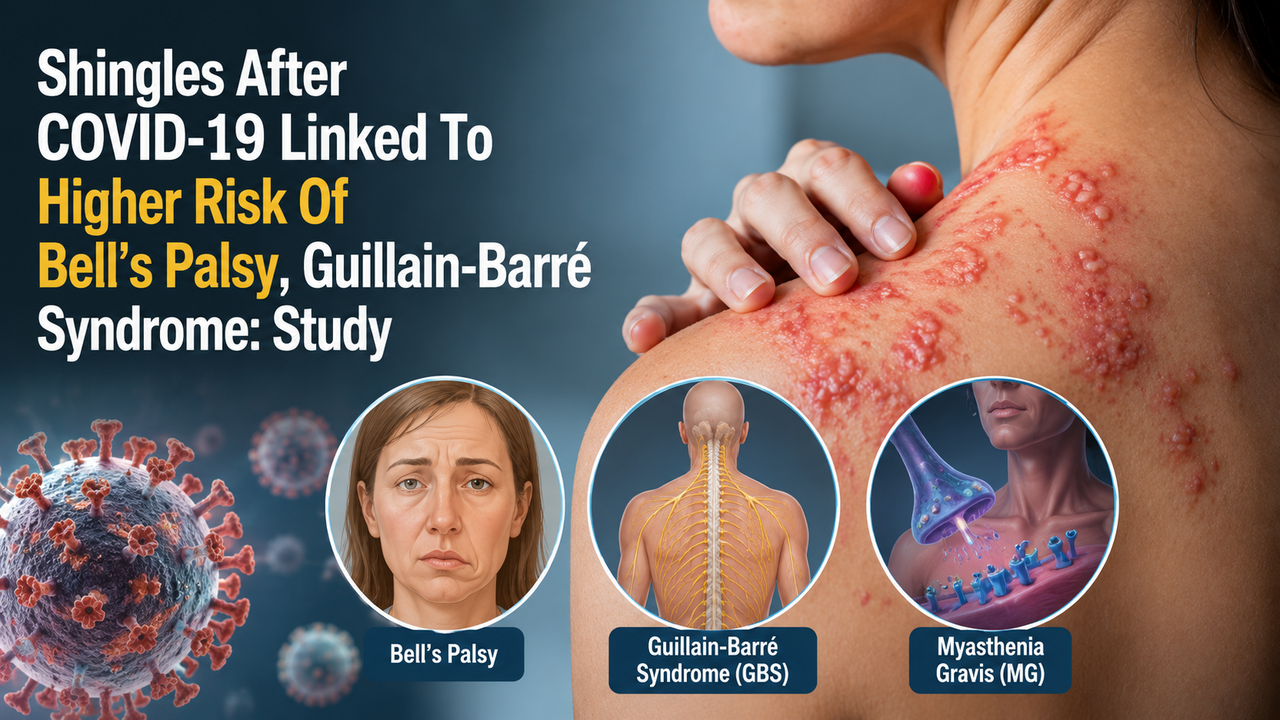
People suffering from shingles after COVID-19 infection may be at a higher risk of neurological conditions such as Bell’s palsy, Guillain-Barré syndrome (GBS), as well as Myasthenia gravis (MG), according to a large study.Shingles (also known as herpes zoster) is a painful condition caused by the varicella zoster virus that lives in the nervous system of people who have had chicken pox.The study, led by researchers from Taiwan and Australia, showed that Bell’s palsy risk increased early after shingles. At the same time, GBS and MG showed delayed increases emerging more than a year later.GBS, Bell’s palsy, and MG are all neurological conditions that cause muscle weakness, but they affect different parts of the nervous system. While GBS and MG cause widespread muscle weakness, Bell’s palsy is strictly localized to the face.The findings, published in International Journal of Medical Sciences, highlighted “the need for symptom-based neurological awareness during both early and delayed post-infectious periods,” the researchers said.What Did The Study Find?Also read: ‘Heat Dome’ Triggering Record-Breaking May Temperatures In France, UK, SpainDuring the COVID-19 pandemic, shingles was reported to occur in people with COVID-19 and in COVID-19 vaccine recipients; shingles vaccination programs were also disrupted.The increased incidence of shingles following COVID-19 suggests a period of immune dysregulation, but the associated long-term neuro-immunological risks remain unclear.To better understand this, researchers from Taipei Tzu Chi Hospital and Queensland University of Technology used electronic health records and compared COVID-19 survivors with individuals with and without shingles reactivation over a three-year follow-up period.The results showed that shingles reactivation after COVID-19 was associated with a significantly increased three-year risk of several neurological disorders.The risk of Bell’s palsy increased early and remained consistently elevated throughout the study period.Patients showed more than three times the risk compared to those without herpes reactivation.The risks of GBS and MG also increased, although these associations appeared later, emerging after the first year of follow-up.The study suggests that post-COVID shingles "may serve as a clinically relevant marker of neuro-immunological vulnerability, particularly among individuals with metabolic comorbidities", the team said.Importantly, the researchers noted that "COVID-19 vaccination was not linked to an increased risk of these neurological outcomes".US FDA Blocked Study Showing COVID And Shingles Vaccines Are SafeRead More: Donald Trump To Undergo 3rd Annual Medical Check-up TodayMeanwhile, in recent news, officials at the US Food and Drug Administration (FDA) blocked the publication of several studies supporting the safety of widely used vaccines against COVID-19 and shingles in recent months, according to a spokesman for the Department of Health and Human Services (HHS).While the studies found serious side effects to be very rare, the HHS said they were pulled over concerns about their conclusions. These withdrawals aim to limit access to vaccines, reflecting broader policy changes under US Health Secretary Robert F. Kennedy Jr., a staunch critic of vaccines.“The studies were withdrawn because the authors drew broad conclusions that were not supported by the underlying data. The FDA acted to protect the integrity of its scientific process and ensure that any work associated with the agency meets its high standards,” said Andrew Nixon, a spokesman for the HHS, which oversees the FDA, in an email to Reuters.“The design of that study fell outside the agency’s purview,” Nixon said on rejecting the shingles vaccine.