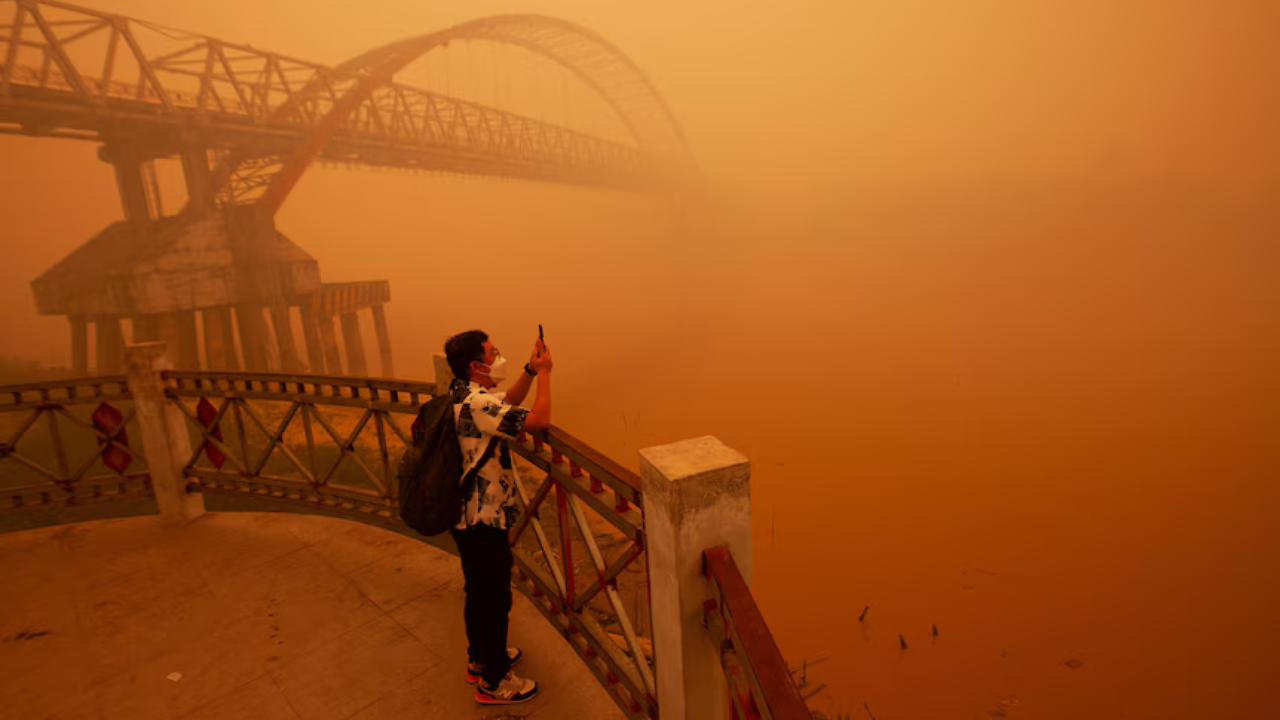
Indonesia’s Central Kalimantan and Sumatra are shrouded in thick orange-yellow smog as wildfires rage across the regions. The smoke has spread across Southeast Asia, obscuring Singapore’s skyline, reaching the Philippines and forcing school closures in parts of Malaysia.Indonesia’s Air Pollution Standard Index (ISPU) exceeded 1,200 on Wednesday, more than four times the “hazardous” threshold of 300, according to Environment Ministry data.Fueled by El Niño-related dry conditions, the country is experiencing its most intense wildfire season in 11 years since mid-July. Authorities have recorded more than 280,000 respiratory problems in haze-affected regions since August 18, as fires burned through hundreds of thousands of hectares across Borneo and Sumatra.Indonesia Plans Dry-Ice Trial To Reduce HazeAlso Read: Landmark Study Links Air Pollution To Higher Hospital Admissions For Cancers & Mental Health Disorders: LancetIndonesia plans to deploy 1.5 tons of dry ice, the solid form of carbon dioxide, over South Sumatra using Cessna aircraft to reduce the haze. The trial will focus on the Palembang area, with the approach potentially extended to other regions if successful, BBC reported.Dry ice can cool the air and encourage cloud formation under suitable atmospheric conditions. However, its effectiveness in reducing wildfire haze will depend on local weather conditions and the method used.Toxic Haze Spreads Across Southeast Asia The smoke has reached Singapore, Malaysia, East Timor and the Philippines. Singapore’s National Environment Agency reported its highest air pollution warning level in the western part of the country on Wednesday. Fine particulate pollution also exceeded the World Health Organization’s recommended annual average exposure level, BBC reported.Singapore has introduced subsidies for haze-related medical treatment and begun distributing N95 masks to eligible residents during periods of very unhealthy air pollution. How Can Wildfire Smoke Affect Your Health?Read More: Delhi Air Pollution Is Back: What Days Of Poor AQI Can Do to Your LungsA 2025 study published in Epidemiology found that the effects of wildfire smoke exposure on the heart and lungs may persist for up to three months after the smoke clears. Higher smoke pollution levels were also associated with an increased risk of health problems.Why Is Wildfire Smoke Harmful?Wildfire smoke contains fine particulate matter called PM2.5, which can penetrate deep into the lungs. Some particles can enter the bloodstream and trigger inflammation.Smoke may also contain toxic substances released by burning plastics, homes, vehicles, electronics and industrial materials.Health Risks Of Wildfire Smoke Prolonged exposure can affect several aspects of health:Lung health: Coughing, reduced lung function, worsening asthma and COPD, and other respiratory problems.Heart health: Fine particles can contribute to cardiovascular stress and heart-related complications.Brain health: Exposure may be associated with headaches and other neurological effects.Mental health: Wildfires, displacement and evacuations can contribute to anxiety, depression and post-traumatic stress disorder (PTSD).Cancer risk: Research is investigating possible links with lung, breast, colorectal and bladder cancers, as well as certain blood cancers. Evidence remains limited, and these associations do not establish direct causation.Children, older adults and people with existing heart or lung conditions are particularly vulnerable.How To Protect Yourself From Wildfire SmokeEven after visible smoke clears, harmful particles may remain in the air. To reduce exposure:Check air quality before going outdoors.Stay indoors and avoid strenuous outdoor activity when pollution is high.Use a HEPA air purifier to reduce indoor airborne particles.Wear a well-fitted N95 mask if going outdoors is unavoidable.Keep windows and doors closed when smoke levels are high.Continue prescribed medications for asthma or heart disease.Seek medical care for persistent or worsening cough, chest pain or breathlessness.