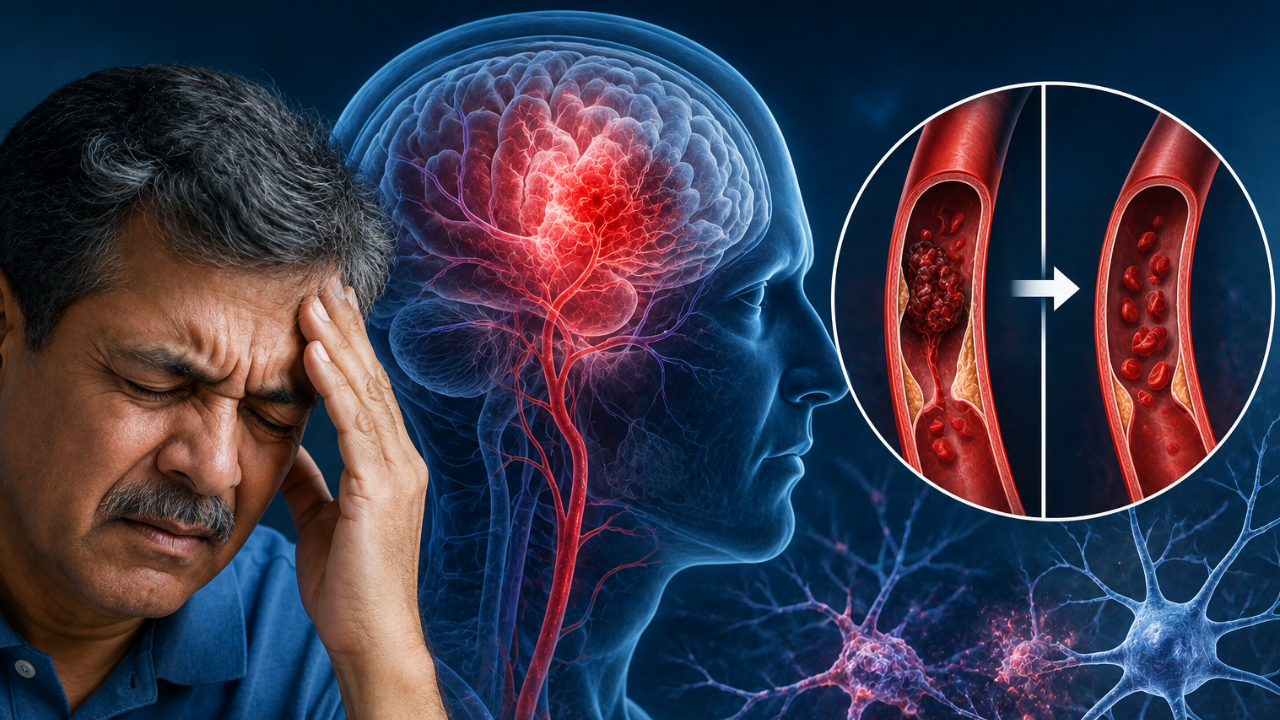
Ischemic strokes are usually treated by removing the blood clot. But it may not be enough. New research has emerged, claiming that the brain’s own response to the stroke may keep causing damage even after the original blockage has been cleared. A study published in the Proceedings of the National Academy of Sciences have found a process in which the body’s defence mechanism can backfire, producing tiny blood clots that damage brain tissue. The findings may explain why two people with seemingly similar strokes can have completely different recoveries. What Happens When One Has An Ischemic Stroke? An ischemic stroke happens when a blood clot blocks a blood vessel supplying the brain. The severed oxygen supply can rapidly injure brain cells. Doctors can restore the cerebral blood flow by using medicines to bust the blood clot or, in more severe cases, surgically removing the clot through a procedure called thrombectomy. But restoring blood flow does not necessarily mean the damage immediately stops. The new research suggests that the immune system, which normally helps the body respond to injury, can become part of the problem.Also read: Sweetener In Sugar-Free Gum Linked To 57% Higher Heart Attack And Stroke Risk: What Is Xylitol? How Can Tiny Clots Cause More Brain Damage? When a stroke occurs, the body's defence system springs into action to prevent the injury and begin the repair process as soon as possible. But, researchers found that this defensive response can also promote the formation of micro-clots. Micro-clots are far smaller than the original clot that caused the stroke. Because of their size, they can obstruct tiny blood vessels that are even more difficult to detect or treat using conventional techniques to remove clots. The result can be reduced blood flow and additional injury to brain tissue, even after the main artery has been reopened.Also read: Vitamin D3 Outperforms D2 In Maintaining Muscle, Heart Function, Shows ICMR StudyTwo Patients With Similar Strokes May Recover DifferentlyThe research offers one possible explanation for the wide differences seen in stroke recovery. Removing the major clot may restore circulation through the main blood vessel, but if microscopic vessels remain blocked, some areas of the brain may continue receiving inadequate blood supply and thus get damaged furtherThat could contribute to ongoing tissue damage and poorer neurological recovery, researchers suggest. It also highlights why simply measuring whether the original artery that has been reopened may not tell the whole story of what is happening inside the brain. Effect On Stroke TreatmentThe findings are still at the early research stage, so it does not mean that patients currently need a different treatment for stroke after thrombectomy. But, understanding how these secondary micro-clots form could eventually open another avenue for treatment that could prevent further damage to the brain. Instead of focusing only on removing the large clot that triggered the stroke, future treatment strategies could target the biological processes that cause these microscopic blockages to form.