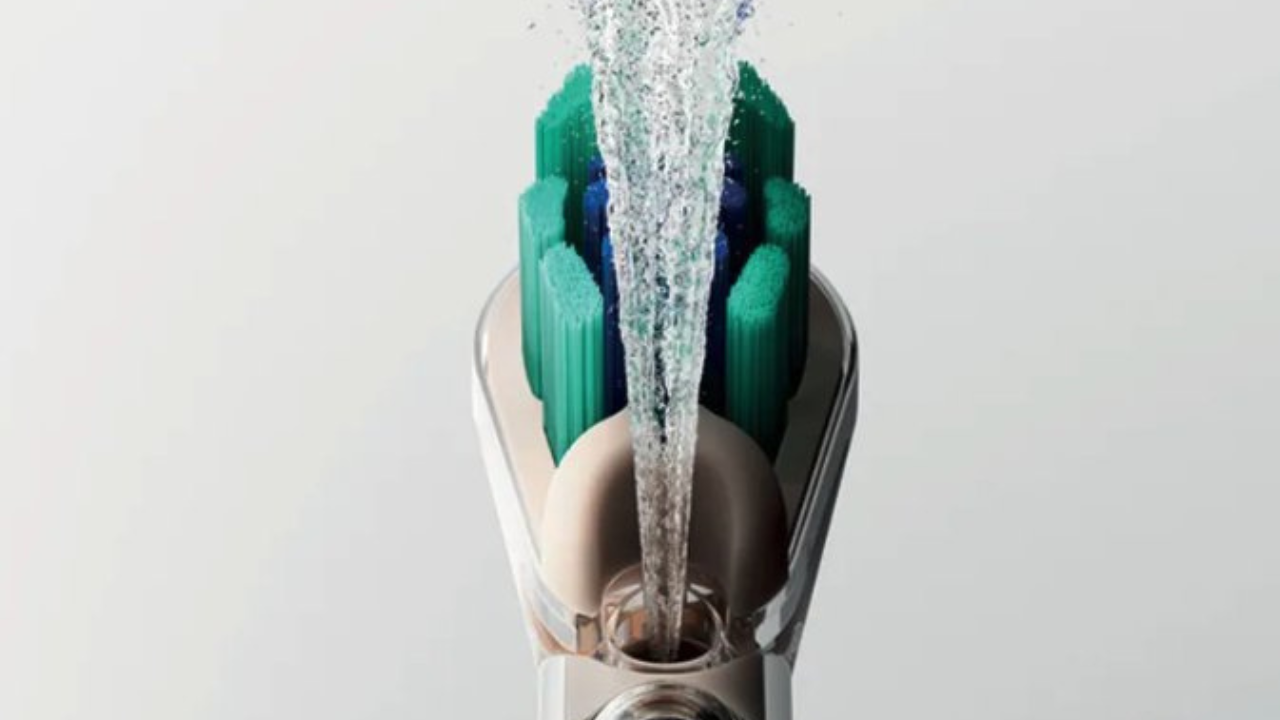
Gone are the days when teeth brushing involved just a toothbrush and toothpaste. It seems that the future of ultimate oral health is here as a newly developed AI toothbrush lets you see parts of your mouth to see parts that you may miss. The electric toothbrush with a built-in camera and machine-learning technology that watches the mouth while you brush. The device is designed to identify gaps between teeth in real time and direct a targeted stream of mouth rinse into those areas. The technology is aimed at the spaces between teeth, one of the most easily missed parts of daily oral hygiene. How Does The Camera Toothbrush Work? The toothbrush has a 100,000-pixel macro-lens camera built into the brush head. Its Gap Optical Targeting system analyses 28 images every second, using machine learning to detect, track and predict the position of gaps between teeth. When it identifies a gap, the toothbrush can automatically trigger a precision conical jet of mouth rinse, directing up to 0.15ml of liquid between the teeth. In other words, instead of simply brushing over the surfaces of the teeth, the device attempts to identify where cleaning is being missed and target those areas while you continue brushing. The camera also streams live footage to a specifically designed app, allowing users to see their brushing technique and coverage.Also read: Vitamin D3 Outperforms D2 In Maintaining Muscle, Heart Function, Shows ICMR Study The Gaps Between Teeth Are Important Brushing alone cannot adequately reach every tight space between teeth. Food particles and plaque can become trapped there, allowing bacteria to accumulate. If plaque remains undisturbed, it can harden into tartar and contribute to gum irritation, bleeding gums, bad breath, and gum disease. Interdental cleaning, therefore, is an important part of oral hygiene alongside brushing. Rather than relying on people remembering to floss separately, the device combines brushing and targeted cleaning with a jet.Also read: Scientists Warn Common Diabetes Drug Taken By Millions Could Cause Life-Threatening 'Diabetic Attack' Could It Actually Improve Oral Health? Dyson says its toothbrush, named Camerajet, has been clinically shown to improve gum health in two weeks when used with its low-foaming mouth rinse compared with a manual toothbrush. It says its brushing system can remove up to 69% more plaque than leading electric toothbrushes. However, evidence is limited, so they should not be interpreted as proof that the device is superior to every existing electric toothbrush or professional dental care. According to the The Guardian, the British Dental Association cautioned that expensive technology is not a replacement for maintaining consistent oral hygiene. The Future Of Brushing? The more interesting feature of the toothbrush is that it can respond to what it sees. Most toothbrushes provide instructions about where and how long to brush. The AI brush attempts to take that a step further by detecting areas that need attention and directing cleaning there in real time. Additionally, unlike traditional water flossers that typically use a needle-shaped stream, this brush uses a broader, cone-shaped jet that sprays mouth rinse across a wider area between the teeth. But even the smartest toothbrush cannot replace regular dental check-ups, professional cleaning when needed, or a consistent oral-care routine.