
- Health Conditions A-Z
- Health & Wellness
- Nutrition
- Fitness
- Health News
- Ayurveda
- Videos
- Medicine A-Z
- Parenting
The Great Healthcare Plan Explained: What Is In President Trump's Health Care Proposal?
Credits: Wikimedia Commons
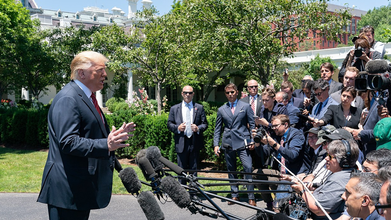
President Trump on Thursday launched The Great Healthcare Plan, a health care proposal that outlined a set of cost-cutting ideas. The White House website reads: "President Donald J. Trump is calling on Congress to enact the Great Healthcare Plan, a comprehensive plan to lower drug prices, lower insurance premiums, hold big insurance companies accountable, and maximize price transparency."
What Does This Great Healthcare Plan Offer?
In terms of lowering the price, prescribed drugs make it to the list, along with insurance premiums. Furthermore, the plan also states "holding big insurance companies accountable" and "maximize price transparency" as the features it will be introducing soon.
Great Healthcare Plan By Trump: Lower Drug Prices
This allows lower prescription prices for all Americans by "codifying the Trump Administration's Most-Favored-Nation deals" to get Americans the same low prices for prescription drugs that people in other countries pay. This had already been introduced before on President's personal website, TrumpRx. On its launch, Trump signed deals with popular weight loss companies to lower their weight loss drug prices.
This initiative will further allow more over the counter medicines to be available at a cheaper rate. The website mentions that this will lower healthcare cost and increase "consumer choice by strengthening price transparency, increasing competition, and reducing the need for costly and time consuming doctor’s visits".
Great Healthcare Plan By Trump: Lower Insurance Premium
This feature includes three things:
- Send the Money Directly To The American People
- Fund cost-sharing Reduction Program
- Cut Kickback Costs
So, what do these mean? The first feature means that the plan aims to stop sending big insurance companies billions in extra taxpayer-funded subsidy payments. Instead, money will be sent directly to eligible Americans to allow them to buy the health insurance of their choice.
The second feature includes a cost-sharing reduction program for healthcare plans which would save taxpayers at least $36 billion and reduce the most common Obamacare plan premiums by over 10%.
Lastly, the plan aims to end kickbacks from pharmacy benefit managers to the large brokerage middlemen that deceptively raise the cost of health insurance.
Great Healthcare Plan By Trump: Hold Big Insurance Companies Accountable
The first feature 'Create the “Plain-English Insurance” Standard' means that it will require health insurance companies to publish rate and coverage comparison upfront on their websites in "plain English - not industry jargon". This will be done so that consumers can make better insurance purchasing decisions.
The plan will also require health insurance companies to publish the percentage of their revenues that are paid out to claims versus overhead costs and profits on their websites.
Lastly, it will require health insurers to publish the percentage of insurance claims they reject and average wait times for routine care on their websites.
Great Healthcare Plan By Trump: Maximize Price Transparency
The plan would require any healthcare provider or insurer who accepts either Medicare or Medicaid to
publicly and prominently post their pricing and fees to avoid surprise medical bills.
Why Is Trump's Great Healthcare Plan Is Being Introduced?
Earlier, polls have found that many voters were unhappy with the rising health care premiums and lawmakers' inability to reach a deal on ACA subsidies. This lapse led to a spike in health-insurance cost of millions of marketplace enrollees.
“There’ll be ongoing conversations, and we hope to be able to support with specific language for the legislation,” Mehmet Oz, one of Trump’s top health care deputies, told reporters Thursday on a conference call.
Kentucky Reports First Positive Measles Case of 2026: Confirmed Health Officials
Credits: Canva
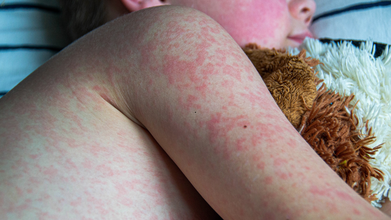
Measles case, the first of 2026 is confirmed in Kentucky state, as the health officials announced the state's first positive measles case of the year on Thursday. The Kentucky Department for Public Health reports that an unvaccinated Jessamine County resident tested positive for measles. Officials have confirmed that the person was exposed to measles when an out-of0state travel who was infectious visited Fayette County between December 31, 2025 to January 2, 2026.
Previously, it was also reported by the health officials that the infectious person stayed at the Hyatt Place in Hamburg from December 31 and January 3. The person ate at Panera in Hamburg on January 1. This information will help in contract tracing.
Why Is Measles Making A Comeback In The US?
The measles outbreak in South Carolina started in October and from thereon, it showed no signs of slowing. In fact, Dr Linda Bell, South Carolina's state epidemiologist said at a news conference on Wednesday, this has happened because country's "lower-than-hoped-for vaccination coverage".
Read: Measles Warning: 'Be Careful, Holidays Worry Us', Says Doctor
Vaccination Rates Have Gone Down
In the 2024–25 school year, roughly 90 percent of students in Spartanburg County received all their required childhood vaccines, including the measles, mumps and rubella shot. While that number may sound high, it still falls short of the national average and the 95 percent coverage that experts say is needed to stop measles from spreading in a community.
Several of the schools where students are now in quarantine have vaccination rates that drop well below 90 percent, based on state data.
Health officials pointed out that measles can disrupt lives even for those who never get sick. In South Carolina, a few unvaccinated students were exposed to the virus twice, which meant they had to quarantine twice for 21 days each time. That is more than a month of missed school.
“That’s a significant amount of time,” Dr. Bell said. “Vaccination continues to be the best way to prevent the disruption that measles is causing to people’s education and to employment.”
State officials have increased their outreach around the MMR vaccine, although it is still unclear if these efforts are making a real difference. Uptake has been limited, according to Andrew Nixon, a spokesperson for the Department of Health and Human Services. He said vaccination remains “the best way to protect against measles” and encouraged people to speak with a doctor about what makes the most sense for them.
This is not just the case of South Carolina, but every where else the vaccination rates have fallen down, noted Harvard Health. In fact, same is the case with flu vaccines as rates have gone down, exposing more vulnerable population to such diseases.
Also Read: How Did This Once Eliminated Disease Come Back?
What Is Measles?
Measles, also known as rubeola, is a highly contagious viral illness that typically causes fever, cough, a runny nose, red and watery eyes, and a distinctive red, blotchy rash that usually begins on the face and spreads downward. The virus spreads through the air when an infected person coughs or sneezes and can lead to serious complications such as pneumonia or brain inflammation. Despite its severity, measles is preventable through a safe and effective vaccine, as per the Mayo Clinic.
How Contagious Is Measles?
Measles is among the most contagious diseases in the world. The virus spreads through airborne droplets that can linger in the air or on surfaces for hours. Up to 90% of unvaccinated people who are exposed to measles will become infected. A single infected person can pass the virus to an estimated 12 to 18 others through close contact or shared spaces. People can transmit the virus days before symptoms become obvious and continue spreading it after the rash appears, according to the World Health Organization.
How Long Is Someone Contagious With Measles?
Someone infected with measles can spread the virus from four days before the rash develops to four days after it appears. The virus spreads so efficiently that about 90% of people who are unvaccinated or have never had measles will become infected after being exposed.
In November, Canada lost its measles elimination status following a significant outbreak, according to the Pan American Health Organization, which works closely with the World Health Organization.
“It’s important to say that all the other 34 countries in the region, they keep their certification as measles-free,” said PAHO/WHO Director Dr. Jarbas Barbosa at the time, as per NPR News.
U.S. health officials have also warned that genetic links between outbreaks in different states suggest continued spread.
“The trajectory that we’re looking at now is that we do anticipate more cases well into January,” Bell said. “What that means for us nationally in terms of how they are defining our designation in this country as having eliminated measles is unclear.”
Skin Implant That Glows Green May Help Detect Illness In Advance, Scientists Reveal
Credits: AI Generated
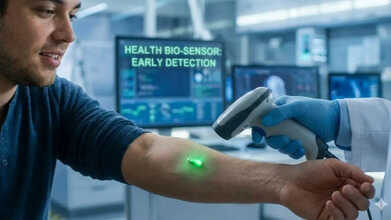
Japanese researchers have developed a new form of wearable health technology that could reshape how illness is detected. The innovation takes the form of a “living skin” implant that emits a green glow when the body begins to show early signs of disease. Designed to sit within the skin, the implant offers a visible warning when internal health markers shift, potentially alerting users before symptoms become obvious.
How The Glowing Implant Works
The implant works by monitoring internal biomarkers, which are proteins linked to inflammation, stress, and disease processes. When these biomarkers move outside their normal range, the implant responds by glowing green. Rather than depending on a smartwatch or fitness tracker, this approach would allow people to see changes in their health directly on their skin, offering continuous feedback throughout the day and night.
The project was developed by scientists from Tokyo City University and the University of Tokyo, with technical support from engineers at RIKEN and Canon Medical Systems. The team has already tested the concept in mice, where the implant functioned as a living sensor display embedded in the skin.
Why Researchers Sought a New Approach
The idea behind the technology grew out of the limitations of current health monitoring tools. According to Professor Hiroyuki Fujita, who was involved in the study, many existing methods are either invasive or provide only brief snapshots of a person’s health. “Conventional approaches are often invasive or provide only snapshots in time,” he explained. “Our goal was to explore a biologically integrated system that enables continuous sensing and intuitive interpretation, even at home.”The research was also featured in the Daily Star as part of The Weird Science Drop newsletter, which highlighted a range of unusual scientific developments alongside this project.
No Batteries, No Replacements
One of the most striking aspects of the implant is what it does not need. The sensor is made from living epidermal stem cells, allowing it to survive through the skin’s natural regeneration process. Because it is maintained by the body itself, the implant does not require batteries or external power sources, as per Express UK.
Professor Fujita noted that this makes the technology fundamentally different from traditional devices. “Unlike conventional devices that require power sources or periodic replacement, this system is biologically maintained by the body itself,” he said. In laboratory experiments, the sensor remained functional for more than 200 days, with the engineered stem cells continuously renewing the skin while keeping the implant active.
Potential Uses Beyond Human Health
As per Express UK, while the technology is still being tested, the researchers believe its applications could extend well beyond human healthcare. They suggest it may be especially useful in animal research and veterinary medicine. Since animals cannot describe how they feel, a visible signal on the skin could help detect illness earlier and allow for faster intervention.
Although the implant is not yet ready for everyday use, it offers a glimpse into a future where health monitoring becomes part of the body itself, quietly working in the background and providing clear visual cues when something is not right.
Chocolate Products Recalled In US Over Possible Salmonella Contamination

Credits: Canva
Specialty chocolate bars are being removed from store shelves after concerns were raised about possible salmonella contamination, the US Food and Drug Administration said on January 12. Spring & Mulberry has announced a voluntary recall of its Mint Leaf Date-Sweetened Chocolate Bar, which has been sold online and at selected retail locations across the country since September, the FDA confirmed.
The issue was flagged during routine testing carried out by an independent laboratory. So far, no illnesses or negative health effects linked to the product have been reported.
As per The Independent, consumers who purchased the recalled chocolate are being advised to throw it away and seek a refund from Spring & Mulberry. The company has asked customers to contact them directly and provide a photograph of the chocolate bar showing the affected lot code.
Chocolate Bars Sold Across The US Recalled Over Salmonella Concerns
A well-known chocolate brand has issued a recall after possible salmonella contamination was detected. Spring & Mulberry, a Raleigh, North Carolina-based company, voluntarily recalled its Mint Leaf Date-Sweetened Chocolate Bar following routine third-party testing that found traces of salmonella, according to an FDA notice released Monday.
The recalled bars have been sold online and through selected retail partners since September 15, 2025. Consumers can identify the affected product by its teal-colored packaging and the lot code 025255 printed on the back of the box and the inner wrapper.
What Is Salmonella?
Salmonella is a type of bacteria that can cause serious and, in some cases, life-threatening infections, particularly in young children, older adults, and people with weakened immune systems, according to the FDA. Symptoms of salmonella infection may include:- Bloody diarrhea or diarrhea that lasts more than three days without improvement
- Diarrhea accompanied by a fever above 102 degrees
- Severe vomiting that makes it difficult to keep fluids down
- Signs of dehydration such as dry mouth, reduced urination, and dizziness when standing
- Abdominal cramps
Symptoms usually appear between six hours and six days after exposure. While most people recover within four to seven days, those at higher risk, including children under 5 and adults over 65, may develop more severe illness that requires medical care or hospitalization.
Affected Lot Code For Recalled Chocolates
The recalled Spring & Mulberry chocolate carries the lot code #025255. This code applies specifically to the Mint Leaf Date-Sweetened Chocolate Bar that has been pulled from the market due to the potential risk of salmonella contamination identified during routine lab testing.
Shoppers are urged to check their packaging carefully for the listed lot code. Anyone who has a bar with the affected code should not eat it. Instead, they should discard the product and contact Spring & Mulberry to request a refund.
As per USA TODAY, although no illnesses have been reported so far, the recall has been issued as a precaution to safeguard public health, especially for vulnerable groups such as children, older adults, and people with compromised immune systems. The FDA has shared further guidance on recall steps and salmonella symptoms.
The chocolate recall follows another FDA action just months earlier involving Doughy Chocolate Chip Cookie Dough produced by Hudson River Foods in November, also due to possible salmonella contamination. That recall was later upgraded to a Class I recall on December 5 after officials determined that consuming the product could result in serious health effects or death.
A total of 113 units of the edible cookie dough were included in that recall. The affected products were sold in 12-ounce containers and carried a best-by date of July 4, 2026.
- Follow Us :


© 2024 Bennett, Coleman & Company Limited