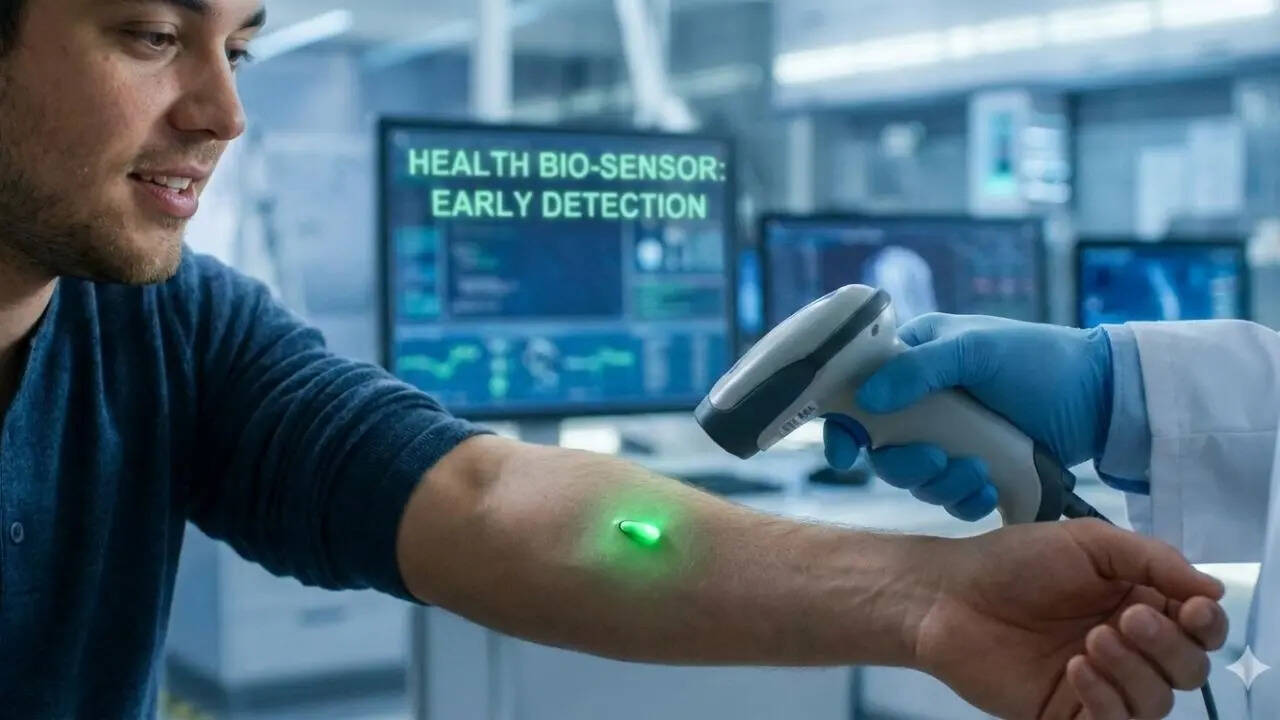
Japanese researchers have developed a new form of wearable health technology that could reshape how illness is detected. The innovation takes the form of a “living skin” implant that emits a green glow when the body begins to show early signs of disease. Designed to sit within the skin, the implant offers a visible warning when internal health markers shift, potentially alerting users before symptoms become obvious.How The Glowing Implant WorksThe implant works by monitoring internal biomarkers, which are proteins linked to inflammation, stress, and disease processes. When these biomarkers move outside their normal range, the implant responds by glowing green. Rather than depending on a smartwatch or fitness tracker, this approach would allow people to see changes in their health directly on their skin, offering continuous feedback throughout the day and night.The project was developed by scientists from Tokyo City University and the University of Tokyo, with technical support from engineers at RIKEN and Canon Medical Systems. The team has already tested the concept in mice, where the implant functioned as a living sensor display embedded in the skin.Why Researchers Sought a New ApproachThe idea behind the technology grew out of the limitations of current health monitoring tools. According to Professor Hiroyuki Fujita, who was involved in the study, many existing methods are either invasive or provide only brief snapshots of a person’s health. “Conventional approaches are often invasive or provide only snapshots in time,” he explained. “Our goal was to explore a biologically integrated system that enables continuous sensing and intuitive interpretation, even at home.”The research was also featured in the Daily Star as part of The Weird Science Drop newsletter, which highlighted a range of unusual scientific developments alongside this project.No Batteries, No ReplacementsOne of the most striking aspects of the implant is what it does not need. The sensor is made from living epidermal stem cells, allowing it to survive through the skin’s natural regeneration process. Because it is maintained by the body itself, the implant does not require batteries or external power sources, as per Express UK.Professor Fujita noted that this makes the technology fundamentally different from traditional devices. “Unlike conventional devices that require power sources or periodic replacement, this system is biologically maintained by the body itself,” he said. In laboratory experiments, the sensor remained functional for more than 200 days, with the engineered stem cells continuously renewing the skin while keeping the implant active.Potential Uses Beyond Human HealthAs per Express UK, while the technology is still being tested, the researchers believe its applications could extend well beyond human healthcare. They suggest it may be especially useful in animal research and veterinary medicine. Since animals cannot describe how they feel, a visible signal on the skin could help detect illness earlier and allow for faster intervention.Although the implant is not yet ready for everyday use, it offers a glimpse into a future where health monitoring becomes part of the body itself, quietly working in the background and providing clear visual cues when something is not right.