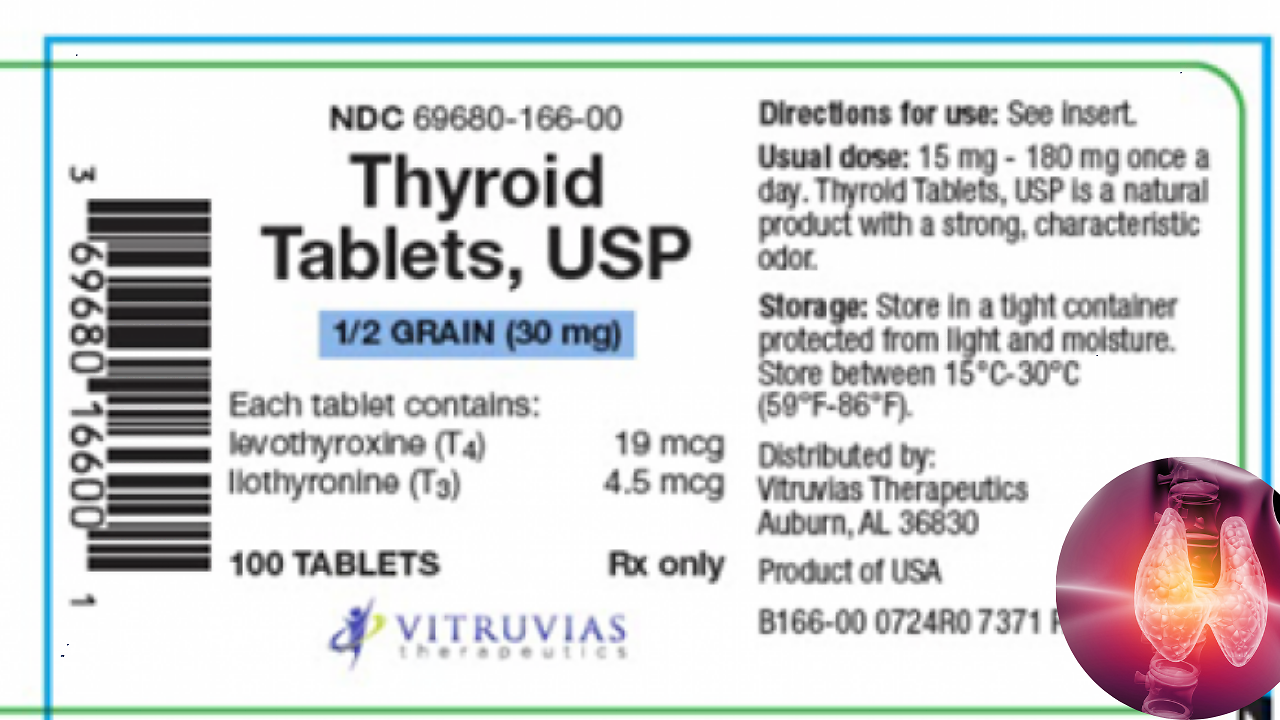
Vitruvias Therapeutics’ thyroid medication, recalled nationwide in August, has been elevated to the highest risk level by the US FDA.The recall was issued because the medication may be superpotent, potentially causing hyperthyroidism (overactive thyroid).On Wednesday, the FDA updated the recall to Class I, its most serious recall classification. It applies when there is a “reasonable probability that the use of or exposure to a violative product will cause serious adverse health consequences or death.”Which Thyroid Tablets Have Been Recalled?Also read: US Cancer Death Rates Fall For Men, Women: Lung Cancer Progress Drives DeclineThe affected product is:Vitruvias Thyroid Tablets USP 30 mgLot number: 504950Expiration date: September 30, 2026In its August 24 recall notice, the company said the tablets were potentially superpotent.Risks of Superpotent Thyroid MedicinesMillions of people with hypothyroidism rely on thyroid tablets every day to replace hormones their bodies cannot produce.However, taking superpotent thyroid tablets can cause hyperthyroidism (overactive thyroid). It can force the body's metabolism into overdrive, speeding up organs and bodily functions. Left untreated, this constant strain can cause serious health complications across multiple systems in the body.In addition, people taking the medication can be at risk of weight loss, heat intolerance, fatigue, nervousness, muscle weakness, hypertension, chest pain, rapid heart rate, heart rhythm disturbances.The lot was distributed nationwide in the US to Vitruvias Therapeutics’ direct accounts between January 31 and September 30, 2025. Of 3,655 units released, 1,955 were sold.Read More: FDA Recalls Popular Thyroid Medication: What Levothyroxine Users Need to Know Who Is At Greater Risk?The company identified the following groups as being at greater risk from superpotent thyroid tablets:Elderly peoplePregnant womenInfantsExcess thyroid hormones in older adults have been associated with adverse outcomes, particularly those affecting the heart.Vitruvias Therapeutics said it has not received any reports of adverse events known to be linked to the recall.The company is notifying wholesalers to stop distributing the recalled product and arranging for its destruction.What Should Patients Do? Patients taking Thyroid, USP from Lot 504950 should not stop taking it without first contacting their healthcare provider for guidance and/or a replacement prescription.Hypothyroidism vs HyperthyroidismSpeaking to HealthandMe, Dr Shruti Kotangale, Consultant Gynaecologist, Obstetrician and Infertility Expert at AIMS Hospital, Dombivli, explained that both conditions are commonly seen in women.Hypothyroidism occurs when the thyroid is underactive. Symptoms can include tiredness, weight gain, dry skin, hair fall, constipation, feeling cold, a slow heartbeat and low mood or depression.Hyperthyroidism occurs when the thyroid is overactive. Symptoms may include weight loss, a fast heartbeat, sweating, anxiety, tremors, irritability, frequent bowel movements and difficulty sleeping.Women should seek medical attention and manage these symptoms without delay.Common Symptoms Of Thyroid DisordersThyroid disorders may cause a range of symptoms, including:FatigueCognitive changesGastrointestinal problemsSensitivity to coldSkin and hair changesWeight changesHow Is Thyroid Disease Diagnosed?Diagnosis may involve:Physical examination: To check for swelling or nodules in the neck.Blood tests: These may measure TSH, T4 and T3 levels, along with thyroid antibodies when conditions such as Hashimoto’s disease or Graves’ disease are suspected.Ultrasound or thyroid scans may also be used to assess the thyroid’s structure.