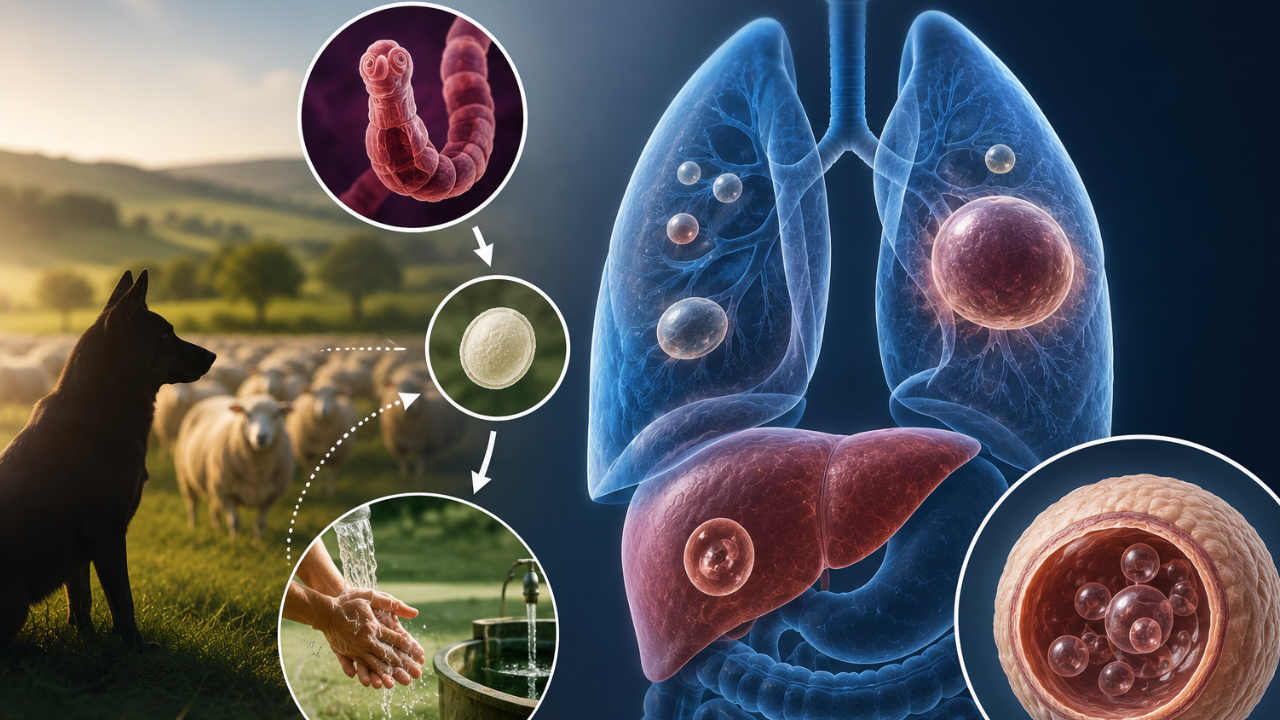
An 86-year-old sheep farmer from Wales recently shared how he unknowingly lived with a rare parasitic disease for years before experiencing what he described as "the worst pain" of his life.The rare case has highlighted a little-known infection that experts say can remain hidden inside the body for decades. Meredydd Jones, from Trecastle in Powys, was diagnosed with hydatid disease, a parasitic infection caused by the tapeworm Echinococcus granulosus. He said that slow-growing cysts had been developing in his lungs for years before he was rushed to the hospital after he complained of severe pain in 2016. "I hadn't been able to control the pain, and it was more intense than anything I had before," Jones recalled. He later underwent two surgeries in 2018 and 2019 to remove cysts from both lungs, while another cyst in his liver continues to be monitored. The case comes as Public Health Wales raise concerns that the disease, though uncommon, remains a significant public health issue in sheep-farming regions. What Is Hydatid Disease? Hydatid disease, also known as cystic echinococcosis, is caused by the larval stage of the Echinococcus tapeworm. The parasite typically circulates between dogs and livestock such as sheep and cattle. Humans become accidental hosts after ingesting microscopic tapeworm eggs, usually through contact with infected dogs or contaminated food, water, or soil. Unlike many infections, hydatid disease develops very slowly and gradually. The parasite forms fluid-filled cysts that most commonly affect the liver and lungs, although they can also develop in the brain, bones, or other organs.Also read: Milestone In Kala-Azar Treatment: WHO Updates Treatment Guidelines, Recommends Shorter & Safer Regimens Why Symptoms Take Years To Appear?According to Dr Chris Williams, consultant epidemiologist at Public Health Wales, the disease can remain hidden for an unusually long time. "What happens is normally the tapeworm transmits between farm animals like sheep and cows to dogs, and the dogs excrete eggs," he explained. "Unfortunately, if humans ingest the eggs, they can then form cysts within humans." He added that symptoms may not appear for 10 to 20 years, which is why infections are often discovered only after cysts become large enough to cause complications. Depending on where the cysts develop, people may experience: Persistent abdominal pain or swellingChest pain, chronic cough or shortness of breathUnexplained lumpsFever if cysts become infectedSevere allergic reactions if a cyst ruptures Public Health Wales says hydatid disease is uncommon but can have serious health consequences if left untreated. Researchers at Aberystwyth University are now studying dogs, livestock and farming practices to better understand whether the parasite is emerging again in parts of Wales. The project includes analysing dog faecal samples and tracking farm dogs to understand how the parasite may spread between farms. Experts say prevention remains the most effective strategy. Regular deworming of dogs, proper disposal of livestock carcasses, avoiding feeding dogs raw offal, and practising good hand hygiene after handling animals can significantly reduce the risk of infection.