
- Health Conditions A-Z
- Health & Wellness
- Nutrition
- Fitness
- Health News
- Ayurveda
- Videos
- Medicine A-Z
- Parenting
UK Releases List Of 24 Infectious Diseases That Could Pose Threat In Future
Credit: Canva
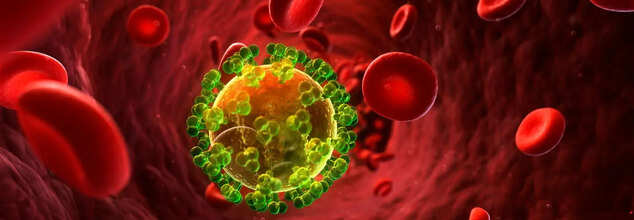
Health authorities in the UK have a new watch list of 24 infectious diseases that could pose the greatest future threat to public health. The list encompasses bird flu as well as mosquito-spread illnesses that may become common with rising temperatures from climate change. The list, which was curated by the UK Health Security Agency (UKHSA), does not include COVID-19.
The aim behind releasing this list is to steer researchers and health experts to invest in making more new tests and vaccines ot medicines in preparation. "This rating does not indicate which pathogen UKHSA considers most likely to cause the next pandemic, but rather those pathogens requiring increased scientific investment and study," UKHSA said in a statement.
Diseases Are 'Highly Spreadable'
Measles, which is a part of the highly contagious virus family Paramyxoviridae, is on the list. According to Prof Woolhouse, a novel measles-like virus would be highly spreadable and "impossible to control by even the strictest lockdown", making it "a threat far worse than Covid." Another significantly dangerous enlisted disease is Norovirus, also known as winter vomiting bug, which is wreaking havoc in the UK. Q fever, which is a disease caused by the bacteria Coxiella burnetii, has also been marked as a potential health threat.
Here's The List Of 24 Diseases
- Adenovirus
- Lassa fever
- Norovirus
- Mers
- Ebola (and similar viruses, such as Marburg)
- Flaviviridae (which includes dengue, Zika and hepatitis C)
- Hantavirus
- Crimean-Congo haemorrhagic fever
- Flu (non-seasonal, including avian)
- Nipah virus
- Oropouche
- Rift Valley fever
- Acute flaccid myelitis
- Human metapneumovirus (HMPV)
- Mpox
- Chikungunya
- Anthrax
- Q fever
- Enterobacteriaceae (such as E. coli and Yersinia pestis, which causes plague)
- Tularaemia
- Moraxellaceae (which cause lung, urine and bloodstream infections)
- Gonorrhoea
- Staphlylococcus
- Group A and B Strep
COVID On Decline
Besides this report, the UK health authorities also published 'The infectious diseases impacting England: 2025' report that marked a rise in both endemic disease and vaccine-preventable infections. "Infectious diseases were the primary reason for over 20% of hospital bed usage, at an annual cost of almost £6bn in 2023 to 2024. Developing scientific capability and effective interventions are having positive impacts, but more action is needed," it said.This report also mentioned that COVID-19 transmission has declined, with the virus circulating at baseline levels of activity for much of the current winter season. Incremental vaccine effectiveness was around 45% against hospitalisation, with vaccine uptake in older age groups at 60% to 70%. Vaccination of priority groups, in particular the elderly, remained an important intervention to protect against severe disease.
Delhi Air Pollution: PM2.5 Exposure May Raise Type 2 Diabetes Risk By 16%, Study Finds
Credit: AI Image
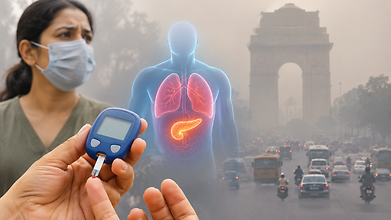
Long known to be a key risk factor for lungs and heart, a new study now shows that long-term exposure to air pollution and fine particulate matter (PM2.5) may increase the risk of developing type 2 diabetes by 16%.
A rise of 10 micrograms per cubic metre in PM2.5 concentration was associated with a 10% to 16% increase in diabetes risk.
The findings come amid rising pollution levels in Delhi, highlighting the potential metabolic health consequences of prolonged exposure to poor air quality.
Published in the Journal of Vascular Diseases, the analysis found that air pollution is not just a cardiopulmonary concern but also a potential contributor to metabolic health problems.
What Did The Study Find?
The researchers analysed 13 major previous reviews, covering more than 200 million participant observations worldwide.
Reviews examining new diabetes cases consistently found an association between air pollution exposure and a higher risk of developing the disease.
The studies also reported higher diabetes prevalence, elevated blood sugar levels and an increased burden of related health complications.
The association was observed even among populations living in areas classified as having clean air. Since nearly everyone is exposed to outdoor air pollution, even relatively small increases in individual risk could translate into millions of additional diabetes cases worldwide.
South and East Asia are among the regions likely to face a particularly high burden.
Air Pollution Must Be Part Of Diabetes Prevention
Dr. Anoop Misra, Padma Shri, Executive Chairman and Director, Diabetes and Endocrinology, Fortis C-Doc Hospital for Diabetes and Allied Sciences, said air pollution should be recognised as a potential contributor to metabolic disorders, including diabetes, rather than viewed only as a respiratory and environmental concern.
“Air quality management must become a core part of diabetes prevention,” he said.
He also highlighted the growing public health burden in heavily polluted South Asian cities and stressed the need to integrate air quality management into diabetes prevention.
Yashendra Sethi, first author of the study, said India must focus on improving environmental conditions to protect metabolic health.
“If India wants to tackle both diabetes and pollution, we must improve metabolic health and clean up our environment. We cannot fight diabetes while ignoring the air we breathe,” Sethi said.
The researchers emphasised that diabetes prevention should be considered alongside heart and lung health when framing clean-air guidelines.
They recommended strengthening continuous air quality monitoring, tightening emissions standards and incorporating environmental factors into national healthcare policies.
Delhi Air Quality In Very Poor Category
Delhi's air quality slipped into the 'very poor' category on November 11, with the 24-hour average Air Quality Index (AQI) settling at 313. This came a day after stronger winds brought some relief, pushing the AQI into the 'poor' category.
According to the Air Quality Early Warning System (EWS) for Delhi, PM2.5 and PM10 concentrations are also expected to rise over the next two days.
Of the 58 monitoring stations that recorded data on Wednesday, one reported 'severe' air quality, 34 were in the 'very poor' category, 22 in the 'poor' category and one in the 'moderate' category.
Christina Applegate Suspects Breast Implants May Have Caused MS-Like Symptoms: What Is the Condition?

Credit: Wikimedia Commons
Weeks after revealing that she had been wrongly diagnosed with multiple sclerosis (MS), Emmy-winning actor Christina Applegate is exploring whether breast implant illness could explain her chronic pain and fatigue.
Applegate has been experiencing persistent pain and fatigue, which have also affected her mobility. She gradually withdrew from public life after her MS diagnosis in 2021, as she navigated the physical and emotional toll of the condition.
However, in October, the 54-year-old actor revealed that a doctor had told her she did not have MS. She is now undergoing tests for various conditions, including autoimmune diseases and Lyme disease, to determine the cause of her debilitating symptoms.
Applegate is also considering whether her breast implants could be contributing to her health problems. Speaking on the November 10 episode of her podcast, she said her suspicions were reinforced after someone sent her a study that described breast implant illness as "presenting as MS", USA Today reported.
"I swear, over the last five years I thought, 'What if they're leaking and they're poisoning me?'" Applegate said. "So that's one that I will be looking into, because it's something I've thought about."
Christina Applegate Opens Up About Her Symptoms
Also read: Christina Applegate Reveals Multiple Sclerosis Misdiagnosis: Why The Disease Is Hard To Diagnose
Applegate said she is struggling to understand what is causing her persistent pain and fatigue, describing how the symptoms have affected her mobility.
"I'm trying to figure out what's wrong with me; of course I know about these things," she said, referring to the messages she receives from people suggesting possible diagnoses.
She added that the number of possible explanations had become overwhelming.
"It's overwhelming because there's so many different things that could be going on, and this pain stuff – I don't know what's going on in my joints, but I can't move my right shoulder at all now. I can't lift my arm," she said.
In an earlier podcast episode in October, Applegate spoke emotionally about the uncertainty surrounding her health after learning that she did not have MS.
"I'm back at square one – that I don't know what's going on with me," she said.
Despite the news, Applegate said her symptoms have not improved.
“I haven’t gotten better. I still have to use wheelchairs when I go to the doctor’s office. I can’t walk from the car to the room. I’m still in this. Nothing magical happened when she said, ‘You don’t have MS.’ Nothing magical happened.”
Christina Applegate's Breast Cancer And Implant History
Applegate was diagnosed with early-stage breast cancer in 2008 and underwent a double mastectomy, followed by breast reconstruction.
She also discovered that she carries a BRCA1 gene mutation, which increases the risk of developing breast and ovarian cancers.
The actor has previously spoken about her breast implants, saying she was "way overdue for having [the implants] replaced."
What Is Breast Implant Illness?
Breast implant illness (BII) is a term used to describe a range of systemic symptoms that some people report experiencing after receiving breast implants.
The US Food and Drug Administration (FDA) has highlighted several potential complications associated with breast implants, including capsular contracture, implant rupture, certain cancers and symptoms collectively described as breast implant illness.
Reported BII symptoms include:
- Persistent fatigue
- Memory and concentration problems, often described as brain fog
- Joint and muscle pain
- Hair loss
- Weight changes
- Anxiety and depression
However, BII is not a formally recognised medical diagnosis. The FDA notes that there are no specific tests or established diagnostic criteria to define or identify the condition.
While some people report improvements in symptoms after implant removal, the relationship between breast implants and these systemic symptoms remains an area of ongoing research. Applegate's concerns about a possible connection with her symptoms have not yet been medically established.
US Set To Lose Measles-Elimination Status After 26 Years: Prof Devi Sridhar Explains Reasons Behind Resurgence

Credit: iStock
Twenty-six years later, the country is facing its worst outbreak of the highly contagious disease and is on the verge of losing its hard-earned elimination status.
As of November 5, 2026, the US had reported 5,182 confirmed measles cases, according to the CDC. It is the first time that the country has crossed 5,000 mark since 1991.
Further, Pennsylvania (six), New York (one) and Wisconsin (one) have reported a combined eight measles-associated deaths this year — more than the total recorded between 2000 and 2024.
The Pan American Health Organization (PAHO), a regional office of the World Health Organization, is reviewing the country's status. An announcement is expected next week.
What Is Driving The Measles Resurgence In The US?
Vaccine hesitancy is a key factor behind the resurgence, said Professor Devi Sridhar, Professor and Chair of Global Public Health at the University of Edinburgh, in an exclusive conversation with HealthandMe.
"We're seeing more parents concerned about the side effects of vaccines. Perhaps they've seen a video online or read something that makes them nervous. So for a while in the 1990s, for example, the MMR vaccine was falsely linked to rising autism rates."
She noted that while the study has since been debunked, misinformation of this kind has contributed to vaccine hesitancy, with parents choosing not to vaccinate their children despite vaccines being available because they fear potential side effects.
Falling Vaccination Rates Allow Measles To Spread
Two doses of the MMR vaccine are approximately 97% effective at preventing measles. Even a single dose provides strong protection, offering about 93% effectiveness.
Sridhar said the number of vaccinated children was falling below the threshold needed to prevent the virus from circulating and causing deaths in the country.
"But what we're seeing is that the number of children vaccinated is falling underneath that threshold, which is around 85 to 90%. And once you get a population that is not vaccinated to that level, measles starts to circulate, then it starts to find children, and unfortunately they get infected. And because it's so serious, we are starting to see deaths even in the United States."
Sridhar also warned that misinformation online is undermining trust in vaccines. She said online claims about the MMR vaccine, including false links to autism and fears about side effects, can discourage parents from vaccinating their children.
"That's very dangerous now because as we know, the information on the internet and on social media isn't regulated."
Read More: What Happens After Measles Infection? The Hidden Risks That Can Last For Years
Can The US Rebuild Public Trust In Vaccines?
Sridhar pointed to changes in the country's public health and scientific institutions over the past two years, including the dismantling of the vaccine advisory group and a shift towards alternative therapies that has contributed to vaccine hesitancy.
However, with the recent Democratic gains in Congress, she is hopeful about the possibility of restoring science in government.
“Those who are scientifically trained, those who are doctors, clinicians, PhDs, people who have that kind of background will really help to hopefully bring science back into government and into government advice and help build that trust.”
How Is Measles-Elimination Status Determined?
PAHO considers endemic measles transmission to have been re-established when the same virus genotype and lineage circulates uninterrupted for at least 12 months within a country or defined geographical area.
The Regional Verification Commission reviews epidemiological and laboratory evidence, alongside information on vaccination coverage, surveillance and outbreak response, before making recommendations on a country's status.
Publicly available data shows that several chains of measles transmission have continued for more than a year in the US, according to scientists who analysed the data at the request of The New York Times.
Three separate transmission chains — two in Utah and one in Arizona — were continuing in July 2026 and could be traced to an outbreak in Texas more than a year earlier. One of these chains was still circulating in Utah in September, occasionally spilling over into Oregon and Washington.
Another transmission chain, detected in Virginia at the start of the year, was still spreading in Iowa, Indiana and Pennsylvania as of mid-October.
- Follow Us :


© $2026 Times Horizon Private Limited