
- Health Conditions A-Z
- Health & Wellness
- Nutrition
- Fitness
- Health News
- Ayurveda
- Videos
- Medicine A-Z
- Parenting
Under RFK Jr's MAHA, More Food Dyes Are Getting Banned In US
Credits: Canva
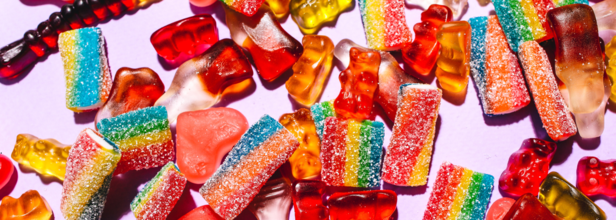
Whether conservative and Republican Oklahoma or the liberal-leaning New York, they are all finally at the same page on health concerns. A growing number of the US States are moving to outlaw certain food dyes and chemical additives. Lawmakers cite concerns over public health, especially the effects of the dyes on children. The push has also gained bipartisan support as new research further highlights potential risks associated with artificial food coloring.
Currently, it is West Virginia which is leading the large with one of the most extensive bans. The proposed law prohibits the sale of food products that contain specific yellow, blue, green and red dyes. These artificial colors are usually used in candies, cakes, snacks and drinks. The proposed bill, which has passed in both the legislative chambers is not expected to be signed into law soon. It has the possibility to be one of the strictest regulations on food additives in the country.
What Are The Health Risks With Food Dyes?
Health advocates have long warned about the potential dangers of synthetic food dyes and studies too show that these additives can cause various health issues. These include:
- Neurobehavioral issues in children, such as hyperactivity
- Possible carcinogenic effects in animal studies
- Other unknown long-term health impacts
Despite these concerns, many dyes remain approved by the Food and Drug Administration (FDA), prompting state-level action.
However, the food industry has always opposed these bans, stating that there is insufficient evidence that proves that these dyes are harmful. Industry groups have also claimed that if these additives are restricted, it will drive up food costs and limit accessibility. The National Confectioners Association (NCA) represent candy manufacturers, who have voiced concerns about states making independent decision on food safety and banning the dyes. The NCA argues that the FDA should only have the authority over the additive regulations.
MAHA: Make America Healthy Again
Those who support the ban state that it is under the newly appointed Health and Human Services Secretary Robert F Kennedy Jr's MAHA tag or "Make America Healthy Again" that these are being banned. Kennedy too had been vocal about the potential risks of chemical additives and has pledged to scrutinize their presence in food supply.
In January it self, the FDA banned Red 3 Dye. It is a food colorant which was found to be associated with cancer in rodents. However, the agency stated that the decision was made due to legal obligations rather than a belief that it poses serious health risks. Critics have argued that FDA had been slow to respond to concerns about food additives which is why the states are now taking matter in their own hands.
ALSO READ: Will RFK Jr. Ban Other Food Colors After Red Dye No. 3?
Bans Across States
Virginia: Lawmakers approved a bill banning seven food dyes from public schools. The bill awaits the governor’s signature.
Oklahoma: On March 3, lawmakers advanced a measure banning 21 synthetic dyes and additives. The bill allows food companies until January 2027 to reformulate their products but requires warning labels in the meantime.
New York: A proposed law aims to ban synthetic dyes and chemical additives in public schools and prohibits statewide sales of Red 3 Dye and two other additives. It also demands transparency about “generally recognized as safe” (GRAS) ingredients.
California: In 2023, the state banned Red 3 Dye and three other additives from all food products and expanded restrictions in September 2024 to include six dyes in public school meals.
Canada Top Court Says COVID Travel Restrictions Broke Mobility Rights Within The 'Reasonable Limits'
Credits: iStock and Canva
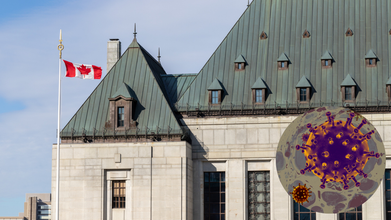
Travel Restrictions To Canada: The top court of the land, that is the Supreme Court of Canada ruled that travel restrictions were violative of citizen's right, however, are reasonable during "grave emergency" like pandemic.
Travel Restrictions To Canada: What Happened That Led To Supreme Court Ruling?
During May 2020, in early days of the COVID-19 pandemic, Kimberley Taylor, who was living in Halifax, got the news of her mother Eileen's passing away at the age of 75 of natural causes at St John's, as reported by The Global Mail. Kimberley wanted to attend a small memorial service however was unable to go there due to the Newfoundland government's rejection of her initial request.
The memorial service and the burial was attended by her father, sister and niece. "I was denied the ability to join my family to grieve my mother," she said, as reported.
This is when she along with the Canadian Civil Liberties Association launched a legal challenge. They noted that strict travel restrictions were in violation of the mobility rights within Canada as guaranteed by Section 6 of the Charter of Rights and Freedoms.
Last week, on Friday, a nine judge bench in the Supreme Court of Canada provided an expansive view of the Canadians' Charter mobility rights.
Travel Restrictions To Canada: What Did The Canadian Supreme Court Say?
The top court said that while Kimberley's rights were in fact violated by Newfoundland's pandemic rules, these were within the reasonable limits. The court deemed the pandemic travels rules to be in bounds within the reasonable limits on rights and freedoms in Section 1 of the Charter.
Jessica Kuredjian, a lawyer at Cassels in Toronto, as reported by The Global Mail, said, "This is a great ruling, and an important one. It is very human case. It is a great example of where Charter rights impact the real rights of everyday citizens."
The ruling will serve as a precedent for the ambit of government actions and restrictions during potential health emergencies in the future.
In a majority ruling authored by Justices Andromache Karakatsanis and Sheilah Martin, the court noted that early pandemic deaths and scientific uncertainty created an “extraordinarily difficult situation,” requiring swift decisions to protect public health and prevent further loss of life.
The judgment marks the latest major court effort to define the balance between individual freedoms and government authority stemming from pandemic-era actions. Just last month, the Federal Court of Appeal found the federal government’s 2022 use of the Emergencies Act to curb large protests was not legally justified.
Friday’s ruling also adds to the legal interpretation of the 1982 Charter of Rights. While many Charter provisions have been heavily litigated over the years, Section 6 — mobility rights — has rarely been tested in court.
“There really was a dearth of jurisprudence on the topic,” said Anaïs Bussières McNicoll, director of the Civil Liberties Association’s fundamental-freedoms program.
The pandemic travel-restriction case effectively marks the Supreme Court’s first detailed examination of Section 6 as it applies to Canadians’ general freedom of movement within the country.
In their majority opinion, five judges stressed that Charter rights must receive “generous protection.” On mobility rights, they traced the concept back nearly a millennium, linking it to common-law traditions from the 1200s and even earlier “ancient customs.”
North London Measles Outbreak: 34 Cases Confirmed In Unvaccinated Children From Enfield
Credits: iStock
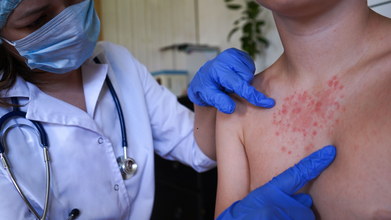
North London Measles Outbreak: 34 children have been infected by a "fast spreading" measles outbreak in several north London schools, confirmed health officials. The cases were first confirmed from Enfield in laboratory tests in January, as is reported by the UK Health Security Agency or the UKHSA.
A local GP, as reported by the BBC said that one in fiver children who contracted the illness had been admitted to hospital. The doctor also said that these children "had not been fully immunized".
Families are now asked to ensure that their children are up to date with their immunizations and vaccinations against this highly contagious disease. Measles could cause serious health complications.
North London Measles Outbreak: Who Can Get The Vaccines?
Measles vaccinations for children are available at the school, however, if they missed it, they can also get it at a number of catch-up clinics around the UK. The vaccinations are for free.
Enfield's NHS Ordnance Unity Centre For Health on its website noted that there is a "fast spreading measles outbreak in several schools" across the borough. The infections were confirmed in "at least" seven schools in Enfield, which means there could be more. Some reports also came from neighboring Haringey.
Enfield Councillor Alev Cazimoglu said that current outbreak had "mainly affected children and some have required additional care with a short stay in hospital". She also said, "Vaccination is the most effective way to protect yourself and your family. We urge everyone who is not fully vaccinated to act now."
The 34 cases of Enfield represent over a third of the 96 total cases which were confirmed in England in the first month of this year as per the UKHSA data.
As per the Enfield Council, it is working closely with UKHSA, the NHS and local partners to limit any further spread.
Read: UK Loses Measles Elimination Status: Why Is This Disease Making A Comeback?
North London Measles Outbreak: Who Are At Most Risk?
As per a UKHSA medical practitioner, Dr Vanessa Saliba, as also reported by the BBC, the "big" outbreak is "mostly affecting unvaccinated children under 10 in schools and nurseries". She also added, "Measles is a nasty illness for any child, but for some it can lead to long term complications and tragically death, but is so easily preventable with two doses of the MMRV [measles, mumps, rubella, chickenpox] vaccine."
Dr Saliba also suggested children to catch-up with their vaccine schedule in case they have missed it and also urged those travelling abroad over the Easter holidays to check their vaccination status.
North London Measles Outbreak: What Is It And What Are The Symptoms?
Measles is a highly contagious disease. It spreads by coughs or sneezes or by touching things that someone with measles has coughed or sneezed on.
Measles, also known as rubeola, is an extremely contagious viral illness that typically causes high fever, cough, runny nose, red and watery eyes, and a characteristic rash that begins on the face and spreads downward across the body. It spreads through respiratory droplets and can lead to severe and sometimes fatal complications, including pneumonia and inflammation of the brain known as encephalitis.
Symptoms include high fever, sore or red and watery eyes, coughing, sneezing, and small white spots in the mouth.
New Monkeypox Variant Emerges as Two Strains Combine, WHO Warns
Credit: Canva
Two strains of the monkeypox virus (MPXV) have combined with each other to create a new version of the disease, prompting the World Health Organisation to raise an alarm.
According to scientists, the Ib and IIb of MPXV have mutated together, and a case has been found in the UK and India, respectively. The first case was detected in the UK with travel history to a country in South-East Asia, and the second in India, with travel history to a country in the Arabian Peninsula.
Further analysis of each case shows that the two individuals fell ill several weeks apart with the same combined strain. Both cases had similar reported signs and symptoms of the disease and neither experienced severe outcomes.
As of now, these are the only known cases of this version of the virus.
What Is Mpox?
Mpox (formerly monkeypox) is an infectious disease caused by the monkeypox virus, a member of the Orthopoxvirus genus. Symptoms usually appear 1-21 days after exposure, and the illness lasts 2–4 weeks. People are considered to be contagious until all scabs have fallen off.
Mostly based in Africa, it was discovered by captive monkeys in 1958, after whom the disease was named in 1970. However, the name attracted many racist comments, especially on social media, where people wrote “the disease of monkeys” and associated it with Africans.
Under WHO guidelines, the naming of diseases must not drive any unnecessary negative impact on trade, travel, tourism or animal welfare, and avoid offending any cultural, social, national, regional, professional or ethnic groups. Thus, the name monkeypox became the ‘m-pox’.
How Can You Detect Mpox?
There are signs and symptoms of M-pox. They start to show within seven to 14 days of being infected. Therefore, for about a week, a person may not know they have m-pox, and they can spread it by travelling.
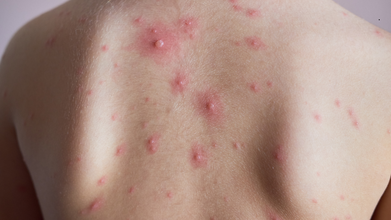
The earliest signs are getting a fever, sweating and having chills through your body. Other signs involve rashes, which start from a distant rash on the face and spread throughout the body. These rashes can be in different forms, sometimes a flat lesion, bumps, boils or scabs.
Symptoms can also include swollen lymph nodes, migraine, muscle aches, fatigue, weakness and back pain.
How Do You Prevent Mpox?
This is a contagious infection and can spread by skin-to-skin contact. Here are some things you can do to safeguard yourself:- Restrict your movement by avoiding going out in public, meeting people and interacting with animals.
- Wear clothes that will prevent skin-to-skin infections.
- Hydrate yourself to get rid of the toxins from your body
- Check if you have received your smallpox vaccination
Doctors also prescribe medications like acetaminophen and ibuprofen to treat the pain and fever one may experience after being infected
- Follow Us :


© 2024 Bennett, Coleman & Company Limited