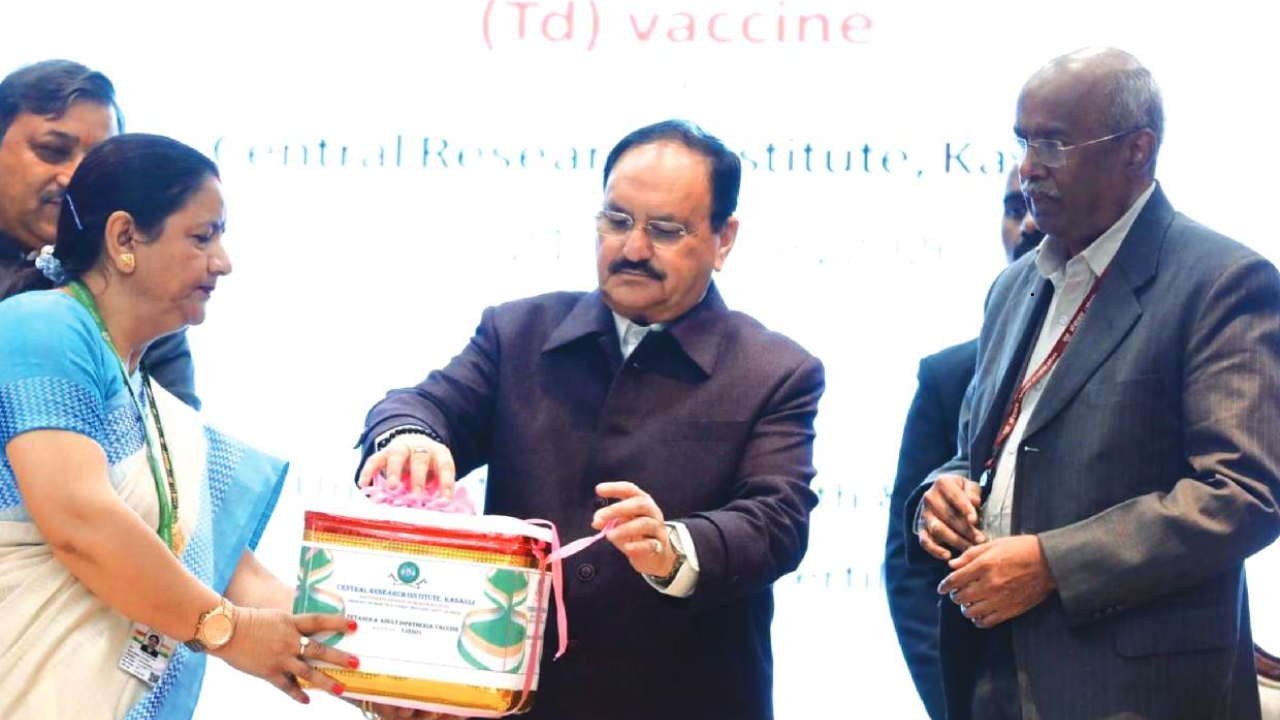
Union Health Minister JP Nadda launched indigenously manufactured tetanus and adult diphtheria (Td) vaccine at the Central Research Institute in Himachal Pradesh's Kasauli on Saturday. The formal launch of the Td vaccine will now include the vaccine under the Universal Immunisation Programme (UIP). The Central Research Institute will supply 55 lakh doses to the UIP by April. The production is also expected to scale up progressively in subsequent years to further strengthen the Central Government's Universal Immunisation Programme, said Nadda. Nadda also congratulated the scientists, technical experts and staff of the Central Research Institute Kasauli at the gathering, and described the launch Tb vaccine as a momentous and historic occasion. He also stated that the launch marked a significant step towards safeguarding national health security and strengthening India's public health infrastructure. The minister also noted that the government under the leadership of Prime Minister Narendra Modi, set clear targets for achieving self-reliance in the health and pharmaceutical sectors. Nadda also said that the launch of the indigenously manufactured Td vaccine represents a concrete step towards the vision of Atmanirbhar Bharat in health and medicine. India Is Pharmacy Of The WorldHe also highlighted the nation's global standing. He said that the minister also stated that India is widely recognized as the "pharmacy of the world" and is among the leading vaccine manufacturers globally. He also said that India has achieved Maturity Level 3 in the World Health Organization's (WHO) global benchmarking of regulatory systems, reflecting the robustness of its vaccine regulatory framework. Institution like CRI, said Nadda, have also played a major role in achieving these standards.Read: After Coldrif, WHO Bans 2 More Drugs, But This Is Not the Only Death from Indian Cough Syrup From Decades Of Research To Digital Vaccination TrackingThe Union Health Minister said that historically, vaccines and medicines took decades to develop. The tetanus vaccine required years of global research, tuberculosis drugs evolved over nearly 30 years, and the Japanese Encephalitis vaccine took close to a century of scientific effort.In contrast, during the COVID 19 pandemic, India developed two indigenous vaccines within nine months and administered more than 220 crore doses, including boosters. He added that vaccination certificates were issued digitally, reflecting the country’s expanding use of technology in public health delivery.Highlighting international cooperation, he noted that under the Vaccine Maitri initiative India supplied vaccines to nearly 100 countries, with 48 receiving them free of cost. Public sector institutions such as the Central Research Institute also strengthened the country’s ability to meet both domestic and global demand.The minister further said the Central Research Institute became the first government facility to manufacture vaccines under Good Manufacturing Practices standards, marking a major step in modernizing public sector vaccine production.He described the Universal Immunisation Programme as the world’s largest vaccination drive. It currently provides 11 vaccines protecting against 12 preventable diseases, with significant contributions from the institute.Every year about 2 to 2.5 crore children are born and a similar number of women become pregnant. From pregnancy registration onward, beneficiaries are tracked through digital platforms such as U WIN. Expectant mothers receive five antenatal check ups including at least one by a specialist, and monitoring continues until the child turns 16 years old, covering 27 doses.The annual immunization cohort includes nearly 5 crore beneficiaries, around 2.5 crore pregnant women and 2.5 crore children. Due to systematic tracking and sustained immunization efforts, vaccine coverage in the country has reached nearly 99 per cent.