
- Health Conditions A-Z
- Health & Wellness
- Nutrition
- Fitness
- Health News
- Ayurveda
- Videos
- Medicine A-Z
- Parenting
Unique Symptoms Of H3N2 Flu Strain In UK And How Long Infection Now Last
Credits: iStock
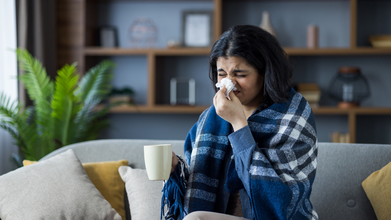
It is that time of the year when cough and colds are at its peak and everyone you know if affected by it. However, the health experts have warned that this winter could be worst, worse than the previous one. Why? Because this winter may have the most severe flu outbreaks in decades. The worst part? It is already wreaking havoc on the NHS.
The flu strain being talked about here is the H3N2 strain, what has also been named as the "unpleasant" by health experts. The experts have warned that NHS could face a "tidal wave" of illness ahead of Christmas. A per the reports, hospital admission rates for flu has already gone up to 56 per cent, as compared to the same week last year. As per the health experts, wearing a mask outside is must, especially if they feel unwell, and have encourages those who are eligible to get their vaccination.
What Is the H3N2 Strain?
H3N2 is one of the two main influenza strains currently in circulation. Also referred to as subclade K, it is the most prevalent flu strain in England right now, according to the UK Health Security Agency (UKHSA).
What Are The Doctors Saying?
The Independent spoke to Dr Giuseppe Aragona, GP and a medical adviser for Prescription Doctor, about this new strain and the ways to prevent sickness.
Dr Aragona explained that the letters and numbers used to classify flu strains come from the virus’s surface proteins called haemagglutinin, represented by H, and neuraminidase, represented by N.
He said that this specific combination can sometimes lead to more serious illness, particularly in older adults and people with underlying health conditions.
He added that H3N2 changes frequently, which means the version circulating this year may differ from earlier years or from the strain included in the seasonal vaccine. This can leave people more vulnerable to infection.
What are the symptoms?
According to the UKHSA, flu symptoms tend to appear suddenly. Extreme tiredness is common and this often helps distinguish flu from a cold, which develops more gradually.
The symptoms linked to H3N2 have been similar to typical seasonal flu. These may include fever, cough, a runny nose, body aches, vomiting or diarrhea.
People at higher risk of complications include children under five, especially those under two, adults over 65, pregnant women and individuals with chronic medical conditions such as asthma, diabetes, heart disease, weakened immunity or neurological illnesses.
If someone develops flu symptoms after close contact with pigs, doctors advise informing a healthcare provider immediately and mentioning that exposure.
How high are flu rates right now?
NHS England reported that an average of 1,717 patients a day were admitted to hospital with flu last week. This is a 56 per cent rise from the same period last year.
- The rates are seven times higher than in 2023, when hospitals saw an average of 243 flu patients a day.
- This spike follows Australia’s biggest flu season on record, which often predicts how the UK will fare.
Why is H3N2 hitting harder this winter?
Dr Aragona said several factors are contributing to a more challenging flu season. The season has begun earlier than usual, giving the virus more opportunity to spread.
He added that the strain has evolved from last year’s version, so immunity from previous infections and even the vaccine may offer less protection.
He also pointed out that fewer people have been exposed to flu in recent years, especially children. This means a larger portion of the population is susceptible. Cold weather, indoor gatherings and normal social habits are also helping the virus spread more easily.
Experts have already noted that this strain picked up seven new mutations over the summer, making it quite different from previous versions in the current vaccine.
With winter underway, the UK is preparing for a rise in flu related deaths. NHS leaders have issued a strong appeal for people to get vaccinated. Last winter saw around 8,000 deaths linked to flu. This was higher than the previous year’s 3,500 deaths but lower than the 16,000 recorded in the 2022 to 2023 season.
How can you protect yourself?
Dr Aragona said getting the flu vaccine is the most important step, especially for people who are older, pregnant, very young or managing long term health conditions.
He said the vaccine does not prevent every infection but it greatly reduces the chances of severe illness and hospitalisation.
Good hand hygiene, covering your mouth and nose when coughing or sneezing, avoiding close contact with sick individuals and keeping indoor spaces well ventilated can also help.
New data from the UKHSA shows the 2025 to 2026 vaccine is currently 70 to 75 per cent effective at preventing hospital visits in children aged two to seventeen, and 30 to 40 per cent effective in adults.
Dr Jamie Lopez Bernal of the UKHSA said the early results offer reassuring evidence that this year’s vaccine provides meaningful protection. He encouraged everyone eligible to get vaccinated as soon as possible.
Dr Thomas Waite, deputy chief medical officer, said flu can be unpleasant for many people and dangerous for some. He emphasised that vaccination is the best defence. He said the season has started early and that those eligible should get their vaccine now.
Last year’s flu vaccine significantly reduced the number of severe cases, cutting hospitalisation by nearly 40 per cent in people over 65 and by 75 per cent in children aged two to seventeen.
How worried should we be about H3N2?
Dr Aragona said that while flu can be uncomfortable, most healthy adults and children recover without complications. He advised against panic but highlighted that older people, those with chronic illnesses and other vulnerable groups could face more serious illness this season.
He said the key is staying alert, getting vaccinated, taking sensible precautions and seeking medical help early if symptoms worsen. With these steps, he said the risks can be managed, even in a year with higher flu activity.
Harish Rana Case Highlights Why Planning For A Living Will Is Important

Credit: Canva
Recent legal developments have highlighted the importance of advance planning for end-of-life care.
A Living Will is something every adult should consider discussing and creating at some point.
Conversations within families about individual preferences in the event of a terminal illness are an important first step, and these discussions should take place while everyone is still in good health.
Individuals may have very different views about how they wish to be treated if they develop a terminal illness or certain severe, irreversible conditions. For instance, some may not want ventilator support, while others may choose to avoid ICU care.
Some might accept ICU care but prefer not to undergo CPR. Others may prefer not to receive artificial feeding through tubes. Yet others may wish for every possible treatment to be attempted. A few may prefer to spend their final days at home.
Creating A Living Will
It should be noted that a Living Will does not impose any limitation on treatment for common medical conditions such as infections, surgery for curable illnesses, or routine hospital care.
These preferences apply only to situations such as terminal illness—for example, advanced cancer—or irreversible conditions such as a persistent vegetative state.
Creating a Living Will is now relatively straightforward. It must be signed in the presence of two witnesses and attested by a notary or a gazetted officer.
The earlier requirement of countersignature by a Judicial Magistrate has been removed to make the process easier. Templates are also available online that individuals can use as a basis for drafting their own. Before preparing one, it is helpful to discuss the pros and cons of their choices with the family doctor.
It is important to again emphasize that a Living Will is NOT about refusing all treatment, hospitalization, or ICU admission for routine medical care. Rather, it addresses only specific situations.
When such preferences are clearly documented in advance, important decisions about withholding or withdrawing treatment in select circumstances become less contentious.
Doctors and hospitals will no longer be hesitant to withhold unnecessary treatment measures in such situations, as it will already be documented in the patient’s own Living Will. Relatives also will not face the difficult decision of withholding or withdrawing futile medical treatment on behalf of their loved one.
Essentially, the Living Will protects the patient’s wishes when they are no longer able to speak for themselves.
What Happens Without A Living Will
In a terminally ill patient who is unable to communicate, the absence of a Living Will often leads to differences of opinion among family members about what the patient might have wanted.
This uncertainty frequently results in a collective decision to “do everything possible,” just to be on the safe side.
Doctors are reluctant to override the wishes of relatives, even when they believe that further treatment measures are unlikely to be beneficial.
As a result, the patient may receive prolonged medical interventions that neither improve the underlying condition nor enhance quality of life. Once started, these treatments may continue indefinitely until the patient dies naturally.
This may take months, years, or even decades, and also incur huge costs. In the absence of a Living Will, complex legal procedures are required to withdraw these treatments — even if all the relatives are convinced that they should be withdrawn.
Bolivia reports chikungunya outbreak, cases rise over 5,000
Credit: Canva
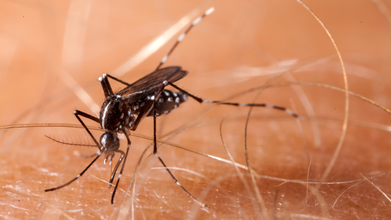
Bolivia has reported an outbreak of mosquito-borne Chikungunya virus disease, with cases rising to more than 5,000 nationwide.
Chikungunya is transmitted by the Aedes aegypti and Aedes albopictus mosquitoes -- the same species that spread dengue fever and Zika virus disease. As a result, the disease becomes challenging to diagnose.
The South American country's Ministry of Health, in a statement, shared that "5,371 cases of chikungunya have been registered nationwide".
The worst areas in Bolivia include
- Santa Cruz (4,500 cases)
- Cochabamba (303 cases)
- Tarija (332 cases)
- Chuquisaca (81 cases)
- La Paz (68 cases)
The Ministry informed, "joint efforts to control and manage the vector".
It further noted that an investigation is being conducted to share the results and cause of death, as well as ongoing epidemiological surveillance for all vector-borne disease.
To curb the cases, the Health Ministry noted that "it is supporting the provision of biolarvicide and insecticide for departmental and municipal actions to prevent an increase in cases".
This includes the distribution of about 1,300 liters of insecticide and biological larvicides applied with backpack sprayers, Outbreak News Today reported.
The government also urged the general public to clean weeds from yards and gardens to eliminate the vector’s resting places
Global Cases
In January, the surveillance data from the European Centre for Disease Prevention and Control (ECDC) reported 2,881 cases of Chikungunya virus disease and no associated deaths from 11 countries in European Union this year.
The ECDC noted that the Americas have reported 2,879 cases and one associated death, with Brazil reporting the highest number of cases in 2026.
In addition to Bolivia, other countries in South America reporting chikungunya include Costa Rica, El Salvador, Honduras, and Mexico.
French health authorities also reported a significant rise in chikungunya disease in Mayotte, an overseas department in the Indian Ocean. Since the beginning of 2026, more than 270 confirmed cases have been recorded, Vax-Before-Travel reported.
ECDC data shows that the weekly average of cases in the last two weeks of February 2026 was around 65.
Symptoms And Prevention
There is currently no antiviral drug treatment for chikungunya. While two vaccines against chikungunya have received regulatory approval, it still lacks widespread rollout.
Common symptoms of chikungunya include:
- abrupt onset of fever
- joint and muscle pain
- headache
- nausea
- fatigue
- rash
While serious complications are rare, the elderly and children under one year old may be at risk of long-term symptoms and even death.
The ECDC advised people "to take enhanced measures to prevent mosquito bites".
CDSCO threatens action against pharma companies for promoting GLP-1 weight-loss drugs
Credit: Canva
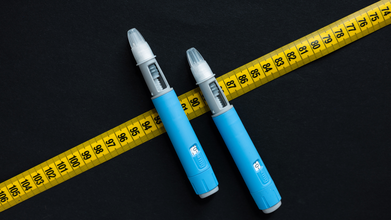
India's drug regulator, the Central Drugs Standard Control Organization (CDSCO), has threatened pharmaceutical firms with action for promoting GLP-1 weight-loss drugs among the general public.
Glucagon-Like Peptide-1 (GLP-1) receptor agonists are a class of medicines that help lower blood sugar, support weight loss, reduce the risk of heart and kidney complications, and can even lower the risk of early death in people with type 2 diabetes.
In an official circular, the CDSCO warned drug makers from indulging in "direct or indirect advertising" for obesity and metabolic disorders.
The regulatory body also cautioned pharma companies against campaigns using influencers, noting that any violation "could attract regulatory action".
Advertisements, which "function as a surrogate advertisement for prescription-only drugs, shall be viewed seriously and may be treated as irrational or misleading marketing practice", read the letter signed by the Drug Controller General of India (DCGI) Rajeev Raghuvanshi.
The order comes as the CDSCO noted that drugmakers have been engaging in surrogate promotional activities, under the garb of disease awareness campaigns, and digital media outreach.
What The CDSCO Mandated
- Weight-loss drugs, specifically GLP-1 medications, must only be sold with a prescription from a registered medical practitioner.
- There should be no ads, whether direct or indirect, in print, electronic, digital, social media, or any other public platform intended, directly or indirectly, to promote the product to the general public.
- No GLP-1 drugs must exaggerate for therapeutic efficacy; suggest for assured or guaranteed weight loss outcome; and induce demand for pharmacological therapy
- awareness campaigns
- influencer engagement
- corporate campaigns
Rush For Generic Weight Loss Drugs
The government's advisory comes patent for semaglutide -- an active ingredient in diabetes and anti-obesity drugs, specifically Wegovy and Ozempic -- expires on March 20.
This will allow Indian pharma companies to launch cheaper generic versions, significantly increasing affordability and access for millions battling Type 2 diabetes and obesity.
Major Indian drugmakers gearing up to launch their generic semglutide injection in the country in March include Sun Pharmaceutical Industries, Zydus Lifesciences, Alkem Laboratories, Dr. Reddy’s Laboratories, Torrent Pharmaceuticals, and MSN Laboratories.
Obesity A Chronic Metabolic Condition
The CDSCO stressed the importance of "lifestyle modification measures (diet, exercise, behavioural interventions)" in treating obesity.
"Obesity is a chronic metabolic condition requiring comprehensive management, including lifestyle interventions," the regulator said.
"Pharmaceutical therapy, where indicated, must not be projected in a manner that undermines public health initiatives promoting diet control, physical activity, and preventive healthcare," it added.
WHO Guidelines On GLP-1 drugs
Amid increasing prevalence of GLP-1 drugs, the World Health Organisation (WHO), late last year, acknowledged its role in treating obesity.
However, it warned that medications like GLP-1 alone will not solve the problem affecting more than one billion people worldwide.
The global health body also issued conditional recommendations for using these therapies as part of a comprehensive approach that includes healthy diets, regular physical activity, and support from health professionals.
- Follow Us :


© 2024 Bennett, Coleman & Company Limited