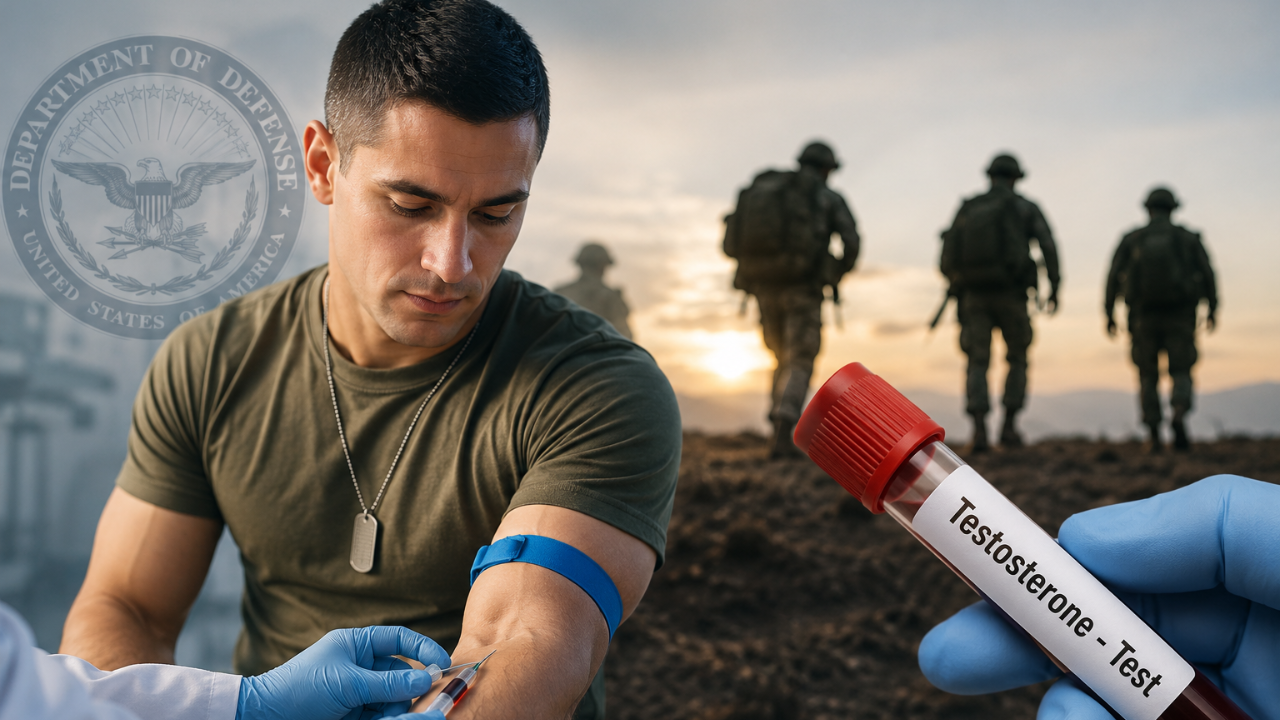
The U.S. Department of Defense is introducing a new policy that will require military personnel over 30 and above to undergo an annual testosterone deficiency screening as part of their routine Periodic Health Assessment. Personnel under 30 can choose to be screened voluntarily. Those diagnosed with testosterone deficiency may opt for testosterone replacement therapy (TRT), though treatment will remain voluntary. Why Is the Pentagon Introducing The Policy? The High-T Department of War. pic.twitter.com/hlAUq3j2cD— Secretary of War Pete Hegseth (@SecWar) July 15, 2026 ]]>Defense Secretary Pete Hegseth made the announcement on Wednesday, saying the military must ensure that troops remain physically and mentally prepared for the demands of modern warfare. Hegseth said in a video posted on X, "As we know, the modern battlefield is brutal and unrelenting. It requires and demands maximum psychological and mental readiness. I'm authorizing a new screening program for testosterone deficiency for our service members, ensuring you have the right testosterone levels to operate at your absolute best." "By addressing these health markers early, we're keeping you on the leading edge of lethality and giving you the same level of support that you give this nation: the absolute best." The Defense Secretary also said the goal extends beyond active military service. "We owe our warriors the absolute best medical care in the world. Taking care of your long-term health means ensuring you remain strong, resilient, and capable, not just for your next deployment, but for the rest of your life."Also read: Donald Trump's 'Two Mangled Hands' Spark Fresh Health Speculation Does Testosterone Matter? Testosterone is a hormone that plays an important role in maintaining muscle mass, bone density, strength, energy levels, mood and sexual function in men. Levels naturally decline with age, typically beginning around age 30, falling by roughly 1% each year thereafter. Military experts say service members may face additional risk factors like high operational tempo, chronic stress, sleep deprivation, traumatic brain injury, blast exposure, and prolonged physical exertion. Army Major Theodore Crisostomo-Wynne, a urologist at Madigan Army Medical Center, previously told an FDA advisory panel that researchers have observed hormonal disruptions among elite military personnel. "The high operations tempo and high stress that these service members go through can actually decrease testosterone, sometimes acutely and sometimes even in the long term," he said.Also read: Expert Highlights Key Vitamins To Combat Male Infertility And Boost Reproductive Health Experts WarnWhile low testosterone is a genuine medical condition, physicians caution that it should not be diagnosed or treated simply because hormone levels decline with age. The American Urological Association says a diagnosis requires both symptoms of testosterone deficiency and at least two separate early-morning blood tests confirming low testosterone levels. Experts also note that testosterone replacement therapy is intended for people with clinically confirmed deficiency, not healthy individuals seeking improved athletic performance or anti-aging benefits. According to the Endocrine Society, using testosterone without a medical indication may increase the risk of acne, infertility, worsening sleep apnea, and other adverse effects. What Is Testosterone Deficiency? Testosterone deficiency, also known as hypogonadism, occurs when the body does not produce enough testosterone to maintain normal bodily functions. Common symptoms of testosterone deficiency include: Persistent fatigueReduced muscle strengthLow sex driveDepression or low moodDifficulty concentratingReduced bone densityErectile dysfunctionA diagnosis requires both symptoms and laboratory confirmation, according to medical guidelines.