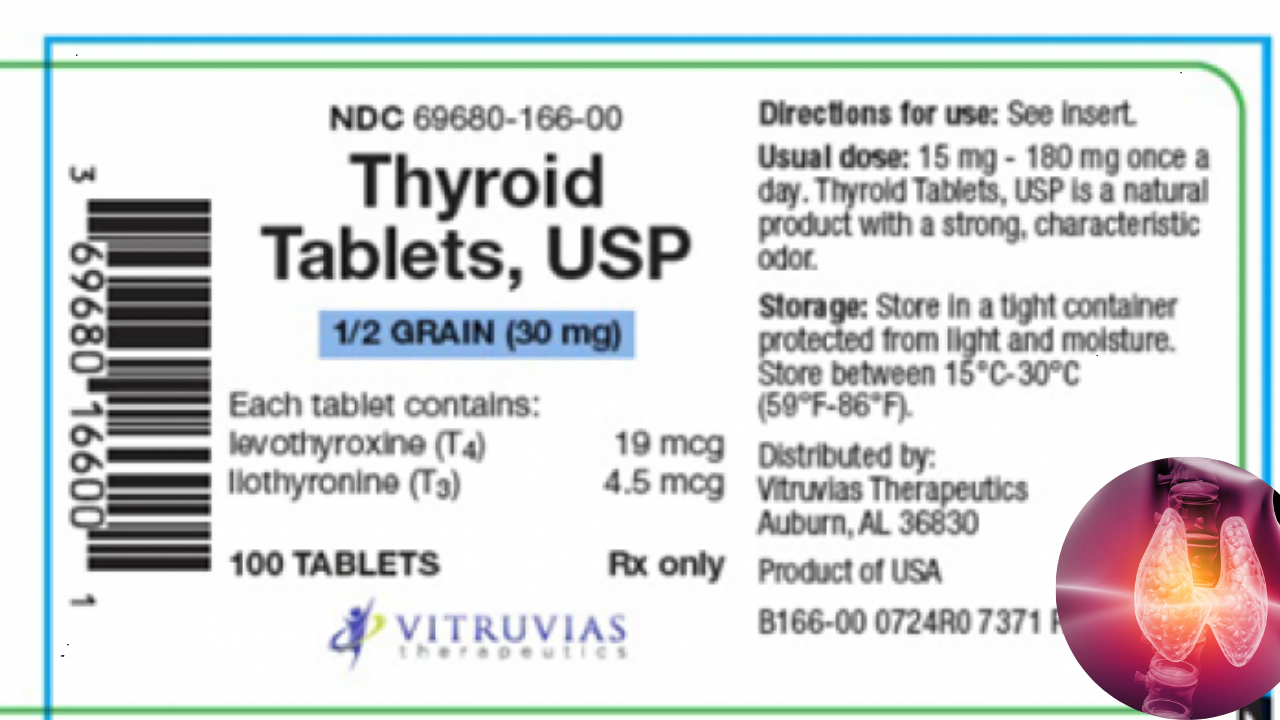
The US FDA has announced a nationwide recall of Vitruvias Therapeutics' Thyroid Tablets USP 30 mg over potential super-potency, which may cause hyperthyroidism (overactive thyroid).In a recall notice issued on August 24, the company said the affected thyroid tablets, with lot number 504950, were potentially superpotent.“Consumption of superpotent Thyroid tablets can cause hyperthyroidism (overactive thyroid) including, but not limited to, weight loss, heat intolerance, fatigue, nervousness, muscle weakness, hypertension, chest pain, rapid heart rate, or heart rhythm disturbances,” the company said.Which Thyroid Tablets Have Been Recalled?The recalled product is:Vitruvias Thyroid Tablets USP 30 mgLot number: 504950Expiration date: September 30, 2026The lot was distributed nationwide in the US to Vitruvias Therapeutics’ direct accounts from January 31, 2025, to September 30, 2025.A total of 3,655 units were released, of which 1,955 were sold during the distribution period.Who Is At Greater Risk?The company noted that patient populations at greater risk from superpotent thyroid tablets include elderly people, pregnant women infants.Excess levels of thyroid hormones in elderly people have been associated with adverse outcomes, particularly affecting cardiac health.However, Vitruvias Therapeutics said it has not received any reports of adverse events known to be related to this recall.The company noted that it is proactively notifying wholesalers by email and phone to discontinue distribution of the recalled product and is arranging for the destruction of all recalled products.What To Do If You Are Taking the Recalled Product?Patients currently taking Thyroid, USP from Lot 504950 should not discontinue use without contacting their healthcare provider for further guidance and/or a replacement prescription.What Is the Thyroid?The thyroid is a small gland located in the neck, but it plays an important role in the body's activities. It secretes hormones that control metabolism, or the body's ability to convert food into energy.Thyroid hormones also regulate several other body functions, including heart rate and body temperature.When the thyroid gland becomes underactive, a condition called hypothyroidism occurs. It causes bodily functions to slow down. Metabolism may also be reduced, leading to changes in a person's well-being.Hypothyroidism vs HyperthyroidismSpeaking to HealthandMe, Dr Shruti Kotangale, Consultant Gynaecologist, Obstetrician and Infertility Expert at AIMS Hospital, Dombivli, explained that conditions such as hypothyroidism and hyperthyroidism are commonly seen in women.Hypothyroidism occurs when the thyroid gland is underactive. Symptoms can include tiredness, weight gain, dry skin, hair fall, constipation, feeling cold, a slow heartbeat and low mood or depression.Hyperthyroidism occurs when the thyroid gland becomes overactive. Women may experience weight loss, a fast heartbeat, sweating, anxiety, tremors, irritability, frequent bowel movements, and difficulty sleeping.Women must seek medical attention and manage these symptoms without delay.Symptoms of ThyroidAlthough weight fluctuations are the most common thyroid abnormality, they are typically accompanied by a group of symptoms, including:FatigueCognitive changesGastrointestinal problemsSensitivity to coldSkin and hair changesHow To Diagnose?Obtaining a proper diagnosis requires two key steps:Physical examination: This helps determine whether there is swelling or a nodule in the neck.Blood tests: These may determine levels of:TSH (thyroid-stimulating hormone)T4 and T3Thyroid antibodies, particularly when autoimmune diseases such as Hashimoto's disease or Graves' disease are suspectedImaging studies such as ultrasound or thyroid scans may also be used to evaluate the shape and structure of the thyroid gland.