
- Health Conditions A-Z
- Health & Wellness
- Nutrition
- Fitness
- Health News
- Ayurveda
- Videos
- Medicine A-Z
- Parenting
US Measles Outbreak Becomes Largest In Decades: Key Symptoms And Treatment

Measles (Credit: Canva)
An outbreak of measles in American state of Oregon has become the largest in over 30 years, reflecting a broader rise of the disease across the US this year. According to the Centers for Disease Control and Prevention (CDC), nearly one-third of all measles cases in the country since the COVID-19 pandemic began have occurred in the past three months. As of Tuesday, Oregon's outbreak, which began in mid-June, has risen to 31 cases, surpassing the 28 cases reported during the state’s previous outbreak in 2019.
Health experts attribute this resurgence to a decline in measles, mumps, and rubella (MMR) vaccination rates among children nationwide. Outbreaks are typically confined to communities with low vaccination coverage. "Measles is one of the most contagious diseases known, and the only way to control it is to maintain very high immunization rates—above 95%," said Paul Cieslak, medical director for communicable diseases and immunizations at the Oregon Health Authority’s Public Health Division. "Two doses of the vaccine provide lifelong protection for about 97% of recipients."
Everything You Should Know About Measles
Measles is a highly contagious viral disease caused by the measles virus, a member of the paramyxovirus family. It primarily spreads through respiratory droplets when an infected person coughs or sneezes, and it can also be transmitted by touching surfaces contaminated with the virus. According to the World Health Organization (WHO), measles remains a significant global health issue, particularly in areas with low vaccination coverage. The disease is characterized by a distinctive rash, high fever, cough, runny nose, and inflamed eyes.
Symptoms of measles typically begin about 10 to 12 days after exposure to the virus. Initial signs include a high fever, cough, runny nose, and conjunctivitis, followed by the appearance of a rash that usually starts on the face and spreads downward. In some cases, complications such as diarrhea, ear infections, and more severe outcomes like pneumonia and encephalitis can occur. The rash usually lasts for about a week, and the fever typically subsides once the rash appears.
Treatment for measles primarily focuses on relieving symptoms and managing complications. There is no specific antiviral treatment for measles, so care is supportive and may include fluids, fever reducers, and rest. The World Health Organization emphasizes the importance of vaccination as the most effective way to prevent measles. The measles, mumps, and rubella (MMR) vaccine is highly effective, with two doses providing long-lasting protection. Vaccination not only protects individuals but also helps prevent outbreaks by contributing to community immunity.
Scientists Develop First Antibodies To Block Epstein Barr Virus
Credits: Canva
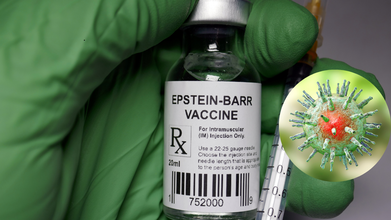
Scientists for the first time ever developed antibodies that could block Epstein Barr virus or EBV. This is a pathogen that is estimated to infect 95 per cent of the global population. The Epstein Barr virus is also linked with multiple types of cancer, neurodegenerative diseases and other chronic health conditions.
Antibodies for Epstein Barr Virus: How Does It Work?
Scientists used mice with human antibody genes. The team then developed new genetically human monoclonal antibodies that would prevent two key antigens on the surface of the Epstein Barr virus from binding to entering human immune cells.
The findings are published in Cell Reports Medicine. The study shows how the newly identified monoclonal antibodies successfully block infection in mice with human immune systems when they had EBV.
Scientists View On The Antibodies That Block Epstein Barr Virus
"Finding human antibodies that block Epstein Barr virus from infecting our immune cells has been particularly challenging because, unlike other viruses, EBV finds a way to bind to nearly every one of our B cells," explained Andrew McGuire, Ph.D., a biochemist and cellular biologist in the Vaccine and Infectious Disease Division at Fred Hutch. "We decided to use new technologies to try to fill this knowledge gap and we ended up taking a critical step toward blocking one of the world's most common viruses."
What Was the Challenge In The Creation Of Antibodies To Block Epstein Barr Virus?
The key challenge was to pursue human monoclonal antibodies that could actually halt the Epstein Barr virus infection without triggering an anti-drug response to the antibodies themselves. This is a common response among patients who are treated with antibodies raised in other animals.
The researchers targeted two antigens namely: gp350, which helps EBV bind to cell receptors. The second antigen was gp42 that allows EBV to enter and infect human antibody genes. This has led to the monoclonal antibodies to work against gp350 and eight gp42.
"Not only did we identify important antibodies against Epstein Barr virus, but we also validated an innovative a new approach for discovering protective antibodies against other pathogens," noted Crystal Chhan, a pathobiology Ph.D. student in the McGuire Lab. "As an early-career scientist, it was an exciting finding and has helped me appreciate how science often leads to unexpected discoveries."
Read: Chronic Epstein-Bar Virus: Can A Common Viral Infection Cause Fatal Brain Damage?
What Is Epstein Bar Virus (EBV)?
EBV is a highly contagious virus that can pass through bodily fluid contact. It is the cause of one of the most common infections, mononucleosis or mono. Once you get this virus, it stays in your body, inactive and in a dormant state until it becomes reactivated.
According to the Frontiers in Immunology, Chronic active Epstein-Barr virus (CAEBV) disease is a very uncommon problem where people's bodies can't fight off the EBV virus. It keeps getting worse, with a lot of the virus's DNA in their blood and the virus attacking their organs with infected blood cells.
People with this disease often have fevers, swollen glands, a big spleen, liver problems caused by EBV, or low blood counts. Over time, their body's ability to fight off infections gets weaker. If they don't get treatment, they can die from other infections, a problem where the body attacks its own blood cells, organ failure, or cancers linked to EBV.
The only treatment that has been proven to work for this disease is a stem cell transplant (a procedure to replace damaged blood cells with healthy ones). Right now, scientists are trying to figure out why this disease happens. They are looking at problems with the body's defense system (immune defects) and changes in people's genes that might be linked to the disease. A new study as also revealed that EBV may also cause us brain damage due to a disease called encephalitis.
Symptoms Of Epstein-Bar Virus
EBV infections do not cause symptoms especially for children, teens and adults are more likely to experience symptoms like fever, feeling tired or fatigued headache, sore throat, swollen lymph nodes in your neck and arm, enlarged spleen or swollen liver, body aches and skin rash. The symptoms of this usually last for two to four weeks. Things are a bit different with Chronic EBV. In rare cases of EBV, it can lead to a chronic condition called active EBV (CAEVB) some symptoms include, swollen and tender lymph nodes, fever, enlarged liver, fatigue, sore throat, headache, muscle pain joint stiffness, anemia and liver failure.
Meghalaya Health Minister Warns State Has Highest HIV-Related Deaths
Credit: Hub News
Meghalaya's Health Minister Wailadmiki Shylla has raised alarm over the rising HIV cases in the state, noting that 10,293 infected residents were receiving antiretroviral treatment.
Along with this, Shylla noted that nearly 750 people have died due to the condition in the past decade with East Khasi Hills district reporting 435 of those cases. Coming in second is West Jaintia Hills with 123 cases, East Jaintia Hills with 90 cases, Ri Bhoi with 51 cases and Eastern West Khasi Hills reporting 16.
Nine deaths in West Garo Hills, eight in West Khasi Hills, seven in South West Khasi Hills, three in South Garo Hills, two in South West Garo Hills, and one in North Garo Hills have also been recorded.
During a question hour in an assembly session on February 25, the official said: "It is very unfortunate, but Meghalaya is having the highest cases in India".
He also highlighted the confidentiality clauses in the HIV and AIDS Prevention and Control Act, 2017 as well as existing social stigma as major challenges in addressing the rampant spread of the issue. “Early detection and intervention get complicated because testing requires consent and treatment cannot be forced,” he said.
“The State government has sanctioned a ₹25-crore intervention program for the next five years to address the alarming rise in HIV/AIDS cases,” Shylla declared as well as assured that the Department has been intensifying awareness campaigns to improve testing and treatment.
The global challenge of HIV/AIDS remains one of the most pressing public health issues today. According to the latest data from UNAIDS, around 38.4 million people worldwide are living with HIV/AIDS.
As of 2024–2025, India has approximately 2.5 million to 2.56 million people living with HIV (PLHIV), marking the third-largest HIV epidemic globally, underlining the need for not only medical intervention but also comprehensive awareness, education, and social change.
What Is HIV?
HIV is the virus responsible for attacking the body’s immune system, specifically targeting CD4 cells, which are crucial for the body’s defense against infections. As HIV progresses, it destroys these cells, weakening the immune system over time. If left untreated, this continuous damage can lead to AIDS.
HIV is highly contagious and can be transmitted through the exchange of bodily fluids such as blood, semen, vaginal fluids, and breast milk. It is primarily spread through unprotected sexual contact, sharing needles, from mother to child during childbirth or breastfeeding.
Without treatment, HIV progresses through three stages:
- Acute HIV Infection: This stage occurs shortly after transmission and may include symptoms like fever, fatigue, and swollen lymph nodes.
- Chronic HIV Infection: Often asymptomatic or mildly symptomatic, the virus continues to damage the immune system but at a slower rate.
- AIDS: This is the final stage, marked by severe immune damage and the presence of infections that take advantage of the compromised immune defenses.
The disease is diagnosed through blood tests or oral swabs that detect the presence of the virus or antibodies produced by the immune system in response to the virus. Early detection of HIV is crucial, as it allows for timely intervention and treatment, which can prevent the virus from progressing to AIDS.
For HIV, the primary treatment goal is to suppress the virus to undetectable levels, thus maintaining a strong immune system and preventing further transmission of the virus. People living with HIV can often live long, healthy lives if they adhere to antiretroviral therapy (ART).
What's Happening In Mizoram?
Mizoram Health Minister Lalrinpuii has expressed serious concern about rising HIV cases, as data shows that cases in the state are 13 times higher than the national average.
Calling it a "collective disgrace", Lalrinpuii said: “About 70 per cent of HIV transmissions in Mizoram occur through sexual contact. While the national prevalence rate stands at a mere 0.2 per cent, Mizoram’s rate has climbed to 2.74 per cent. This is a matter of shame for Mizo society.”
Speaking at an event organised for International Condom Day in Aizawl on February 13, she noted that a majority of that sexual contact remains the primary route of HIV infections in the state, accounting for 70 per cent of all cases.
The minister noted that the spread is largely driven by infidelity and a lack of preventive measures, which she argued contradicted the moral and religious values of the Mizo society.
She urged the people of the state to remain faithful to their partners. “To protect the future of Mizoram, our youth must remain vigilant,” Lalrinpuii added.
Lupita Nyong’o Opens Up About Fibroids Returning, Doubling 12 Years After Surgery

Credit: Instagram
Kenyan-Mexican actress Lupita Nyong’o has revealed that her fibroids have returned after undergoing surgery in 2014 -- now doubling up to 50, raising awareness about the often-overlooked health condition in women.
Speaking at the Today show, the Oscar-winning star Nyong’o said that she was first diagnosed with fibroids, a noncancerous tumor -- about 30 in number -- in 2014.
The growths made of muscle and tissue were removed with myomectomy, the fibroid-removal surgery.
However, the fibroids came back after over a decade, with the largest being the size of an orange, Nyong’o said.
She noted that the doubled-up fibroids are causing her more pain, while her treatment options remain largely the same.
“The first time I got the fibroids taken out, they took out 23,” she said on the show. “And this time, I’ve been informed two years ago that I have over 50.”
“And I’m being faced with the same options,” she added. “Surgery or live with the pain.”
Even as she is contemplating her treatment options, the A Quiet Place: Day One star opened up about feeling left alone and scared for her reproductive health during the initial phase.
She is now speaking out and connecting with other women suffering like her. Nyong’o is also advocating and raising money for scientists to research less invasive and non-invasive treatment methods for fibroids.
I was told that fibroids were something women live with. In refuse to accept that. Millions of women are suffering in silence, and we deserve better answers, better care and better options," Nyong’o wrote in a post on Instagram.
What Are Fibroids
Uterine fibroids are noncancerous growths that form inside or on the uterus. They are very common, affecting an estimated 40 to 80 percent of people with a uterus between the ages of 30 and 50.
In some cases, fibroids do not cause any noticeable symptoms, which means many people may not realize they have them. However, when symptoms are present, they often include:
- Heavy menstrual bleeding or painful periods
- Longer or more frequent periods
- Pelvic pressure or pain
- Frequent urination or trouble urinating
- Growing stomach area
- Constipation
- Pain in the stomach area or lower back, or pain during sex
Obesity and a higher body mass index (BMI) are the most common risk factors that can increase the chances of developing fibroids. Others include family history, not having children, early onset of menstruation (getting your period at a young age), and late age of menopause.
How To Treat Fibroids? Can They Recur?
There are several tests that can be done to confirm fibroids and determine their size and location.
These tests can include ultrasonography, magnetic resonance imaging (MRI), computed tomography (CT) scan, hysteroscopy, and laparoscopy.
Myomectomy is a commonly used surgical procedure to remove fibroids. There are several types of myomectomy, and they are used depending on the location of the fibroids, their size, and number.
The types of myomectomy procedures include hysteroscopy, laparoscopy, laparotomy, hysterectomy, uterine fibroid embolization, and radiofrequency ablation (RFA).
Even after a successful myomectomy, new fibroids can still develop. The recurrence risk is more common among young adults (under age 40) with many fibroids. The risk is less among people near menopause or with few fibroids.
Visit your doctor if you have:
- Pelvic pain that doesn't go away
- Heavy or painful periods that limit what you can do
- Spotting or bleeding between periods
- Trouble emptying your bladder
- Ongoing tiredness and weakness, which can be symptoms of anemia, meaning a low level of red blood cells.
- Follow Us :


© 2024 Bennett, Coleman & Company Limited