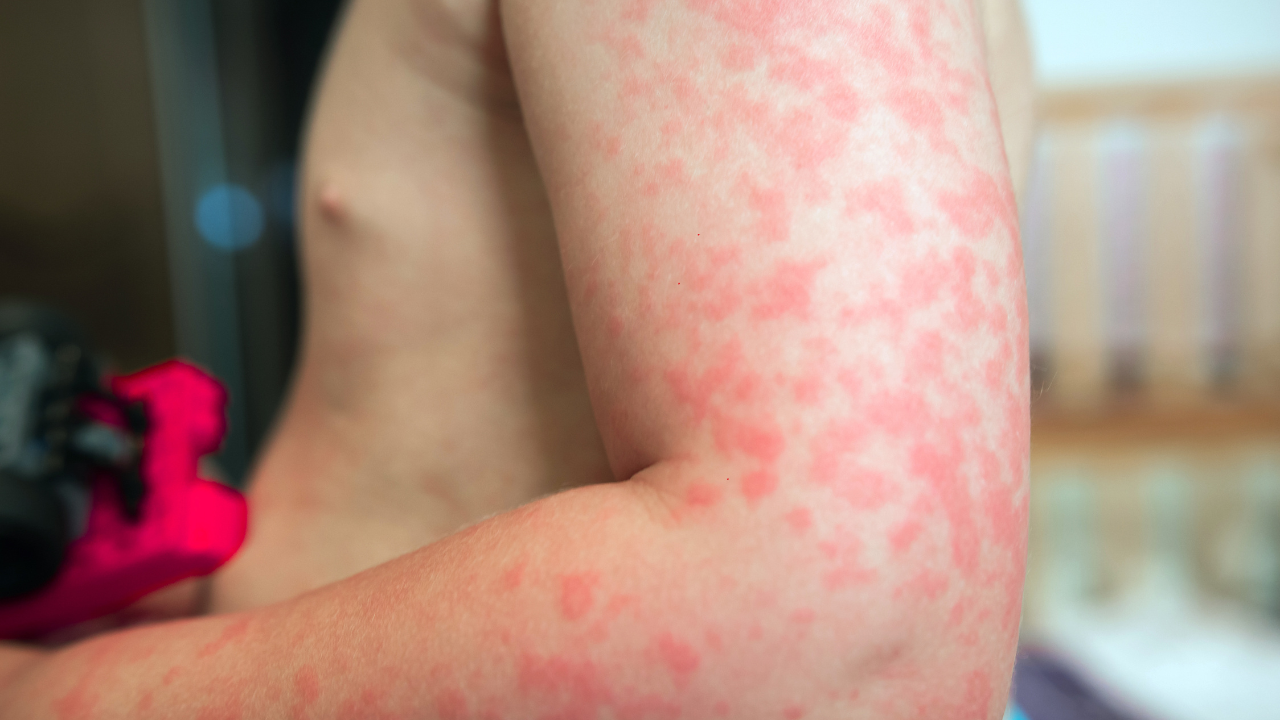
The US is seeing a significant rise in measles cases, with three deaths reported among unvaccinated people in Pennsylvania. The surge has also raised concerns about the country’s measles elimination status and whether people who have already been vaccinated can still catch the highly infectious virus.While two doses of the measles, mumps and rubella (MMR) vaccine can prevent measles by up to 97%, breakthrough infections can still occur. Pennsylvania has reported four measles cases among people who were fully vaccinated this year.What Happened In Pennsylvania?Pennsylvania is among the worst-hit states, with the measles virus having sickened 676 people, with the state adding 108 cases in the last seven days.Although the US CDC is yet to update its website, Pennsylvania health officials have confirmed three deaths — two babies and one adult. But more concerning is the fact that four residents who were fully vaccinated against measles have fallen ill with the virus this year.According to health officials, of the four individuals, three are adults and one is a child. None of them were hospitalized.While measles infection among vaccinated individuals is unusual, cases can occur as community transmission rises and overall case numbers increase, they said.“As community transmission rises and our overall case numbers increase, we see a handful of people who were vaccinated will get measles,” state Secretary of Health Dr. Debra Bogen said, LancasterOnline reported.However, measles is not expected to be as severe in people who are vaccinated.“Their illness will be much more mild and less likely to cause serious illness than if they had not received two vaccines,” Dr. Pia Fenimore, chief and vice chair of pediatrics at Penn Medicine Lancaster General Health, was quoted as saying to LancasterOnline.How Effective Is The MMR Vaccine?The measles, mumps and rubella (MMR) vaccine is recommended for infants. The first dose is given at age 12-15 months, followed by a second dose between ages 4-6 years.The measles vaccine is 97% effective when a person receives two doses. However, three out of 100 people who have received both doses of the MMR vaccine will get measles if exposed, according to the federal Centers for Disease Control and Prevention website.Among people who have received one dose of the vaccine, seven out of 100 will get measles following an exposure.Can Measles Vaccine Effectiveness Wane?The measles vaccine is safe, and most people can receive it. Exceptions include people who have had allergic reactions or those with a weakened immune system.“Adults and children who are immunocompromised due to cancer or other illnesses should be very careful since these treatments and conditions can weaken the efficacy of their vaccines,” Dr. Fenimore said.According to the National Foundation for Infectious Diseases (NFID), most vaccinated adults are immune to measles and do not need further vaccines.People born before 1957 likely had measles disease and developed lifelong immunity, and do not need MMR vaccines.Those vaccinated between 1963 and 1968 may have received a measles vaccine that was found to have lower effectiveness. Those who have received two doses of the measles vaccine are not considered to be at risk.How Big Is The Measles Outbreak In The US?As per the CDC, there have been 3,294 confirmed measles cases reported in the United States so far in 2026.There have been 38 new outbreaks reported this year, with 95% of confirmed cases associated with outbreaks — 1,748 from outbreaks that started in 2026 and 1,375 from outbreaks that started in 2025.For comparison, a total of 2,289 confirmed measles cases were reported in the US during the full year of 2025.