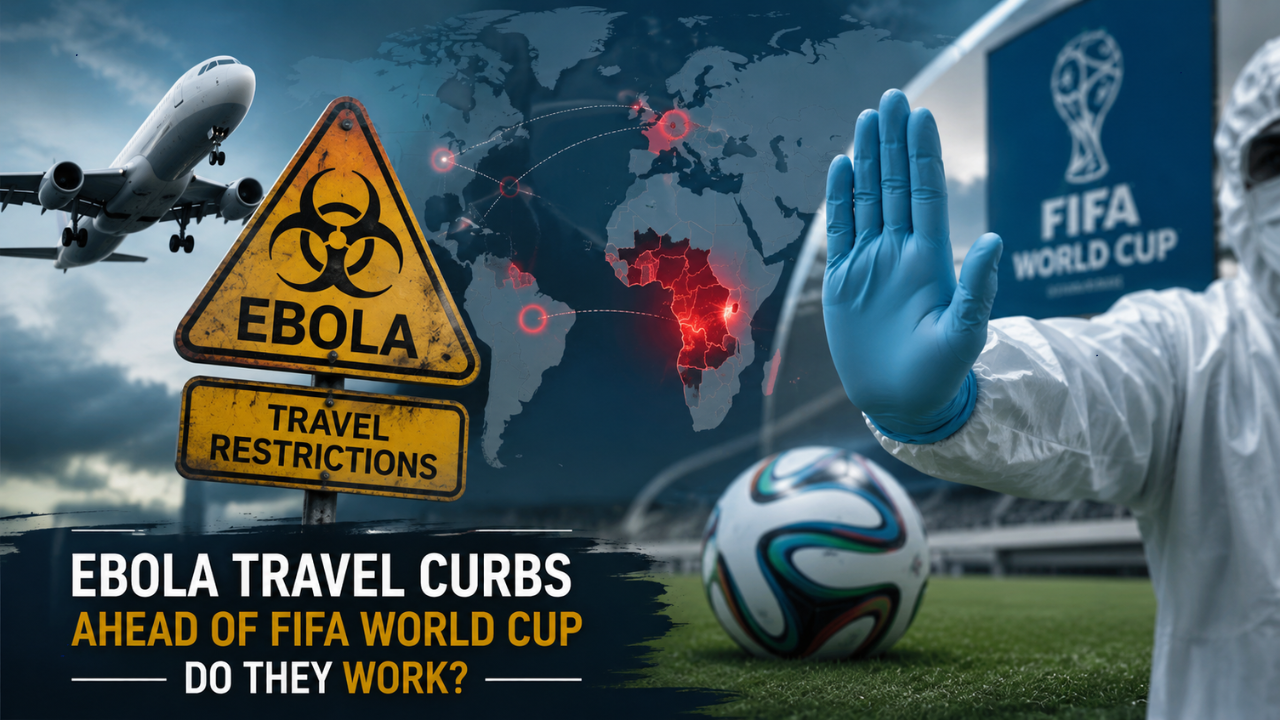
Ahead of the high-voltage FIFA World Cup, which begins on June 11, the US has called on the European Union to impose travel restrictions on people who have recently been in Central African countries affected by the Ebola outbreak to curb the wider spread of the deadly virus.On June 1, the US issued a demarche — a formal diplomatic statement of concern — urging European countries to implement travel restrictions related to the outbreak, a European Union diplomat based in Africa and a second source familiar with the matter said. The diplomat said EU states had not responded, Reuters reported."Other countries must do their part to ensure this outbreak does not spread further. Action is required now. That includes financial contributions and implementing common-sense restrictions on travel from the affected area," said the official, who provided comment anonymously."We are engaging diplomatically with countries around the world to coordinate our approach to protect our citizens, including the millions of visitors, fans, athletes and tourists expected during the FIFA World Cup," he added.Meanwhile, the State Department said that Secretary of State Marco Rubio and European Commission President Ursula von der Leyen discussed the Ebola response in a call on June 9."The Department's highest priority and focus remain protecting the health of the American people and preventing this Ebola outbreak from reaching our shores," spokesperson Tommy Pigott said in a readout of that call.Also read: Ebola Crisis Deepens: DR Congo Cases Near 600 Amid Risk Of Cross-Border Spread Countries Imposing Ebola Travel BansThe Ebola outbreak has complicated some travel plans ahead of the FIFA World Cup, which will be hosted by the US, Canada and Mexico and held across 16 cities in the three countries. United States: Last month, the US Centers for Disease Control and Prevention issued an order barring non-citizens who had been in the Democratic Republic of Congo, Uganda or South Sudan in the previous 21 days from entering the US. Americans were told to travel through select airports for screenings. The restrictions were later expanded to include green-card holders.Rubio has said Ebola must not be allowed to enter the US, and the administration's efforts have focused on keeping anyone potentially exposed to the virus overseas, even though the country has facilities equipped to treat Ebola cases while containing the spread of the virus.Read More: Ebola Bundibugyo Outbreak: UK Scientists Identify 23 Unique MutationsCanada – Imposed a 90-day entry ban on residents of the DRC, Uganda and South Sudan, along with quarantine measures for some returning travelers.The Bahamas – Introduced a temporary ban on travellers from affected countries.Jordan – Suspended entry for travellers arriving from Ebola-affected countries.Bahrain – Implemented temporary entry restrictions on travellers from affected regions.United Arab Emirates – UAE authorities halted all new visa issuances for citizens of the DRC, Uganda and South Sudan, and barred anyone travelling from or transiting through these countries.Countries with additional restrictions, screening or quarantine measures include:MexicoIndiaThailandKenyaZambiaCayman Islands Is A Travel Ban Effective To Curb Ebola? The World Health Organization (WHO) does not recommend any ban on international travel or trade during the ongoing Ebola outbreak centered in the Democratic Republic of Congo and Uganda.The United Nations has called on airlines and governments to adhere strictly to protocols established by the International Civil Aviation Organization (ICAO) during the global COVID-19 pandemic. These include using electronic health declarations and contactless border processes, it said on June 9.The ICAO said that, for now, international flights are safe. It urged countries not to close borders or impose restrictions on travel or trade and instead focus on exit screening for departing passengers rather than entry screening for arrivals."Exit screening can be implemented in affected countries for all persons at international airports for unexplained illness associated with fever and consistent with other symptoms of potential BVD," the ICAO said in a statement.The WHO has maintained that the risk of transmission of Ebola virus disease during air travel is low. Unlike infections such as influenza or tuberculosis, Ebola is not spread by breathing air, or airborne particles, from an infected person.Transmission requires direct contact with blood, secretions, organs or other body fluids of infected living or dead persons or animals, all of which are unlikely exposures for the average traveler. Further, travelers are advised to avoid such contacts and routinely practice careful hygiene, including handwashing.Importantly, the virus spreads only after an infected person has started showing symptoms. A person usually has no symptoms for two to 21 days (the incubation period). Symptoms include fever, weakness, muscle pain, headache and sore throat. This is followed by vomiting, diarrhea, rash and, in some cases, bleeding.The risk of a traveler becoming infected with the Ebola virus during a visit to affected countries and developing the disease after returning is also very low, even if the visit includes travel to areas where cases have been reported, the WHO has said.