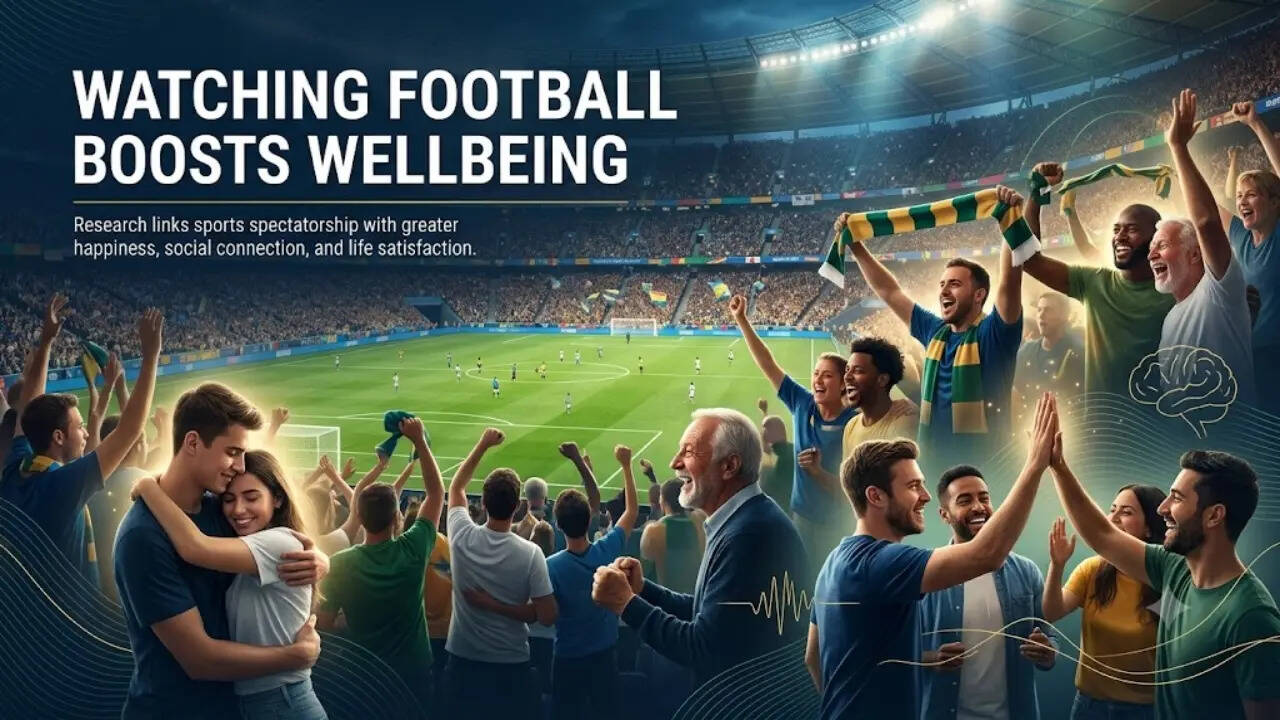
The 2026 FIFA World Cup is set to begin, and the stakes are higher than ever before—it will likely be a rollercoaster ride for fans. The highs and lows of winning and the stress that comes with it give an adrenaline rush like no other. However, the overall impact is considered to be positive because research says that people who watch sports together are healthier and experience greater well-being than those who do not. Experts believe that this could be associated with the social aspect of watching sports. And when talking about well-being, experts say that it is about an individual's psychological state.How does watching football improve well-being?Researchers say that well-being refers to how one feels, and people with higher well-being have better physical health. They also tend to live longer. The research was carried out by experts at Anglia Ruskin University, involving 7,290 adults aged 16–85 years living in England and who participated in the Taking Part Survey commissioned by the UK government.Read more: Can An App Be Your Therapist? India’s Digital Mental Health Revolution Faces Key ChallengesResearchers also found that people living in the UK who attended a small sports event in the past year were more satisfied with their lives and less lonely than others. The findings are in sync with other studies that discovered that people who watch sports at least once a year are less likely to have symptoms of depression than those who did not watch.Should you watch the game in a stadium or at home?Research found that people who watch sports on TV or on the internet were less likely to be depressed. These symptoms were less likely to occur in people who watched sports more often. People who watch sports are more likely to report a higher feeling of fulfillment than others, whether or not they watch the sport on TV, online, or in person. The findings are correlational, and it cannot be certain which factors influence another or whether they can be influenced by factors such as the number of friends a person has and their wealth. Social identity theory and brain-imaging research, on the other hand, revealed that watching sports could be a greater primary well-being boost than other factors.Researchers noted that the positive aspect of watching sports is linked to social identity—being able to form a connection with people who share common interests. These form a part of an individual's identity, and through them, one seeks emotional and social support. One example is in-group formations within the community that are shared with people who support the same sports teams. This can likely create a sense of being emotionally supported by fellow fans, which contributes to life satisfaction.Read more: Social Media Bans for Kids Gain Ground Worldwide: Will They Work?The shared social identity and emotional benefits of success among a group are noteworthy. Additionally, when a team loses, people are likely to distance themselves from that team to avoid the psychological consequences of a negative social experience. The role of these social processes associated with sports spectatorship and well-being is demonstrated by a Japanese study that relies upon brain imaging. Researchers noted that areas of the brain linked to psychological rewards are more active when people watch spectator sports such as baseball, compared with less popular sports such as golf.The social benefits of watching sportsConclusively, it is said that the social benefits of watching sports are not confined to attending live events with friends and family. Whether one supports a team from home or at the game, the highs and lows of being a sports fan are good for health, as long as the experience is shared with others.