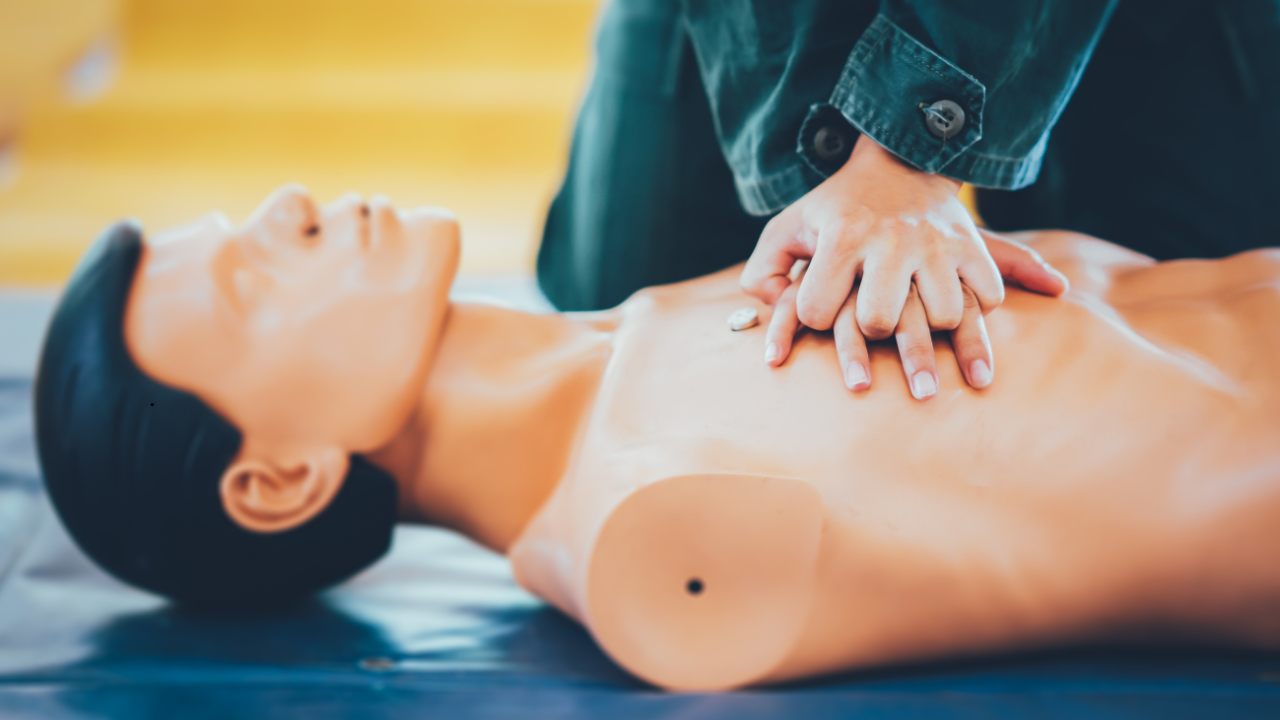
A Vasai final-year MBBS student saved a fellow passenger in Goa-Mumbai Flight. As per a report by Lokmat Times, the incident took place on February 3 when a passenger on an Indigo flight that department from Dabolim Airport in goa at 3.50 pm started experiencing breathing difficulty. His condition worsened and he collapsed in the aircraft. This caused panic. The cabin crew made an announcement asking if there were any doctors on board. Aryan Lolayekar, a final-year medical student from Mumbai's Vasai responded to the call. He was travelling on the same flight. Lolayekar found that man's blood sugar levels had dropped significantly and that his heart rate had also slowed down. This caused him dizziness and led to loss of consciousness. Along with all this, the high altitude of the flight also posed a serious risk to his life.The final-year medical student began administering first aid and used the emergency oxygen cylinder on board. He provided artificial respiration to stabilize the patient. In aa few minutes, the patient's condition improved. The flight had a duration of 45 minutes. After the aircraft landed safely in Mumbai, IndiGo staff shifted the passenger to a hospital for further treatment. Lolayekar's prompt actions earned him applauds and praises. Speaking on the incident, he said that he initially felt anxious when he saw the passenger's condition. However, he relied on his medical training to act quickly. He said that the timely use of oxygen proved to be crucial during the time.How Does CPR Help In Emergency Cases?Lack of CPR training is a significant barrier for most. While many know that CPR can save lives, not many are trained in doing that. One must be trained to carry out CPR safely.A study found that only 18% of people had received CPR training within the last two years, which is crucial for skill retention. Although many people have received CPR training at some point in their lives, the skills may be outdated or forgotten.To address this, some US states have made CPR training mandatory for high school graduation, and countries like Denmark and Norway have implemented similar requirements. In the U.S., CPR courses are widely available online and in-person, and many take just a few hours to complete. These courses teach individuals the basics of CPR, which involves performing chest compressions at a rate of 100 to 120 per minute and a depth of at least two inches.Also Read: Know What to Do: CPR and AED Basics for EveryoneWhat IS CPR?Cardiopulmonary resuscitation (CPR) is an emergency treatment that's done when someone's breathing or heartbeat has stopped.The American Heart Association (AHA) recommends starting CPR by pushing hard and fast on the chest. The pushes are called compressions. This hands-only CPR recommendation is for both people without training and first responders notes AHA.Position the person:Lay the person flat on their back on a firm, level surface.Start chest compressions (hard and fast):Place the heel of one hand in the centre of the chest, between the nipples. Put your other hand on top and interlock your fingers. Keep your elbows straight and position your shoulders directly above your hands. Push straight down at least 2 inches (5 cm) at a steady rate of 100–120 compressions per minute—about the beat of “Stayin’ Alive.” Allow the chest to fully rise between compressions.Give rescue breaths (if trained):After 30 compressions, tilt the head back and lift the chin to open the airway. Pinch the nose shut, seal your mouth over theirs, and give two breaths, watching for the chest to rise. If it doesn’t, reposition the head and try again.Continue CPR:Keep alternating 30 chest compressions with 2 rescue breaths until emergency help arrives, an AED is ready to use, or the person shows signs of movement.