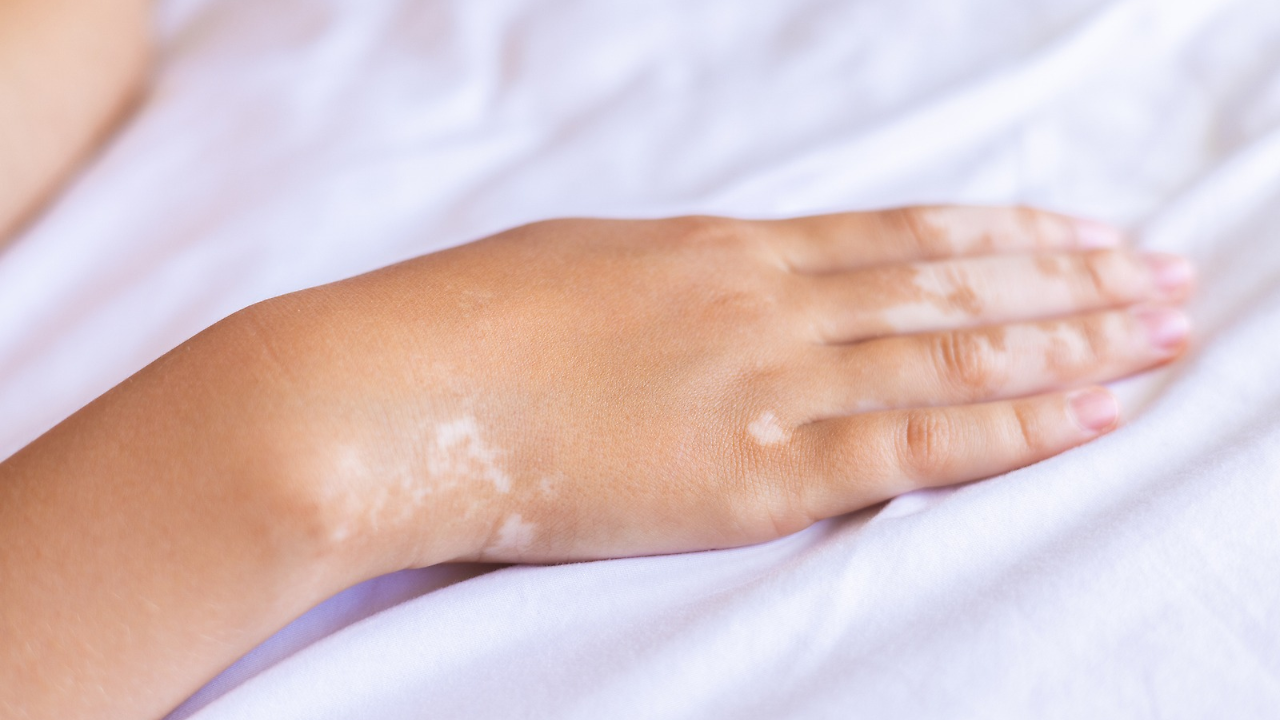
Vitiligo, an autoimmune condition that causes patches of skin to lose pigment, can be difficult to treat. Repigmentation often takes months, and results vary.Now, two Phase 3 clinical trials, led by an international team of scientists from France, the US and Canada, found that an experimental oral drug, povorcitinib, improved skin pigmentation in adults with moderate-to-severe nonsegmental vitiligo.What Did The Study Find?Published in Nature Medicine, the trials STOP-V1 and STOP-V2 involved 916 adults and evaluated once-daily povorcitinib, which blocks JAK1, a protein involved in immune signalling. Key findings include:Facial repigmentation: After 52 weeks, 18.9% of patients receiving povorcitinib in both trials achieved at least 75% improvement, compared with 6.8% and 3.1% in the placebo groups.Whole-body repigmentation: At least 50% improvement was reported in 18.4% and 12.9% of treated patients, compared with 6.5% and 4.8% in the placebo groups. Only 2.6% and 2.3% achieved at least 75% improvement.Disease stabilisation: Exploratory analyses found that 94.3% and 87.6% of treated patients had no increase in disease severity at week 52, compared with 71.8% and 69.2% in the placebo groups.Are Their Any Safety Concerns?Overall adverse event rates were broadly similar between the treatment and placebo groups. However, four patients receiving povorcitinib developed basal cell carcinoma, with one case considered treatment-related. One patient experienced blood-clotting complications, including pulmonary embolism and deep vein thrombosis, also considered treatment-related.Although the findings are encouraging, most patients did not achieve at least 75% facial improvement, and substantial whole-body repigmentation remained uncommon. Longer-term safety data are also needed. Povorcitinib remains investigational and is not yet an established vitiligo treatment.What Is Vitiligo?Vitiligo occurs when the immune system attacks melanocytes, the cells responsible for producing skin pigment. Although it is not life-threatening, it can significantly affect emotional and psychological well-being.Speaking to HealthandMe, Dr Hetanshu Parekh, Consultant Plastic, Reconstructive and Cosmetic Surgeon, Bhailal Amin General Hospital, said vitiligo is more complex than a skin condition alone.He explained that stress, sleep, diet and skin trauma may influence the disease.Stress: Stress can disrupt immune balance and increase inflammation, potentially worsening vitiligo. New or expanding patches may appear following major life events, including illness, work pressure or bereavement.Sleep: Chronic sleep deprivation and irregular sleep schedules may affect immune regulation and potentially worsen autoimmune conditions.Diet: There is no specific vitiligo diet or food that can cure the condition. Deficiencies in vitamin B12, vitamin D, folate and copper may affect immune and skin health. A balanced diet rich in fruits, vegetables, whole grains, nuts, seeds and omega-3 fatty acids is recommended. Smoking and excessive alcohol consumption should be avoided.Skin Protection: Friction, cuts, burns and other skin injuries may trigger new patches through a phenomenon known as the Koebner phenomenon. Regular sunscreen use, protective clothing and avoiding repeated skin trauma can help protect the skin.Is Vitiligo Treatable?Treatment depends on the extent and stability of the condition.Topical medications: Corticosteroid creams and tacrolimus ointment for limited patches.Phototherapy: Narrowband UVB and excimer laser to encourage repigmentation.Oral medications: Corticosteroids and selected JAK inhibitors for extensive or rapidly spreading disease.Surgery: Skin grafting and melanocyte transplantation for selected patients with stable vitiligo.Camouflage: Medical tattooing and cosmetic products to conceal patches.