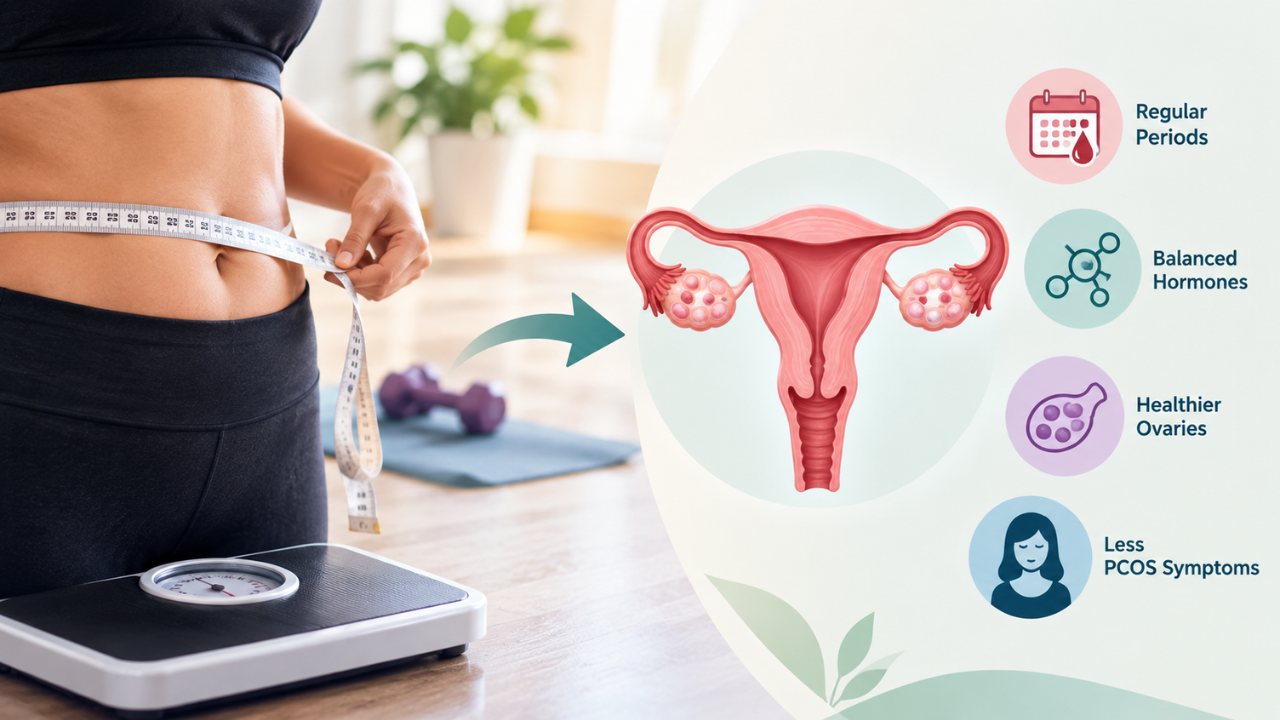
Weight loss surgery may do more than help women living with obesity lose weight. A new study has found that metabolic bariatric surgery can improve menstrual cycles and several reproductive symptoms linked to Polycystic Ovary Syndrome, now renamed as Polyendocrine Metabolic Ovarian Syndrome (PMOS).Researchers from the University of Surrey followed 84 women aged 18 to 45 who underwent bariatric surgery, including 49 gastric bypass and 35 gastric sleeve procedures, for 24 months. Another 18 women with obesity who did not undergo surgery were included for comparison. The findings were published in Obesity Surgery.Bariatric Surgery Improved PMOS SymptomsWomen who underwent surgery lost more than 30 kg on average at both 12 and 24 months after the procedure. But researchers also observed improvements in reproductive health. Women who had previously experienced irregular periods reported more regular menstrual cycles after surgery. The number of women with polycystic ovaries also fell significantly, with the condition persisting in only 10% of those affected after 24 months.Another common PMOS symptom, hirsutism or excessive facial and body hair, had resolved in the women reporting the condition by 12 months. Obesity and PMOS can team up in a way that worsens metabolic and reproductive problems. Insulin resistance and hormonal changes associated with excess weight can contribute to irregular ovulation, menstrual irregularity and difficulty conceiving.Also read: PCOD vs PCOS vs PMOS: Why The Condition’s Name Has Changed Over TimeWeight Loss Could Improve PMOS SymptomsThe researchers suggest that reducing obesity may help correct some of the hormonal and metabolic disturbances affecting reproductive health.Dr Kathryn Hart, co-author of the study and Associate Professor in Nutrition and Dietetics at the University of Surrey, said: “Dysregulated hormone levels, irregular periods and conditions such as polycystic ovaries are impacted by obesity. By reducing this, what we have seen is that it can lead to improvements without the need for medication,” she added.Despite promising results, this does not mean bariatric surgery is a treatment that every obese woman with PMOS should undergo. The procedure is generally considered for people with obesity who meet a certain clinical criteria. Also it carries its own risks and nutritional considerations that are important.Also read: From Insulin Resistance to Fertility: Understanding the Metabolic Side of PCOSFertility May Return Quickly After SurgeryThe researchers also highlighted an important finding for women who may be planning pregnancy. Seventeen women in the study had healthy pregnancies following surgery. The researchers said reproductive counselling and preconception care should be incorporated into care after bariatric surgery, particularly because fertility can improve as menstrual cycles and ovulation become more regular.Professor Martin Whyte, co-author and Professor of Metabolic Medicine at the University of Surrey, said many people undergoing bariatric surgery are women of reproductive age who may be considering pregnancy.“So much remains unknown about the impact of this type of surgery on women who are planning to have children,” he said, highlighting the need to understand when the ideal time to conceive may be after surgery. Importance Of Combating PMOS-Related ObesityThe study adds to growing evidence that treating obesity can improve some reproductive symptoms of PMOS. A 2026 systematic review and meta-analysis also found that bariatric surgery was associated with reductions in menstrual irregularities, hirsutism and several reproductive hormone abnormalities.But bariatric surgery is not a cure for PMOS. PMOS is a complex hormonal and metabolic health condition and its symptomscan vary considerably between women.