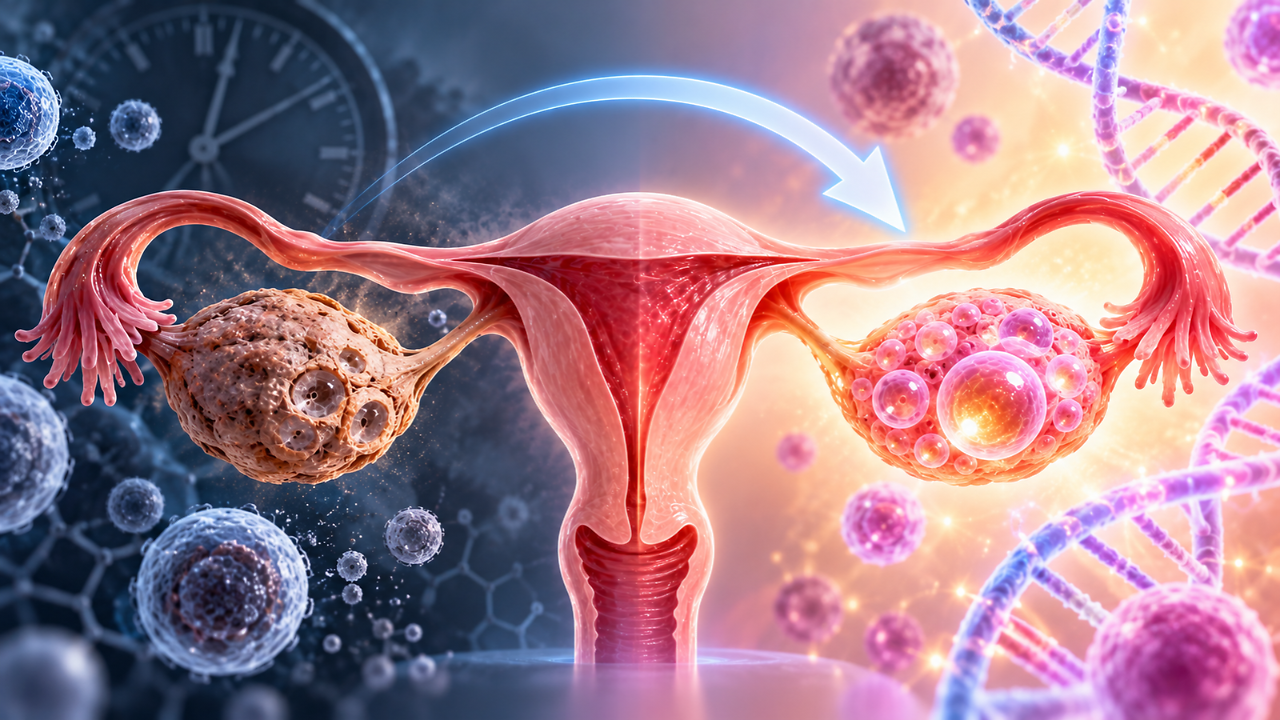
The biological age of ovaries may be influenced by the environment surrounding the organs, rather than being an entirely irreversible process. A new experiment done on mice found that older ovaries became biologically younger after being transplanted into younger animals, restoring and extending their ability to support pregnancy.The research, led by scientists at Harvard Medical School, body's environment may influence how quickly the ovaries age. The findings could help researchers investigate treatments aimed at preserving ovarian function and fertility for longer in women. Older Ovaries Produced Healthy Offspring In Younger MiceThe researchers transplanted ovaries from 13-month-old mice into younger mice that were four months old. The older donor mice had crossed their reproductive age.Four to five months after transplantation, the younger recipients gave birth to healthy offspring, even though the transplanted ovaries were 17 to 18 months of age.The same effect was not observed when older ovaries were transplanted into older recipients. This suggested that the recipient's biological environment, rather than the age of the ovaries alone, affected their reproductive function.The team also performed the reverse experiment. When young ovaries were transplanted into older mice, the ovaries showed signs of accelerated ageing.Also read: Heart Health In Women After Pregnancy: Why Pre-Eclampsia And Gestational Complications Matter Years LaterMore About The ExperimentThe researchers developed an ovarian ageing clock called OvaAge to observe the changes. The clock uses patterns of gene activity to ascertain an ovary's molecular age.The results showed that the molecular age of older ovaries dropped when they were placed in younger animals. Conversely, young ovaries in older recipients aged faster.The researchers also observed that older ovaries in younger hosts showed reduced inflammatory activity, while young ovaries in older hosts showed increased inflammation.Also read: Children’s Mental Health In The Digital Age: Can Governments Protect Them Without Restricting Internet Access? | InterviewEffects Of Ovaries On Ageing Of Other OrgansThe study also explored whether the ovaries affect ageing elsewhere in the body. When young ovaries were transplanted into older mice, researchers observed that the molecular ages of the brain, liver and uterus also dropped. The findings suggest that the ovaries may also influence other organs through hormones or other signals.The researchers also identified changes in gene activity and cellular processes linked to inflammation, metabolism and tissue maintenance. Understanding these signals could help scientists investigate whether some effects of ovarian ageing can be targeted without an organ transplant.Study's Scope In Women's Fertility Ovarian ageing refers to a decline in both the number and quality of eggs. This reduces women's fertility as they grow older. The ovaries also produce hormones, including oestrogen, that affect overall health.The new findings spark the possibility that the environment surrounding the ovaries could be a target for future treatments to preserve ovarian function. If researchers can identify the signals that allowed older ovaries to function in younger mice, they may eventually be able to investigate ways to reproduce those effects without transplantation. But substantial research is still needed to move ahead. The study was based mice, and ovarian biology, reproductive ageing and fertility outcomes differ significantly between mice and humans.