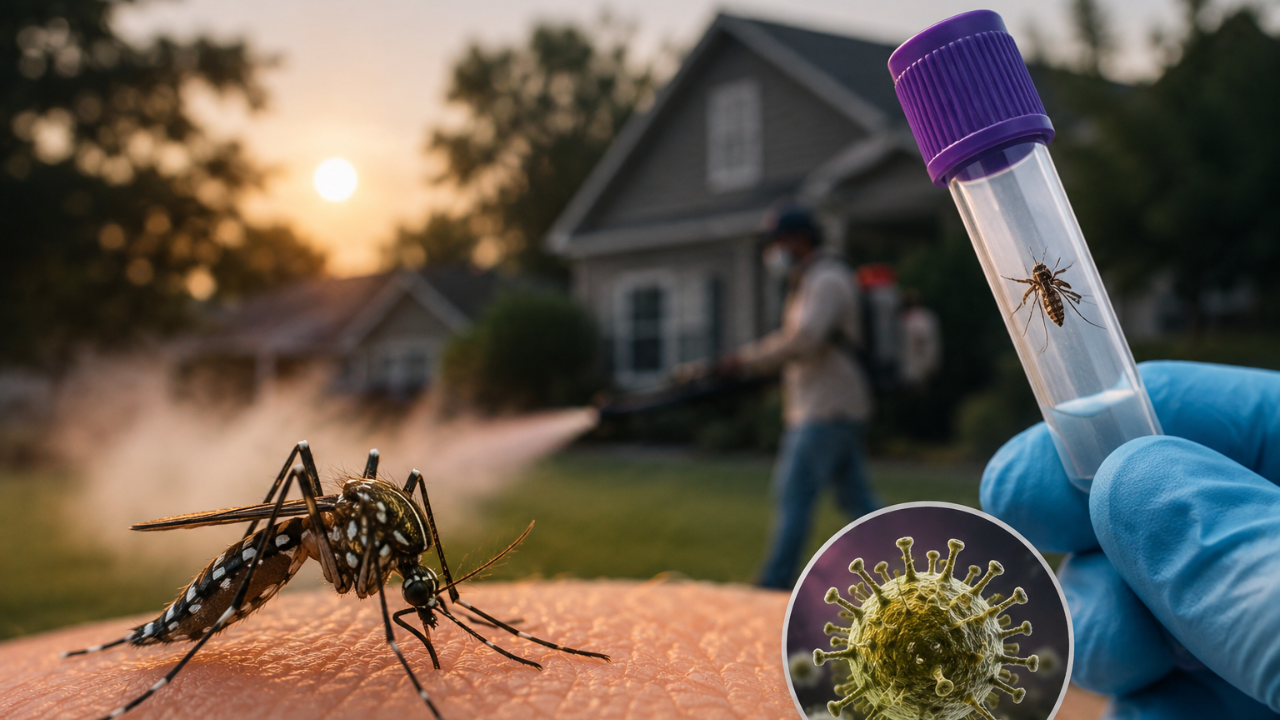
Health officials in the United States are urging residents to protect themselves from mosquito bites after West Nile virus (WNV) was detected in mosquitoes in Grant Park, Fulton County, Georgia, marking the region’s first confirmed detection of the season. The discovery has prompted local health authorities to increase mosquito surveillance and control measures while reminding the public that preventing mosquito bites remains the best defense against infection. Early Warning For West Nile Virus The latest detection comes amid an early arrival of West Nile virus season in the U.S. According to the U.S. Centers for Disease Control and Prevention (CDC), 56 human cases of West Nile virus disease had been reported nationwide as of July 7, 2026, with broader virus activity detected in mosquitoes, birds or animals across multiple states. Although no human cases have been linked to the Fulton County detection so far, finding the virus in mosquitoes serves as an important early warning. Mosquito surveillance allows public health officials to identify where the virus is circulating before people become ill. Once infected mosquitoes are detected, authorities can increase larviciding and spraying operations, monitor mosquito populations more closely, and alert residents to reduce their risk of exposure. Similar detections have also been reported in other parts of the country in recent days. Connecticut recently confirmed its first West Nile virus-positive mosquitoes of the year, while Texas reported its first human case of neuroinvasive West Nile virus after weeks of detecting infected mosquito samples.Also read: Walked Through Floodwater Recently? 5 Things To Do After Reaching Home To Minimise Risk Of Infections About West Nile Virus West Nile virus (WNV) is a mosquito-borne virus that belongs to the flavivirus family, the same group that includes the viruses causing Dengue fever, Zika virus disease, Yellow fever, and Japanese encephalitis. It is primarily spread through the bite of an infected Culex mosquito. Mosquitoes become infected after feeding on infected birds, which are the virus's first host. About 80% infected with West Nile virus have no symptoms. About 20% develop West Nile fever. Its common symptoms include: FeverHeadacheBody and muscle achesFatigue or weaknessJoint painNausea or vomitingDiarrheaSkin rash on the trunk or backSwollen lymph nodesAlso read: Shingles Vaccine May Help Fight Dementia, Suggest Studies The disease could become serious in a few infected people who may develop its neuroinvasive disease. The symptoms of severe West Nile virus include most of the commons ones as well as: Neck stiffnessConfusion or disorientationTremorsLoss of coordinationVision problemsSeizuresParalysisComa (rare case)Why Health Officials Are Asking People To Stay Vigilant? Authorities stress that there is currently no human vaccine or specific antiviral treatment for West Nile virus. Prevention, therefore, depends largely on avoiding mosquito bites and reducing mosquito breeding sites. Officials recommend that residents: Use repellents containing ingredients like DEET, picaridin or oil of lemon eucalyptus.Wear long-sleeved shirts and long pants when outdoors, particularly during dawn and dusk when mosquitoes are most active.Remove standing water from containers, flowerpots, buckets, bird baths and clogged gutters where mosquitoes can breed.Ensure doors and windows have intact screens to keep mosquitoes out of homes.