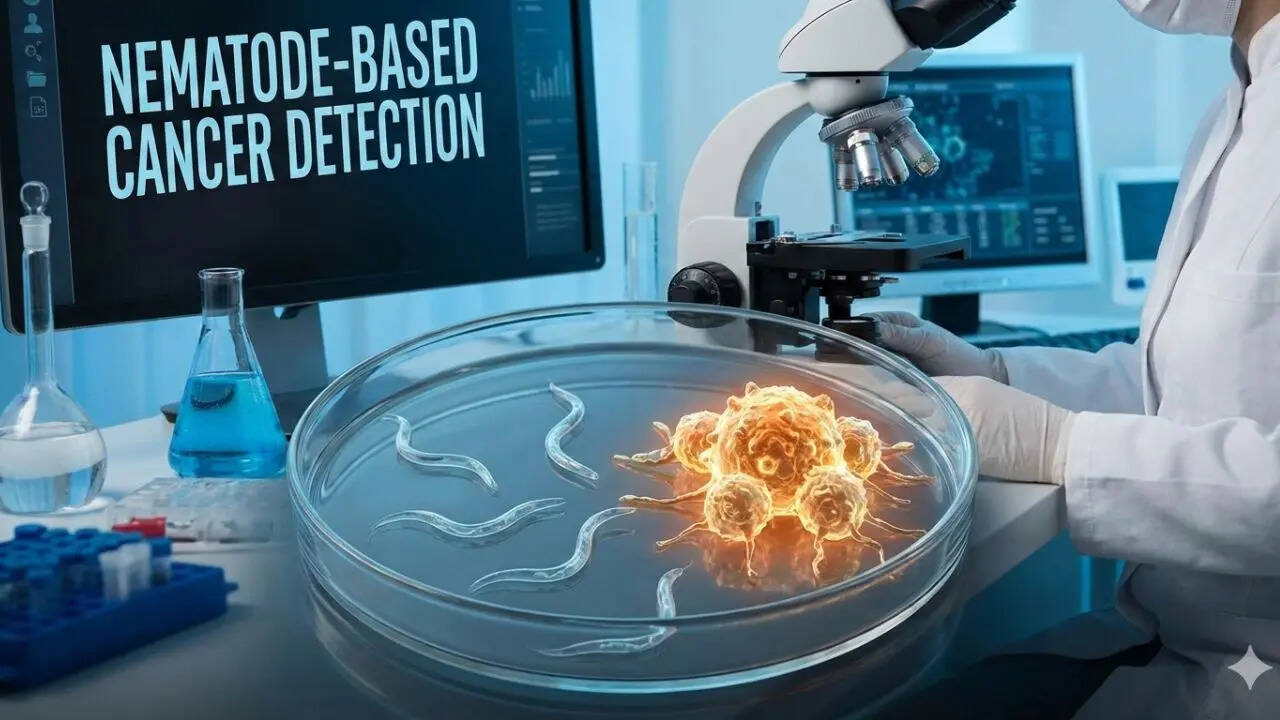
The Delhi High Court has turned down a Japanese company’s attempt to secure a patent for a cancer detection technique that relies on nematodes, or roundworms, ruling that it falls under diagnostic processes that cannot be patented under Indian law, regardless of how novel or non-invasive it may be.Hirotsu Bio Science approached the High Court after India’s Controller of Designs and Patents rejected its patent application in August 2023, stating that the invention did not meet the criteria laid out in the Patents Act, 1970. In a detailed 25-page judgment delivered on Saturday, Justice Tejas Karia reaffirmed Section 3(i) of the Act, which clearly bars the patenting of diagnostic methods.What Is the Nematode-Based Cancer Detection Method?The nematode-based cancer detection method is a research-stage technique that uses microscopic roundworms, known as nematodes, to detect the presence of cancer. These organisms possess a highly developed sense of smell, allowing them to pick up on specific chemical cues released by cancer cells in bodily samples such as urine, breath, or tissue, as per Science Direct.Laboratory experiments have shown that certain nematodes tend to move towards samples taken from individuals with cancer while avoiding those from healthy people. The underlying idea is that cancer changes the body’s chemical profile, creating odour patterns that these worms can detect, sometimes even at an early stage.Scientists have looked at this approach as a potentially affordable and non-invasive screening option. However, it remains a concept under study and has not yet been accepted as a reliable medical test or used in routine clinical care.Delhi HC Upholds Patent Rejection of Nematode-Based Cancer Detection MethodAt the centre of the case was a patent application titled “Cancer detection method using the sense of smell of nematode.” Nematodes, often referred to as roundworms, are among the most widespread life forms on the planet and can be found in environments ranging from soil to living organisms.The Japanese company aimed to patent a technology based on the biological response of Caenorhabditis elegans, a species of nematode recognised for its advanced olfactory abilities.The firm explained that its invention relies on the chemotaxis of these worms, meaning their tendency to move towards or away from certain scents, which would serve as a biological signal for the presence of cancer.According to the company, the nematodes showed avoidance behaviour when exposed to urine from healthy individuals, while being drawn towards urine samples from cancer patients. It claimed the method demonstrated complete accuracy during testing and could detect several cancers, including gastric, colorectal, and pancreatic cancers, even at very early stages.Is This Process Patentable in India?The main legal question was whether the method qualified as a non-patentable “diagnostic process” under Section 3(i) of the Patents Act, 1970. This provision excludes from patent protection any process related to medicinal, surgical, curative, preventive, diagnostic, or therapeutic treatment of humans.Hirotsu Bio Science Inc challenged the rejection by the Controller of Designs and Patents in the High Court, arguing that their invention should be seen as a “detection” method rather than a “diagnostic” one. The company maintained that the process was carried out entirely in a laboratory setting, using samples such as urine or tissue, and did not involve any direct medical procedure or clinical decision-making on the human body.