
- Health Conditions A-Z
- Health & Wellness
- Nutrition
- Fitness
- Health News
- Ayurveda
- Videos
- Medicine A-Z
- Parenting
Who Is Claire Brosseau? The Case at the Center of Canada’s Assisted Death Law Debate And Long Mental Illness

Credits: IMDb
Claire Brosseau, 48, an actress, who lives in Toronto was hopeful when a new change to Canadian law allowed people who were living with incurable medical condition, but not near death to ask a doctor to end their lives. This happened in 2021. This gave her relief. But now, almost five years later, she is still alive, mostly surrounded with headlines and debates on who in Canada has the right to avail medically assisted death.
She suffers from a debilitating mental illness, which has no treatment. The sadness has succumbed her that sometimes she has tried to eat peanuts to trigger her severe allergy, in a hope that she would die. Other times she has overdosed on drugs or cut her wrists. A New York Times report notes that her sadness is so severe that sometimes she sobs until her bones ache.
What Happened To Claire Brosseau?
When she was just a 14-years-old honors student in Montreal, who enjoyed her life as wildly as any student of her own age would, she sometimes would turn rather cruel. Her parents took her to a psychotherapist who diagnosed her with manic depression. It came with diagnoses like eating disorder, anxiety disorder, personality disorder, substance abuse disorder, chronic suicidal ideation, and many more mental health issues.
It is not that she has not tried to get better. She has tried at least 25 medications, two dozen different talk, art behavioral therapies, even electroconvulsive therapy and guided psychedelics. She did feel better for sometime, only to return to the feeling of monsters stalking her when she is awake and in her dreams.
Read: Can Right To Die Be Practiced By Non-Terminally Ill Patients?
A shift in Canadian law briefly offered her another option. In 2019, three years after assisted death was legalized for people whose natural death was reasonably foreseeable, two people with chronic conditions challenged the law. They argued that excluding those suffering unbearably from incurable illnesses, simply because they were not dying, violated their right to equality. The courts agreed, and in 2021 the law was expanded to include people who were not at the end of life.
One group, however, remained excluded: people whose sole underlying condition was mental illness. The government said it needed time to draft special safeguards. Of the nine countries that allow assisted death for people not nearing death, only Canada made this distinction. The exclusion was set to end on March 17, 2023, and Ms. Brosseau planned to apply that day. But the deadline was delayed again, and then postponed once more the following year.
Childhood filled With Trauma
In hindsight, her family believes her illness began in early childhood. As a young girl, she cycled through rage and despair, sometimes sitting on train tracks, convinced everyone would be better off without her. At eight, she wrote in her diary that she wanted to die.
At home, her behavior created constant tension. Her older sister, Melissa Morris, recalls being perpetually anxious around her. At just 12, Ms. Morris used money from her first job to install a lock on her bedroom door to shield herself from the chaos.
Also Read: Australia Social Media Ban Explained: Why Government Plans to Restrict Accounts of Under-16s
At school, Ms. Brosseau appeared to flourish. She was popular, academically strong, and deeply involved in theater, even as she skipped classes and experimented with drugs. She was recruited into elite programs, studied theater in New York, and began acting professionally. But she struggled with eating disorders, periods of deep depression, and substance use.
In her early twenties, she returned to Montreal and experienced a severe manic depressive episode that led to months of hospitalization. She recovered enough to restart her career, performing comedy in two languages, acting in commercials, writing, and earning well. Manic episodes, however, continued, sometimes requiring friends to send her home for treatment. At 34, she underwent electroconvulsive therapy and returned to work soon after.
By 2021, she believed she was in remission. Then, during a downturn, her mother called police out of fear she might harm herself. Ms. Brosseau was involuntarily hospitalized, restrained twice despite no recorded threats, and left deeply traumatized. Complaints against the hospital were dismissed. For her, that decision marked the end of trust in the mental health system and any remaining desire to try to get better.
WHO Chief Says 3 Suspected Hantavirus Cases Evacuated to Netherlands: Cases and Death Toll
Credit: WHO
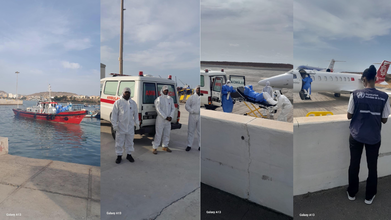
Three suspected hantavirus patients have been evacuated from the ship and are on their way to receive medical care in the Netherlands, said Dr Tedros Adhanom Ghebreyesus, WHO Director-General, today.
The three patients evacuated from the MV Hondius cruise ship include
- a 56-year-old British national,
- a 65-year-old from Germany,
- a 41-year-old from the Netherlands.
The WHO chief noted that the global health agency “continues to work with the ship’s operators to closely monitor the health of passengers and crew, working with countries to support appropriate medical follow-up and evacuation where needed”.
“Monitoring and follow-up for passengers on board and for those who have already disembarked has been initiated in collaboration with the ship’s operators and national health authorities,” Dr Ghebreyesus said.
Hantavirus: 8 Suspected Cases, 3 Deaths
Also read: Hantavirus: Symptoms, Risks, and Prevention
Some passengers aboard the Hondius began experiencing serious health complications after the ship, carrying about 150 passengers, departed Argentina on April 1.
Initially, it was considered a severe acute respiratory infection; later, three people died.
- April 11: A 70-year-old Dutch national became the first passenger to die while on board the ship. His death has not yet been confirmed as due to hantavirus.
- April 24: The man’s 69-year-old wife travelled alongside her husband’s body from St Helena, a British island in the South Atlantic, to Johannesburg. Her condition deteriorated during a flight the next day, and she was taken to the hospital.
- April 26: The woman died in a hospital in South Africa. She is the first confirmed hantavirus case.
- April 27: A second sick passenger, a British national, was flown to South Africa and remains in a critical but stable condition in hospital with hantavirus.
- May 2: A German national died while on the ship; it is unclear if the passenger was infected.
- May 5: The Swiss government announced that a man who travelled home from his trip from South America on the MV Hondius cruise ship at the end of April visited the University Hospital Zurich after experiencing symptoms. He was immediately placed in isolation, with authorities saying there is no danger to the public. His wife, who accompanied him, has not shown symptoms but is also isolating as a precaution.
- May 6: WHO announces the evacuation of three infected passengers.
What Is Hantavirus?
Also read: Hantavirus Outbreak: How The Rare Rodent-Borne Virus Spreads
According to the WHO, hantaviruses are zoonotic viruses that naturally infect rodents and are occasionally transmitted to humans.
Symptoms include:
- Fever
- Headache
- Abdominal pain
- Diarrhea
Hantavirus: The Andes strain?
A team of scientists at South Africa’s National Institute for Communicable Diseases identified the strain of hantavirus linked to the cases.
In a presentation to parliament, the South African health minister said the Andes strain of hantavirus, which can spread human-to-human, had been identified in two people who disembarked from the cruise ship.
The Andes virus is the only hantavirus strain with documented human-to-human transmission and is more commonly found in South America.
Tea Or Coffee? Ladies, Your Choice Could Influence Osteoporosis Risk Later
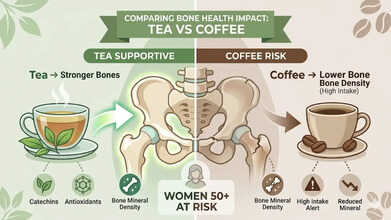
Tea is advised for better bone health in women. (Photo credit: AI generated)
Some people love tea, some can't get enough of coffee, but rarely does one think about if the same could influence disease risk later in life. According to a new study, women's risk of osteoporosis could be influenced by their choice of tea or coffee. Osteoporosis is a common occurrence in women aged 50 years and above. Statistics suggest that one in three women will likely be diagnosed with the disease, which renders the body incapable of replacing old bone after it undergoes wear and tear. This means bones become weak, brittle, and more prone to fractures. Bone problems at an advanced age in women can also slow down healing.
High-risk groups for osteoporosis
Older women are at a higher risk of osteoporosis, and that is because of oestrogen. Oestrogen supports bone metabolism, and its levels drop after menopause. Surgery can help remove a woman's ovaries, thereby resulting in the same effect. Researchers at Flinders University in Australia evaluated tea- and coffee-drinking habits of approximately 9,700 US women aged 65 years and above. Participants were required to self-report their tendencies in the survey on four occasions over a 10-year period.
The study also gathered data on women's bone health, measuring bone mineral density in the hip and the narrow connection to the hip with X-ray beams to deduce mineral levels in the bone. Researchers found that women who regularly drank tea had significantly higher hip BMD than those who did not. This could be because of tea compounds known as catechins that could provide the boost cells need to build strong bones. Even smaller differences can significantly improve bone health.
What are the benefits of tea for women's health?
Researchers noted that tea intake could be particularly beneficial for women dealing with obesity. Coffee habits, alternatively, had a different impact on BMD. Studies suggest that women who drank more than five cups of coffee a day were more likely to have lower BMD levels, thereby suggesting that caffeine can negatively affect calcium absorption in the body. Furthermore, experts noted that drinking any amount of coffee can reduce BMD levels in women, especially those who consumed high levels of alcohol.
Scientists note that, because of the limited scope of the study, more research is required in this area to ascertain the results. However, the study offers insights into the possible benefits of drinking tea for women living with osteoporosis. It can go a long way in improving overall wellness and long-term bone health in women.
The research is published in Nutrients.
Hantavirus: South African Scientists Identify Strain behind Outbreak On Cruise Ship

Credit: Reuters/ Canva
A team of scientists at South Africa’s National Institute for Communicable Diseases has identified the strain of the Hantavirus that has caused three deaths and infected seven so far aboard the MV Hondius ship in the Atlantic Ocean.
In a presentation to the parliament today, the South African Health Minister revealed that the Andes strain of hantavirus, which spreads human-to-human, has been identified in two people who came off the cruise ship.
“Incredible work of @nicd_sa, South Africa, in sequencing the #hantavirus. There has been excellent collaboration as @WHO
works to coordinate efforts and actions of governments, experts around the world, the Ship to keep people safe,” said Dr. Maria Van Kerkhove, director of epidemic and pandemic preparedness and prevention at the World Health Organization (WHO), in a post on social media platform X.
The NICD scientists found that the Andes strain was the cause of infection in a Dutch woman who died in Johannesburg, and a British man who is still in hospital. Both had become ill on the ship, Reuters reported.
“This is the only strain that is known to cause human-to-human transmission, but such transmission is very rare and, as said earlier, only happens due to very close contact,” the Minister said.
Other strains of hantavirus are more commonly transmitted to humans through contact with infected rodents or their urine, droppings, or saliva.
Also read: Hantavirus Outbreak: WHO Flags 6 Suspected Cases; How The Rare Rodent-Borne Virus Spreads
What is Hantavirus? How Deadly Is The Andes Strain?
As per the WHO, hantaviruses are zoonotic viruses that naturally infect rodents and are occasionally transmitted to humans.
Globally, an estimated 100,000 to 200,000 hantavirus infections occur each year. The majority of these cases are in Asia, particularly China. Most are sporadic or occur in small clusters, linked to contact with infected rodents.
“Hantaviruses are a group of viruses carried by rodents that can cause severe disease in humans. Infection with hantaviruses is found in many parts of the world. Thousands of infections are estimated to occur each year," Van Kerkhove said.
The Ande virus is the only strain of virus with documented human-to-human transmission. It is more common in South America.
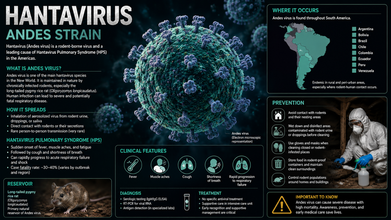
"Although uncommon, limited human‑to‑human transmission of HPS due to the Andes virus has been reported in community settings involving close and prolonged contact. Secondary infections among healthcare workers have been previously documented in healthcare facilities, though they remain rare,” WHO said in its situation report.
The WHO also currently assesses the risk to the global population from this event as low and will continue to monitor the epidemiological situation and update the risk assessment as more information becomes available.
"People really do need to understand that there are different degrees of person-to-person transmission," said Angela Rasmussen, a virologist with the University of Saskatchewan's Vaccine and Infectious Disease Organization, as quoted by CBS News.
Read More: Hantavirus on Cruise Ship: Symptoms, Risks, and Prevention
In the case of hantavirus, individual people are usually the end of the line, Rasmussen said, noting that this makes this cluster of cases unusual.
"So this virus — right now anyways — doesn't seem to be as big a risk as something like flu," the expert said.
While symptoms might not appear for weeks, the strain can escalate quickly, leading to severe respiratory failure with a death rate of roughly 40 per cent.
- Follow Us :


© 2024 Bennett, Coleman & Company Limited